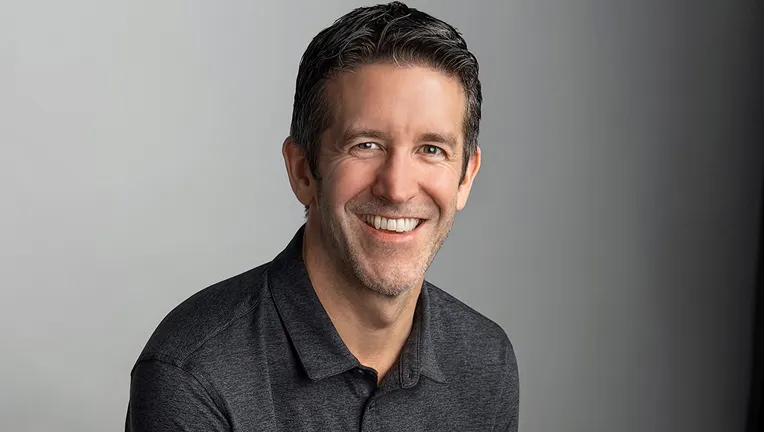
Apple has named John Ternus as its next chief executive officer, ending one of the most consequential leadership runs in the history of the technology industry. Tim Cook, who has led the company for 15 years, will step down on August 31, 2026, with Ternus officially taking over on September 1. Cook will remain at Apple as executive chairman, focusing primarily on engaging with policymakers around the world.
The appointment was approved unanimously by Apple’s board of directors and formally disclosed in a filing with the US Securities and Exchange Commission. It is the first CEO transition at Apple since Cook succeeded co-founder Steve Jobs in 2011, weeks before Jobs died.
Who Is John Ternus, Apple’s Incoming CEO
Ternus, 50, is the same age Cook was when he took over from Jobs. He graduated from the University of Pennsylvania in 1997 with a degree in mechanical engineering and began his career at Virtual Research Systems, where he designed virtual reality headsets.
He joined Apple in 2001 as part of the product design team, starting on the Apple Cinema Display. He was named vice president of hardware engineering in 2013 and joined the executive team in 2021 as senior vice president of hardware engineering, reporting directly to Cook.
Over 25 years at the company, Ternus oversaw hardware development across nearly every major Apple product line. He played a central role in the introduction of iPad and AirPods, the Mac lineup expansion, and Apple’s shift from Intel processors to its own Apple Silicon chips. He was also deeply involved in the Apple Vision Pro and most recently unveiled the iPhone Air, described as the biggest iPhone design overhaul since 2017. Apple also announced that Johny Srouji will step into Ternus’s former role as chief hardware officer in an expanded capacity.
The Tim Cook Era by the Numbers
When Cook became CEO in 2011, Apple’s market capitalization stood at around $350 billion and annual revenue was $108 billion. By his departure, the market cap exceeds $4 trillion, placing Apple third among the world’s most valuable publicly listed companies behind Nvidia and Alphabet. Revenue for fiscal 2025 surpassed $416 billion. The active device installed base has reached 2.5 billion units globally, and Apple shares appreciated more than 1,700% over Cook’s tenure.
Cook’s years at the helm were defined by operational discipline. He built Apple’s supply chain into one of the most efficient in the world, navigated US-China trade tensions, and scaled the services business into a $100 billion annual revenue stream.
“It has been the greatest privilege of my life to be the CEO of Apple,” Cook said in a statement. Ternus said he was “profoundly grateful” for the opportunity and committed to leading with “the same values and vision that have characterized this special place for half a century.”
What the Ternus Era Means for Apple’s AI Push and Hardware Future
The transition comes at a complex moment. Apple remains enormously profitable and dominant in consumer hardware, but analysts have flagged significant pressure points Ternus will need to address from day one.
Artificial intelligence is the most urgent. Apple Intelligence, the company’s in-house AI initiative, has widely been seen as trailing rivals including Microsoft, Google, Amazon, and Meta, all of which have committed hundreds of billions of dollars annually to AI infrastructure. Apple has avoided those levels of spending, and investors are watching closely to see whether Ternus changes course.
Bob O’Donnell of TECHnalysis Research said AI will be Apple’s biggest challenge going forward. Analysts at D.A. Davidson said the selection of a hardware-first CEO signals Apple may push harder into new product categories including folding phones, smart glasses, mixed reality devices, and AI-integrated hardware. Forrester analyst Dipanjan Chatterjee said the coming years will be turbulent for Apple as consumer behavior around technology continues to shift rapidly.
iPhone dependence is another concern. When Cook became CEO, the iPhone accounted for roughly half of Apple’s revenue. In the most recent quarter, that share had climbed to nearly 60%, and given that the services business runs largely on the iPhone user base, the actual dependence is higher still. The Apple Vision Pro has received strong technical reviews but has not achieved commercial success at scale.
Tariffs and supply chain complexity add further pressure. Apple’s manufacturing remains heavily concentrated in China, and Trump administration trade policies have raised costs and introduced new uncertainty. Ternus’s engineering background gives him a ground-level understanding of that supply chain, which analysts see as an asset in navigating what lies ahead.
Apple shares dipped less than 1% in after-hours trading following the announcement. Wedbush analyst Dan Ives called the timing of Cook’s exit a surprise but said he agreed with Ternus as the choice. OpenAI CEO Sam Altman called Cook “a legend.” Cook’s final day as CEO is August 31. Ternus takes over on September 1.'[