


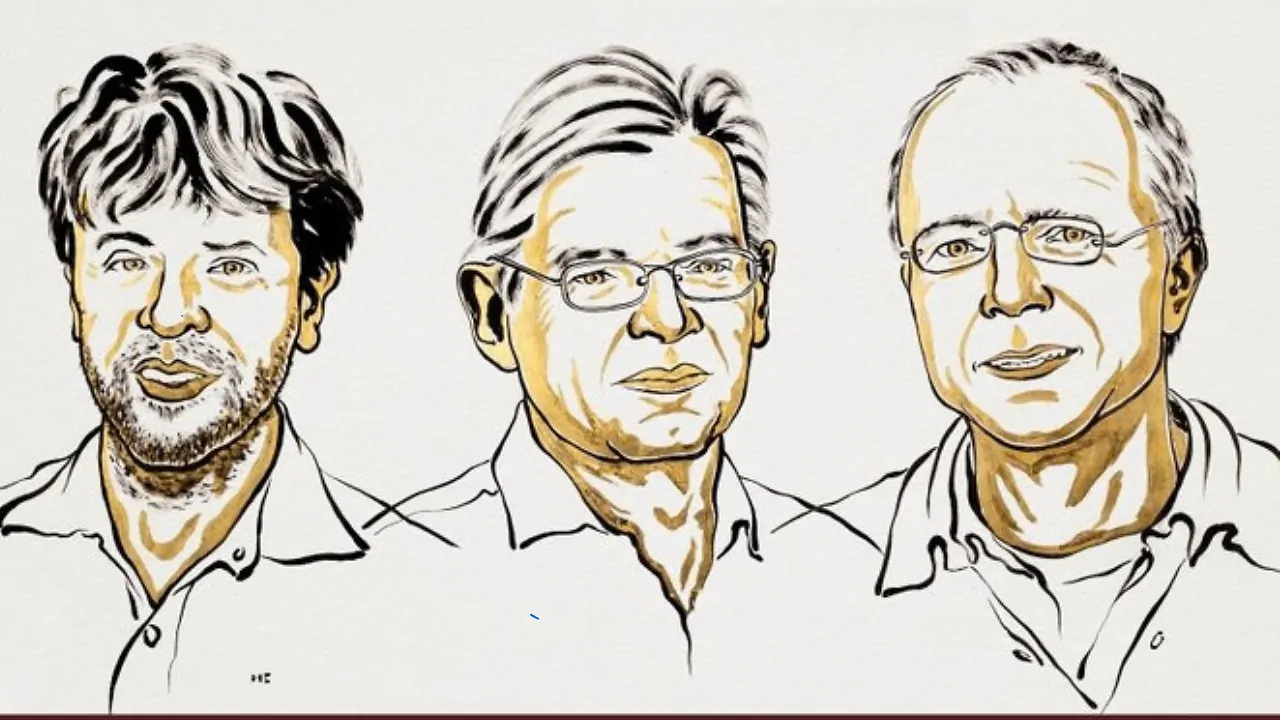
Three scientists have won the Nobel Prize for discoveries that let researchers switch individual nerve cells on and off using light.
What if scientists could flip a switch inside the brain and watch a memory, a feeling or a behavior come to life? For a long time, that idea belonged to science fiction. Thanks to the work of three researchers, it is now a routine part of neuroscience, and on Monday it earned them the world’s most famous science prize.
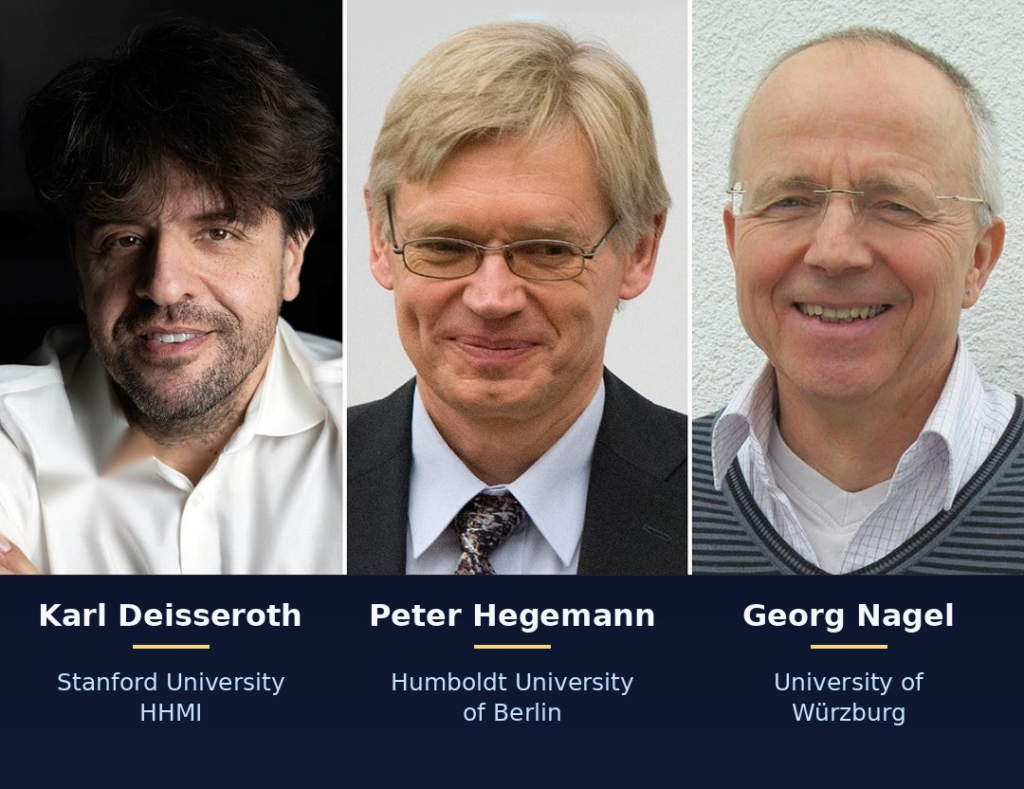
The 2026 Nobel Prize in Physiology or Medicine has been awarded jointly to Karl Deisseroth, Peter Hegemann and Georg Nagel “for their discoveries concerning light-gated ion channels and optogenetics,” the Nobel Assembly at Karolinska Institutet in Stockholm announced.
Their work led to optogenetics, a technique that makes it possible to turn the activity of individual nerve cells on or off in a living brain using light. It has given scientists a powerful way to study how nerve cells shape memories, feelings and behavior.
Deisseroth is a professor of bioengineering and of psychiatry and behavioral sciences at Stanford University in the United States, and still works as a psychiatrist alongside his research. Hegemann is based at Humboldt University of Berlin and Nagel at the University of Würzburg, both in Germany.
Optogenetics Explained, How Algae Proteins Became a Light Switch for Nerve Cells
The story begins with tiny green algae that move toward light. Hegemann and Nagel studied a light-sensitive protein in these algae, called channelrhodopsin, which acts like a gate. When light hits it, the gate opens and allows charged particles to flow through.
The researchers found that the protein kept this ability even when it was placed into other types of cells, making them sensitive to light as well. That opened the door to a new idea. If the protein could be placed inside nerve cells, light might be used to control them.
Deisseroth made that leap. He introduced the gene for channelrhodopsin into nerve cells from rats and showed that shining blue light on them triggered a nerve signal. The technique was published in 2005, and he went on to make the light-controlled switch work in the brains of living mice. Around 2007, his team was able to control the movement of mouse whiskers simply by switching on a light.
What Optogenetics Means for Brain Research, Mental Health and Future Treatments
Before optogenetics, it was extremely difficult to work out which nerve cells were responsible for which functions, because the brain contains billions of them packed tightly together. Optogenetics changed that by letting scientists activate or silence specific groups of cells with precision.
Researchers now use the method to map brain circuits, bring memories to life in animal studies, trigger feelings, drive behaviors and study the types of nerve cells involved in psychiatric and neurological disorders. The Nobel committee said it is fundamentally transforming scientists’ understanding of the brain.
The technique is also being studied as a possible treatment for disease, including early clinical research into restoring some vision in people with certain types of blindness.
The three laureates were delighted to share the honor. Thomas Perlmann, secretary of the Nobel Committee for Physiology or Medicine, said all three told him it was wonderful to receive the prize with the other two and described each other as friends. Deisseroth received the news in a phone call from Stockholm shortly after midnight in California.
The laureates will share the prize money of 12 million Swedish kronor, or about $1.2 million. The Nobel Prizes in physics, chemistry, literature and peace will be announced later this week, followed by the Nobel Memorial Prize in Economic Sciences next Monday.