


Around 1 in every 10 newborns needs some form of assistance to start breathing at birth, according to guidelines published jointly by the American Heart Association and the American Academy of Pediatrics. When a baby is born and does not breathe on its own, medical staff have approximately 60 seconds to complete an initial assessment and begin intervention if needed. That window is called the Golden Minute.
The protocol governing what happens inside that minute is used in hospitals around the world. It was developed by the AHA and AAP and is updated regularly. The most recent full revision was published in October 2025.
The first step does not involve any equipment. Staff dry the baby, keep it warm, position the head slightly to open the airway, rub the back, and flick the soles of the feet. These are basic stimulation techniques. According to AHA and AAP guidelines, around 10 percent of newborns respond to these initial steps alone and begin breathing without further intervention.
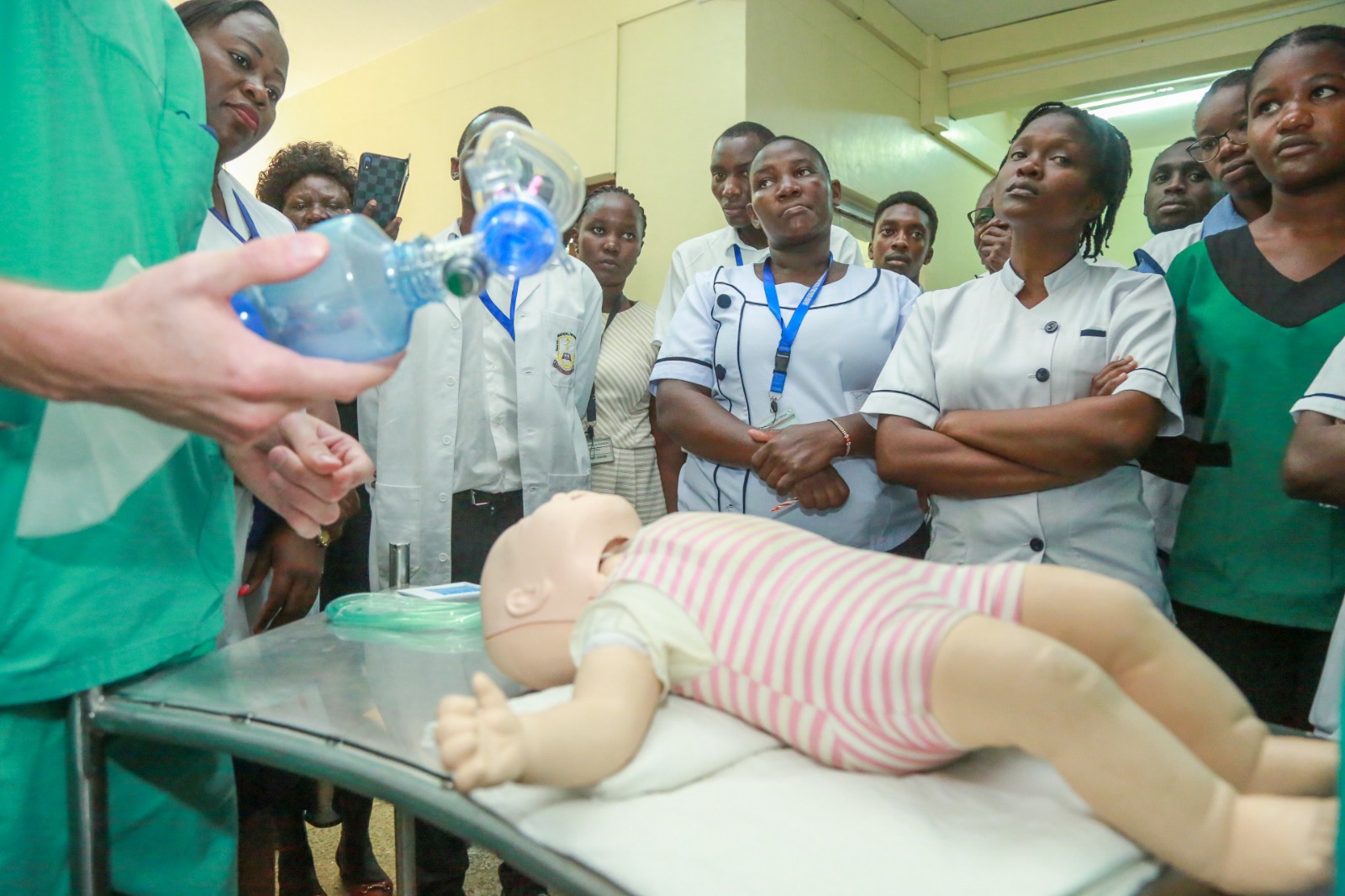
If 60 seconds pass and the baby is still not breathing, or the heart rate is below 100 beats per minute, the next step is positive pressure ventilation using a bag and mask. Staff squeeze a rubber bag connected to a mask placed over the baby’s nose and mouth. The squeeze pushes air directly into the lungs. Around 5 percent of all newborns require this step, according to the guidelines. If the heart rate climbs in response, ventilation is working. If after approximately 30 seconds the heart rate is still below 60 beats per minute, chest compressions begin. That stage is reached in roughly 1 to 3 births per 1,000, according to published medical data.
Why the Mask Seal Is the Critical Variable
Bag and mask ventilation has one mechanical dependency: the mask must seal completely against the baby’s face. Any gap around the rim means air escapes before it reaches the lungs.
A 2014 study from Leiden University Medical Center in the Netherlands tested this directly. Medical staff from neonatal units were asked to perform mask ventilation on a training manikin representing a term newborn. Before any coaching, inexperienced participants produced a mask leak of 51 percent on their first attempt. After two minutes of focused practice, that figure dropped to 11 percent.
A Cochrane review on neonatal resuscitation identifies effective delivery of ventilation as the single most important step in managing a newborn that is not breathing at birth.
Training Cuts Neonatal Deaths
A study conducted in Zambia and published in the journal Pediatrics tracked what happened after midwives in low-risk urban health clinics were trained in the WHO Essential Newborn Care program and the AAP Neonatal Resuscitation Program. Data was collected across 71,689 births. Seven-day neonatal mortality dropped from 11.5 deaths per 1,000 live births to 6.8 deaths per 1,000 live births following the training. The study was supported by the National Institutes of Health.
The WHO identifies birth asphyxia, defined as failure to establish breathing at birth, as a leading cause of early neonatal death. It accounts for an estimated 900,000 infant deaths each year globally, according to WHO figures.
The Protocol Is Deliberate About Pace
The AHA and AAP guidelines do not instruct staff to rush. Each step has an allocated window. The initial stimulation phase is given up to 60 seconds before escalation. Once bag and mask ventilation begins, staff check the heart rate response after roughly 30 seconds before deciding whether to proceed further.
The Leiden University study demonstrated why pace matters mechanically. Mask leak in that study was directly linked to technique, and technique deteriorated under conditions that disrupted fine motor control. Two minutes of structured practice was enough to reduce leak significantly, from 51 percent down to 11 percent, suggesting the skill is learnable but depends on a stable, deliberate grip.
The bag itself provides no feedback. If the mask is not sealed, the person squeezing it has no way to tell the air is not reaching the baby’s lungs. Monitoring devices that measure delivered volume and mask leak exist and are referenced in AHA and AAP guidelines, but they are not universally available in lower-resource settings.
The Zambia study data illustrates what access to training produces at scale. A 41 percent reduction in seven-day neonatal mortality, across tens of thousands of births, resulted from midwives learning to follow an established sequence correctly. No new drugs or equipment were introduced. The intervention was training alone.