


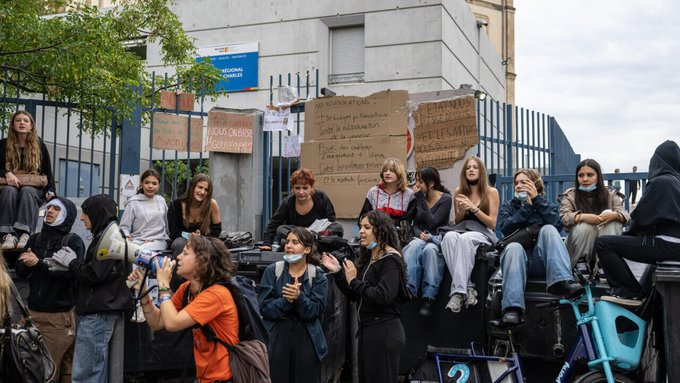
Around 400 schools across France were shut on Friday as student protests over teacher shortages and run-down buildings escalated into clashes.
What began as a series of student blockades outside a handful of high schools near Paris has grown into one of France’s biggest education protests in years. On Friday, around 400 schools and educational establishments across the country stayed closed as the demonstrations spread from city to city and turned violent in several places.
“There are a little over 400 schools and other educational establishments that I know of that will be closed,” French Education Minister Edouard Geffray said in an interview with broadcaster France 2 late on Thursday. France has about 3,700 high schools in total.
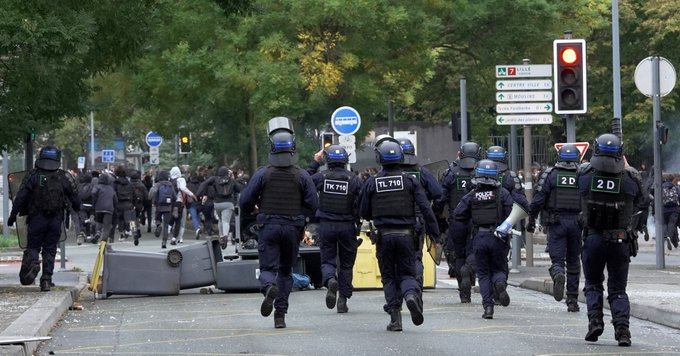
The protests started in the Paris region last week, with students demanding more teachers, smaller classes and better school buildings. Since then, the movement has spread nationwide, with fires set outside schools and confrontations with police reported in cities including Marseille, Lyon, Toulouse and Nantes.
The government has acknowledged the problems students have raised, while condemning the violence that has broken out during some of the protests.
Students have pointed to teacher shortages, overcrowded classrooms, crumbling facilities, timetable problems and classrooms that became unbearably hot during this year’s heatwaves.
Many protesters are calling for substitute teachers to be hired, for more resources to be put into schools and for better learning conditions overall. The blockades have usually involved students gathering outside school gates and preventing entry, a long-standing form of protest among French high school students.
The government has said that the difficulties facing high schools are real and should be addressed, even as it criticized the violence.
The demonstrations have become more intense over the past week. Police arrested 625 people, most of them young, on Wednesday alone, Interior Minister Laurent Nunez said, adding that 83 police and gendarmerie officers were injured that day.
By Thursday morning, police had counted about 340 demonstrations outside high schools, and more than 160 schools had closed. University students also joined in, blocking access to about 30 campuses, according to a student union. Some cities suspended public transport services as the protests continued.
Geffray said that 170 students and 65 education staff had been injured since the protests began, and that more than 100 high schools had suffered severe damage. Students, for their part, have accused police of heavy-handed tactics, including the regular use of tear gas to disperse crowds.
French Government Response to the Student Protests
Prime Minister Sebastien Lecornu held a crisis meeting on Thursday and asked ministers to postpone travel around the country. A readout of the meeting, provided by a source close to Lecornu, described the movement as having reached a tipping point, shifting from school blockades to urban violence.
The same source said intelligence agencies told the meeting that the protests had been initiated by politicians from the hard left, including members of the La France Insoumise party, Reuters reported. LFI lawmaker Louis Boyard rejected the claim. “LFI has always advocated non-violent demonstrations,” he told French broadcasters.
Geffray said the student movement was “being held hostage by ultra-violent fringe groups” and urged parents to tell their children not to take part in the protests. He also called on schools to hold classes remotely if protesters were blocking their buildings.
Justice Minister Gérald Darmanin said he had asked prosecutors to hold parents liable for damage caused by their children during the protests, including paying for repairs.
With hundreds of schools still closed and no sign yet of the protests easing, attention is now on whether talks between the government and students can address their concerns and bring classes back to normal.


