

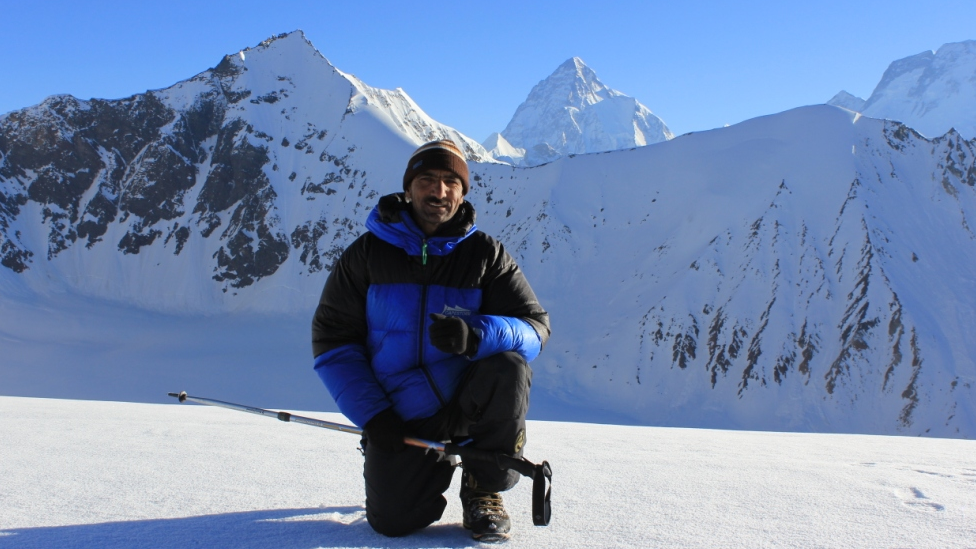
Muhammad Ali Sadpara was more than a mountaineer — he was Pakistan’s window to the world’s highest peaks. Born on February 2, 1976, in the small village of Sadpara in Skardu, he started his career as a porter, guiding Western climbers through the Baltistan region before becoming a legend in his own right.
His achievements were staggering for a self-taught climber from a small mountain village. He became the only Pakistani to have climbed eight of the world’s 14 highest peaks, a record that placed him among the country’s most decorated athletes in any discipline. He was part of the team, alongside Italian alpinist Simone Moro and Spanish alpinist Alex Txikon, that achieved the first winter ascent of Nanga Parbat in 2016 — widely regarded as one of the greatest feats in modern winter mountaineering. He also made the first-ever winter ascent of Nanga Parbat, the world’s ninth-highest peak, and was the only climber in the world to have summited it four times, including first winter and autumn ascents. He was notable for climbing eight-thousanders throughout his career, four of which he ascended in a single calendar year.
On February 5, 2021, that storied career came to a tragic end. Sadpara vanished while attempting a winter summit of K2 alongside Iceland’s John Snorri and Chile’s Juan Pablo Mohr. The three were last seen near the Bottleneck, and after an exhaustive search involving Pakistan’s army, satellite imagery, and international rescue teams, they were officially declared dead on February 18, 2021. His son Sajid, who had turned back earlier after his oxygen regulator failed, would later lead the effort to recover his father’s body, retrieving it from the Bottleneck months later in July 2021.
National Remembrance
The scale of grief that followed was extraordinary. Government officials, international diplomats, and fellow climbers from across the globe shared moving tributes celebrating a man who had, for years, carried Pakistan’s flag to the world’s most unforgiving summits. Twitter and other platforms filled with condolences, with many hailing him as a “living legend” whose loss was felt as a national tragedy.
Cultural and Artistic Tributes
Sadpara’s story moved beyond sports pages and into Pakistan’s cultural consciousness. Singer Ali Zafar composed a musical tribute in his honor during the search for the missing climbers, turning public hope and grief into song. Artists, filmmakers, and writers across the country continued to reference his story as a symbol of resilience and sacrifice in the years that followed.
Memorials and Legacy Projects
Physical tributes to Sadpara sprang up across Pakistan. The Khyber Pakhtunkhwa government inaugurated the country’s first dedicated climbing wall in his honor at Qayyum Stadium in Peshawar — a 52-foot structure spanning speed, technical, and vertical climbing categories, built under the Prime Minister’s 1000 Playground Facilities project. The “Sadpara Wall” was designed explicitly to inspire local youth to take up climbing, ensuring his passion for the mountains would live on in a new generation. In Gilgit, a monument depicting Sadpara in full climbing gear was later installed at a roundabout renamed Sadpara Chowk in his honor.
Philanthropic efforts also carried his legacy into his native community. The U.S.-based NGO Paani Project built a well in his honor, addressing the kind of clean water needs that mattered deeply to the communities of Baltistan, while broader school infrastructure and community development initiatives in the Sadpara valley have continued the work he cared about — improving the lives of the mountain communities that first shaped him.
A Legacy Carried Forward
Perhaps the most powerful tribute to Muhammad Ali Sadpara is his son. Sajid Ali Sadpara has continued his father’s unfinished mission, summiting eight-thousanders without supplemental oxygen and openly dedicating each climb to his father’s memory. In leading a 2023 expedition to clean K2 — the very mountain that took his father’s life — Sajid has ensured the Sadpara name remains etched not just in stone and murals, but in the ongoing story of Pakistani mountaineering itself.


