
What the shift toward solar, storage and hydropower would change about cost, reliability and fuel dependence.
Pakistan currently draws around 55 percent of its electricity from clean sources, counting hydropower, nuclear, wind and solar together. The federal government has set a target of raising that share to 90 percent by 2035.
The number itself says little about daily life. What matters is what changes underneath it: where the fuel comes from, when power is available, and what determines the price on a monthly bill.
Thermal generation in Pakistan runs largely on imported fuel, including regasified liquefied natural gas known as RLNG. That creates two separate vulnerabilities.
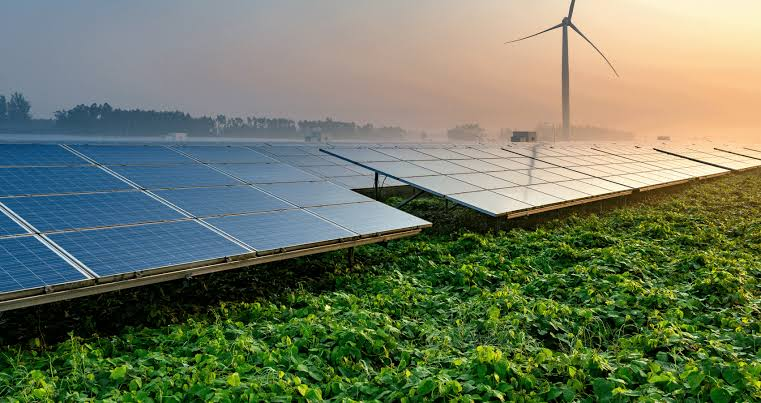
The first is price. When international fuel markets move, generation costs move with them, and those costs pass through to consumers regardless of local conditions. A grid powered mostly by sun, wind and water has no fuel bill attached to it. Once a solar panel or a wind turbine is paid for, the input is free, so the cost of electricity becomes largely a question of financing and maintenance rather than commodity markets.
The second is supply. Imported fuel has to arrive on schedule. Disruptions in RLNG supply earlier this year caused load shedding in Pakistan even on days when solar generation during daylight hours was sufficient to meet demand. Domestic generation removes that link between a shipping delay and a blackout.
This is the reasoning behind the term energy sovereignty, which appears frequently in the government’s framing of the target. It refers to a system where the electricity supply is not contingent on foreign fuel purchases.
Battery Storage and the Evening Peak Problem
Solar power has a timing problem that is easy to state and expensive to fix. Panels generate the most electricity in the middle of the day. Households consume the most in the evening, when people return home and switch on lights, fans, air conditioning and appliances.
Pakistan already generates substantial solar power during the day. Rooftop solar under the net metering system grew from about 190 megawatts in the 2020 financial year to roughly 6,978 megawatts by June 2026, according to figures presented by the Power Division’s energy adviser. Federal Minister for Power Awais Leghari has said total distributed solar capacity installed on rooftops is far higher, at nearly 38 gigawatts, much of it built outside the registered net metering framework.
None of that capacity produces anything after sunset. Battery energy storage systems solve this by absorbing surplus daytime generation and releasing it during evening peak hours. The benefit is direct: fewer hours of load shedding, less reliance on expensive standby thermal plants that run only at peak times, and a grid that can absorb more solar without becoming unstable.
Storage is also what makes the 90 percent figure achievable rather than notional. A grid can only take so much intermittent generation before reliability suffers. Adding storage raises that ceiling, which is why the government has made battery systems a requirement for new solar and wind projects and is promoting local battery assembly and manufacturing rather than continued imports.
Time-of-Use Tariffs and What They Mean for Bills
The third piece is pricing. Under a flat tariff, a unit of electricity costs the same at two in the afternoon as it does at nine at night, even though the cost of producing it differs sharply between those hours.
A time-of-use tariff prices electricity according to what it actually costs to generate at that hour. Power drawn during high-solar daylight hours becomes cheaper, and power drawn during evening peak becomes more expensive. Households and businesses that can shift heavy usage, running water pumps, washing machines or industrial processes during the day, pay less for the same consumption.
The Pakistani government has been in discussions with the International Monetary Fund for several months about introducing such a system, and Leghari has said restrictions under the current IMF program are preventing it. No timeline has been announced.
Time-of-use pricing also strengthens the case for batteries. When there is a measurable price gap between daytime and evening electricity, storing cheap power to use during expensive hours produces a calculable saving rather than only a reliability benefit.
Taken together, the three elements describe a grid that costs less to run, breaks down less often in the evening, and does not transmit foreign fuel prices onto domestic bills. The government’s stated route to that outcome runs through storage capacity, transmission investment, domestic battery manufacturing and tariff reform, with 2035 as the target date.