

As the clock approached midnight on August 14, 1947, millions across the Indian subcontinent waited anxiously for history to unfold. Pakistan was about to emerge as an independent state, marking the end of nearly two centuries of British colonial rule. Yet, unlike today, there was no television, internet or social media to deliver the news. For most people, the birth of Pakistan was not witnessed on a screen but heard through the crackling sound of a radio, making broadcasting one of the defining elements of the country’s first moments.
Karachi, the capital of the newly created Dominion of Pakistan, was at the centre of the historic celebrations. Government officials, political leaders and foreign dignitaries gathered for the transfer of power, while ordinary citizens filled the streets in anticipation. Earlier that day, Muhammad Ali Jinnah had taken the oath as Pakistan’s first Governor-General, and the Constituent Assembly had begun its work of laying the foundations of the new state.
As midnight arrived, radio became the voice of the nation. Pakistan inherited part of the broadcasting network previously operated by All India Radio, allowing transmissions to begin almost immediately after independence. Radio stations in Karachi, Lahore, Peshawar and Dhaka started broadcasting under the banner of the newly established Radio Pakistan, connecting the country’s geographically separated eastern and western wings.
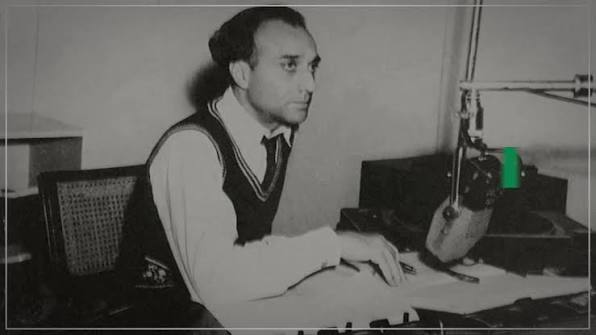
One of the most memorable moments came with the first official announcement of independence. Veteran broadcaster Zulfiqar Ali Bukhari delivered the inaugural announcement in English, welcoming listeners to the Dominion of Pakistan. It was followed by an Urdu announcement by Mustafa Ali Hamdani, whose opening words, “Assalam-o-Alaikum. Yeh Radio Pakistan hai,” became part of Pakistan’s broadcasting history. For countless listeners gathered around radio sets in homes, marketplaces and refugee camps, these words marked the beginning of a new chapter.
Radio also served as the primary medium through which Quaid-e-Azam Muhammad Ali Jinnah’s messages reached the people. In his speeches during the early days of independence, Jinnah acknowledged the enormous challenges facing the new country, including the rehabilitation of millions of refugees, the establishment of government institutions and the maintenance of law and order. He urged citizens to work with unity, faith and discipline, principles that would become closely associated with Pakistan’s national identity.
The importance of these broadcasts cannot be overstated. The Partition of British India had triggered one of the largest migrations in modern history, with millions crossing newly drawn borders amid uncertainty and violence. In such circumstances, radio became more than a source of information; it was a symbol of stability and reassurance. It connected families, conveyed official announcements and offered hope to people beginning new lives in an unfamiliar homeland.
Nearly eight decades later, Pakistan’s first independence broadcast remains one of the country’s most significant historical moments. It reminds us that nations are built not only through political agreements and constitutional documents but also through the voices that inspire, inform and unite their people. On that historic August night in 1947, the sound of a radio carried more than a news bulletin—it carried the announcement of a nation’s birth, echoing across cities, villages and refugee camps, and into the pages of history.