

When people think of Pakistan, they often picture towering mountains, ancient civilizations, or vibrant culture. What rarely comes to mind is this: millions of people around the world use something made in Pakistan every single day, often without ever realizing it.
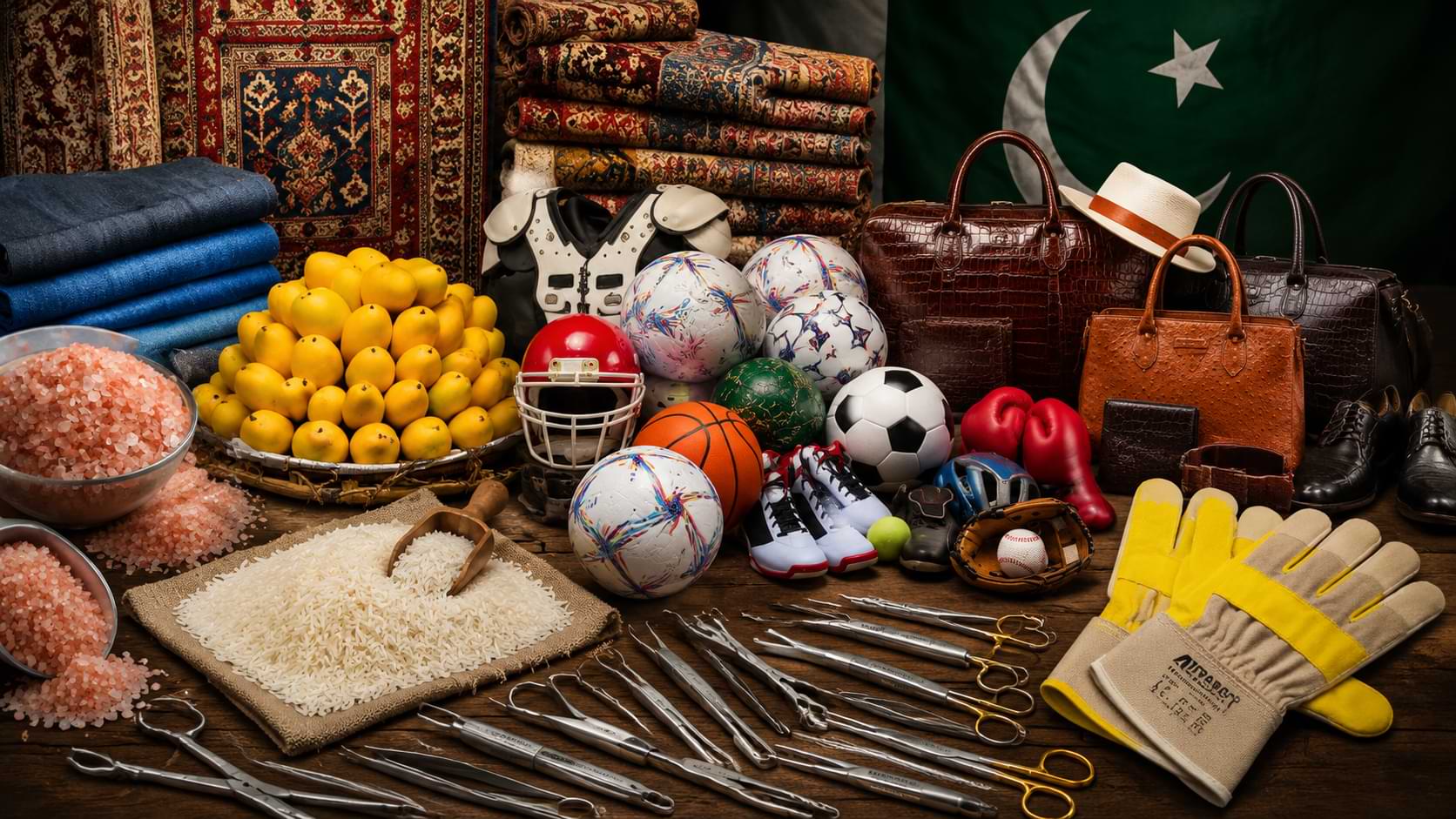
From World Cup footballs to the salt in gourmet kitchens, Pakistan quietly powers industries that touch billions of lives. Here are ten everyday things with a surprising Pakistani connection.
1. Footballs
The city of Sialkot has earned its reputation as one of the world’s football-making capitals. Sialkot produces around 70% of the world’s hand-sewn footballs, with annual output exceeding 40 million units, supplying major brands like Adidas, Nike, and Puma. Between July 2025 and April 2026 alone, Pakistan exported nearly 48 million footballs, generating $221.8 million in revenue.
2. Surgical Instruments
Every day, surgeons across Europe, North America, the Middle East, and Asia operate with instruments manufactured in Sialkot. Pakistan exports hand-held surgical, dental, and veterinary instruments to over 50 countries, with the United States as the leading destination, followed closely by Germany and the United Kingdom.
3. Pink Himalayan Salt
That pink salt on supermarket shelves almost certainly comes from Pakistan’s Khewra Salt Mine. Pakistan is the world’s largest Himalayan pink salt exporter, supplying approximately 350,000 metric tons annually and generating USD 120 million in export value. Malaysia and the United States are the two largest importing markets, with the UAE close behind.
4. Denim and Textiles
Pakistan ranks among the world’s largest textile exporters. Pakistan’s textile sector reached total exports of $17.88 billion in fiscal year 2024-25, a 7.39% rise from the previous year, with the sector contributing over half of the country’s entire export earnings. The United States remains its single largest textile buyer, alongside major European retailers.
5. Sports Equipment
Sialkot’s expertise goes far beyond footballs. Pakistan ranked 15th globally in sports goods exports in 2024, with an estimated annual export value of about $444 million, covering cricket bats, hockey sticks, boxing gloves, and other athletic gear made in the same industrial cluster.
6. Leather Goods
Leather jackets, wallets, and motorcycle gear made in Pakistan reach markets across Europe and North America. Pakistan’s leather industry is the country’s second-largest export sector after textiles, with leather garments and finished goods forming the bulk of shipments to buyers in Italy, the U.S., and the Gulf.
7. Basmati Rice
Pakistani Basmati is a staple on shelves in over a hundred countries. For the year ended June 30, 2024, Pakistan’s rice exports reached roughly 6.01 million metric tons worth around $3.93 billion, and rice was exported to 84 countries including Europe, Central Asia, the Gulf States, Far East Asia, and Africa.
8. Mangoes
Every summer, Pakistani mangoes — including Chaunsa, Sindhri, and Anwar Ratol — head to markets abroad. Pakistan ranks as the world’s 4th largest mango exporter, shipping to over 50 countries, and in 2026 secured its first-ever direct shipment approval into the European Union, opening a major new market.
9. Protective Gloves
Mechanics, industrial workers, and goalkeepers around the world rely on gloves made in Sialkot. In the first half of 2025, Pakistan exported 22.67 million pairs of leather gloves worth $64.12 million to 76 countries, with North America accounting for nearly 45% of that export value and buyers including major U.S. and Canadian safety-wear brands.
10. Handcrafted Carpets and Rugs
Pakistani hand-knotted rugs bring generations-old craftsmanship into homes and hotels worldwide. The United States has historically been a major market for Pakistani carpets, importing US$57.8 million worth of knotted carpets from Pakistan in 2023, with Germany, Italy, the UK, and Turkey rounding out the other key destinations.
Pakistan’s Quiet Global Footprint
Pakistan rarely gets credit for the products it helps bring to the world, yet its industries are woven into daily life on nearly every continent — a football on a World Cup pitch, a surgical instrument in an operating room, a pinch of pink salt on a dinner table. Sometimes a country’s influence isn’t measured in headlines, but in the everyday things the world simply couldn’t do without.