

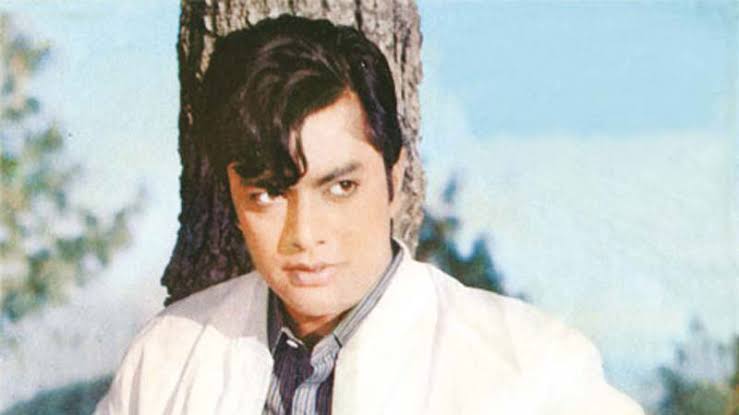
Waheed Murad has been dead for more than four decades, yet his name still doesn’t sound out of place in conversation. You might hear people ask, ‘Who is Habib,’ ‘Who was Darpan,’ or even ‘Who was Salim Raza,’ but never ‘Who was Waheed Murad,’ because he ensured his legacy would endure forever through his work, his style, and an aura that transcended generations.
Born on October 2, 1938, Waheed Murad was only 45 when he died suddenly of a heart attack in Karachi. More years have passed since his death than he spent in this world, yet somehow his face never quite left us.
The hair is still recognizable. The smile is still familiar. The jackets, the songs, the heartbreak, the romantic glances—all of it endures in a country whose film industry has changed almost beyond recognition. On what would have been his 88th birthday, the more pressing question is why we’re still obsessed with Waheed Murad.
Waheed Murad lives on because he wasn’t merely an actor who happened to be exceptionally handsome. He was a producer, writer, director, and actor who grasped the machinery of cinema unusually early. He helped create films, shape stories, and build a screen persona that would eventually outshine the man himself.
Before the fame, there was the filmmaker.
After completing his master’s degree in English literature at the University of Karachi, Waheed Murad entered the film industry through his father, Nisar Murad. His father was one of the country’s leading film distributors, and his family’s Film Arts banner was an established entity. As a result, Waheed Murad began as a producer in the early 1960s before becoming the leading man audiences would come to worship.
That distinction matters. Before audiences fell in love with Waheed Murad the actor, he was already interested in making movies. He could write scripts and wrote four during his career; he invested in scripts he believed in, produced 11 films between the 1960s and 1980s, and even directed one film, now considered a cult classic.
Had he not taken actress Zeba’s advice to take acting seriously, he might have become one of the country’s biggest producers. However, once he went in front of the camera, neither the camera nor his fans left him, leading to 124 films, including two released after his death in 1983. But numbers don’t explain a phenomenon. The face does.
He made vulnerability look glamorous.
Before Waheed Murad, film heroes resonated with middle-aged audiences because, in the newly independent country, audiences wanted them to do the right thing and give them hope. They always got the girl because of their good deeds, and dancing was considered beneath their stature. Dancing was mostly left to the comic actors.
However, everything changed in the 1960s when new blood was injected into the thriving film industry, and younger actors had the chance to connect with an audience that grew up with them. Waheed Murad was the first to tap that market, which was surprising given that he didn’t look like his predecessors. Instead of donning a two- or three-piece suit, he wore what Hollywood stars wore; he used his good looks to his advantage rather than banking on good deeds, and he could be romantic, vulnerable, stylish, and playful at the same time.
He could look like the man who had just stepped out of a fashion magazine and, moments later, behave like someone genuinely terrified of losing the woman he loved. That was his trick; he made vulnerability look glamorous.
Perhaps that is why the image has endured. Consider the romantic hero in Pakistani popular culture today. He is often expected to be physically imposing, emotionally guarded, impossibly confident, and able to rescue everyone around him.
Waheed Murad offered something else. He could perform songs like no one before him, make a fool of himself, be rejected, and look ridiculous in love. And he could still be the coolest man in the room.
Then there was Ahmed Rushdi
Waheed Murad’s partnership with singer Ahmed Rushdi was crucial to that image. Although Rushdi was a few years senior to the new entrant in the industry and had established himself as the country’s premier playback singer, the two became part of the era’s soundscape, with Rushdi giving voice to many of the emotions Waheed Murad’s characters were required to express.
Songs such as Ko Ko Korina and Akelay Na Jana remain closely associated with Waheed Murad’s screen image decades later. The collaboration of Waheed Murad, Ahmed Rushdi, Zeba, Pervez Malik, Sohail Rana, and Masroor Anwar produced a particular kind of Pakistani popular cinema—romantic, glamorous, and unapologetically larger than life.
It wasn’t just a hero on screen; it was an entire fantasy. Ahmed Rushdi was Waheed Murad’s voice from his first film as a lead actor, Heera Aur Pathar, to his final outing, Hero. Their deaths in the same year, despite being in their 40s, sadly prove that they were an inseparable team.
He was a trendsetter in many ways.
Today, actors routinely move into producing. Stars attach to projects, develop scripts, and try to control their own images. Waheed Murad did all that decades earlier.
Not only did he write and produce Pakistan’s first Platinum Jubilee film, Armaan, in 1966, but he also directed Ishaara in 1969, proving that the man who seemed made for the close-up was interested in what happened behind the camera, too.
His films also looked beyond Pakistan’s borders, and his career spanned Urdu and regional cinema, including a handful of Punjabi films and one Pashto film. Even in his 40s, he could easily play a recent college or university graduate, and his presence in Kala Dhanda Goray Loag proves that point.
The man behind the myth
And yet, ironically, we remember one image most—the romantic hero. The irony is that the real Waheed Murad was considerably more interesting than the mythology surrounding him.
His career was not an uninterrupted parade of hits. His final years were marked by personal and professional difficulties. He suffered serious health problems and died as the Pakistani film industry was experiencing a dramatic decline. His death transformed him from a star into something else: a memory.
The reaction to his death was extraordinary. His films returned to theaters, magazines and newspapers devoted special attention to him, and his songs continued to circulate among fans.
That part of Waheed Murad’s story fascinates me most. Pakistan didn’t simply miss him; it mourned the idea of him. By then, Waheed Murad represented more than himself. He embodied a version of Pakistani popular culture that was disappearing.
The image that refuses to die.
The movie theaters were changing. The industry was changing. The kinds of heroes audiences wanted were changing. And the romantic fantasy Waheed Murad had embodied was slowly fading into the past. Yet it never completely disappeared.
Every few years, someone rediscovers him. A song resurfaces. A photograph goes viral. Someone watches Armaan for the first time or discovers Ko Ko Korina or Akele Na Jana from the same film. Someone posts an old clip, and suddenly a new generation discovers that the Pakistani film industry once produced a star who could command the screen without shouting, flexing, or threatening anyone.
That is the strange thing about Waheed Murad. He belongs to the past, but he doesn’t feel entirely trapped there. Perhaps that is because his appeal was never just about fashion or beauty. Those things fade. Faces change. Hairstyles become embarrassing. Clothes become dated. What survives is the fantasy.
Thanks to his son Adil Murad, who had a brief acting career and a longer one as a TV producer, the iconic actor remains alive in Pakistanis’ hearts and minds. Most of his films are now digitized and available online, making YouTube the best way to honor his legacy.
More than 40 years after his death, we still recognize his face. We still remember his songs. We still talk about his hair. We still borrow his image to describe what a Pakistani romantic hero once looked like.
Perhaps the real reason we are still obsessed with Waheed Murad is very simple: He didn’t just play the hero. For an entire generation, he taught Pakistan what a movie star should be.


