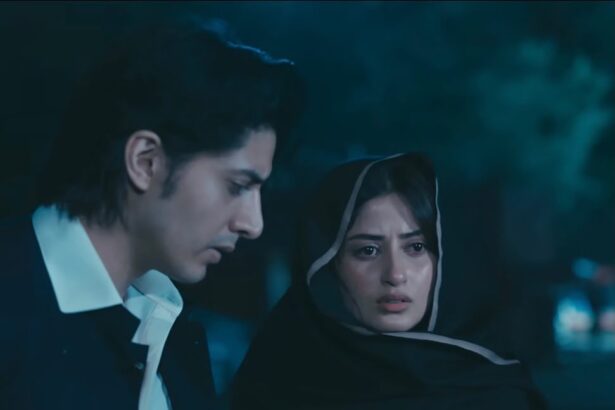


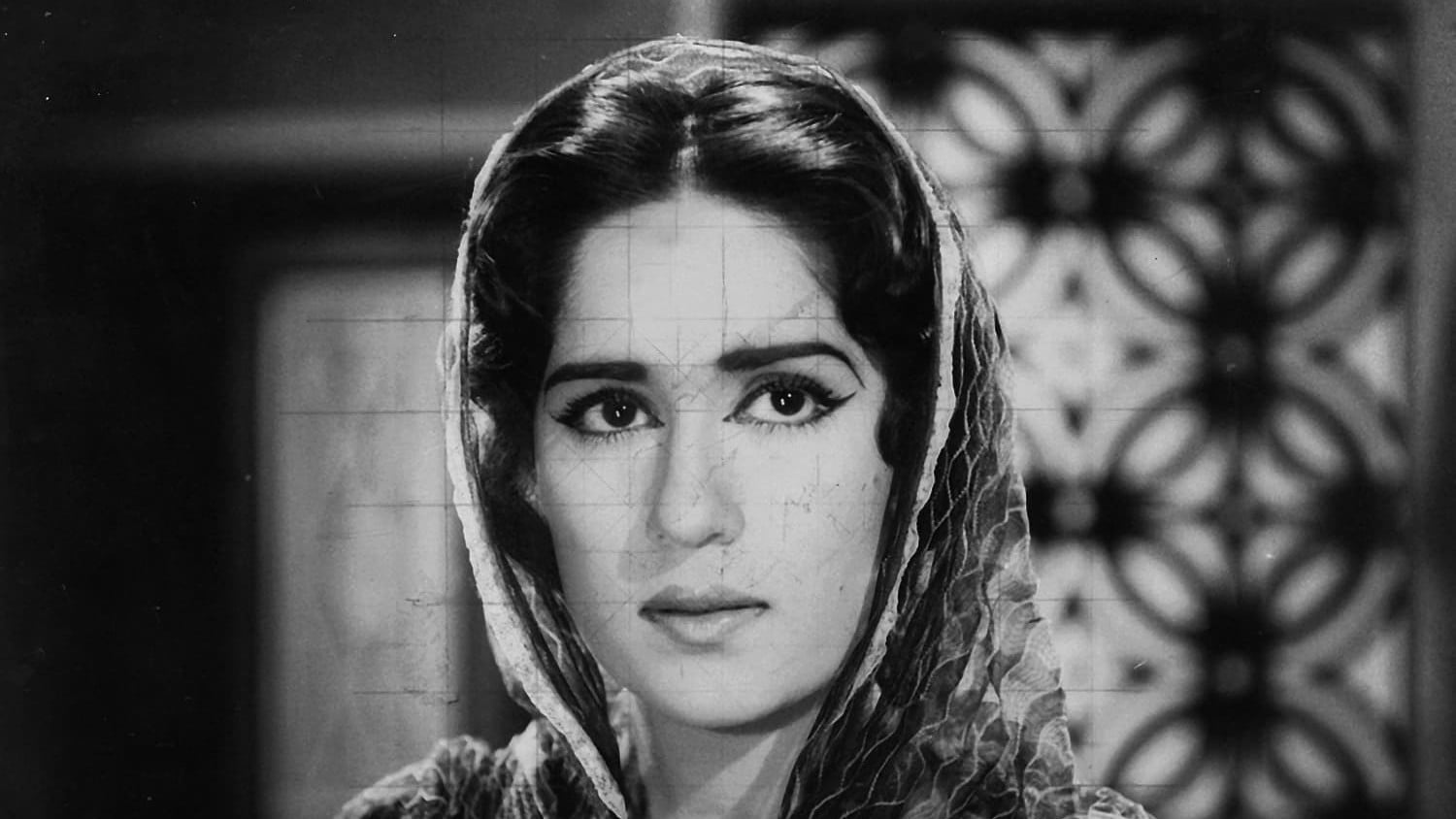
When Kafeel-famed Pakistani actress Sanam Saeed paid tribute to Shamim Ara at the Cannes Film Festival, it reminded many younger viewers of a towering figure from Pakistan’s cinematic past. Revered as one of the country’s most influential filmmakers, Shamim Ara was not only a successful actress—she was also a producer, director, and trendsetter who redefined women’s roles in Pakistan’s film industry.
Shamim Ara was an integral part of Pakistani cinema from the 1950s until the late 1990s. Even though she wasn’t very active in the 2000s, her work kept her alive in the hearts and minds of those who grew up watching her films.
Would you believe that in the early part of her career, Shamim Ara was so famous that young fans would have done anything just to catch a glimpse of their favorite actress? Call it her fashion sense, her on-screen persona, or the way she elegantly carried herself with the charisma of a film heroine. Everything made her desirable to beating hearts.
After bidding farewell to acting in the early 1980s, Shamim Ara became a full-time director and delivered hit films even as her contemporaries’ films were failing at the box office. It was Shamim Ara who helped Mohsin Khan gain a place in Lollywood after his stint in Bollywood; she was also behind the awkwardly titled Munda Bigra Jaye, the film that heralded the mini-revival of the 90s.
Her passing in London on August 5, 2016, marked the end of an era, yet her influence continues to resonate with generations of Pakistani cinema lovers.
From Putli Bai to Shamim Ara
Born Putli Bai in 1938, the future star entered showbiz as a teenager and was given the screen name Shamim Ara—a name that would later become synonymous with grace, glamour, and talent. With expressive eyes, a memorable smile, and remarkable screen presence, she quickly rose through the ranks to become one of the most admired actresses of her time.
At first, she played minor roles opposite Noor Jehan and Nayyar Sultana in Anarkali and Saheli, but later carved out a separate identity for herself with films like Qaidi, Aag Ka Dariya, Devdas, Doraha, Humraaz, Naila, Lakhon Mein Aik, and Salgira, all released in the 1960s.
Breaking Barriers in Film Production
In the 1960s, film production in Pakistan was overwhelmingly dominated by men. Shamim Ara challenged that status quo by producing Saiqa in 1968, based on a novel by celebrated writer Razia Butt. The film became a commercial success and won multiple awards, proving that women could excel not only in front of the camera but also behind it.
Even though there were film producers like Madam Noor Jehan before her, her achievement as an outsider paved the way for future generations of women filmmakers in Pakistan.
She was also the heroine of the first-ever color film made in West Pakistan (present-day Pakistan), and the songs filmed with her were among the many reasons the film helped pave the way for color films in the country.
The Woman Behind Mustafa Qureshi’s Film Debut
Pakistani cinema may never have seen the iconic villain Noori Nath if fate — and Shamim Ara — had not intervened. Yes, she was the woman behind Mustafa Qureshi’s film debut in Lakhon Mein Aik, which inspired the 90s Bollywood film Henna.
Legendary actor Mustafa Qureshi was working at Radio Pakistan when he happened to visit a film set where Shamim Ara was shooting. According to the actor, he wasn’t interested in the shooting but in catching a glimpse of his favorite actress. During that moment, film director Raza Mir noticed the young man in the crowd, and the rest is history. Qureshi eventually accepted the role, playing Shamim Ara’s husband in the film, thus fulfilling his wish and launching a career in films.
Reinventing Herself Through the Decades
Although the 1970s saw many young actresses make their mark in films, limiting opportunities for experienced campaigners, Shamim Ara didn’t lose hope. First, she produced films like Suhag, where, for the first time, actor Nadeem played a villain opposite her; then she cast the legendary Zia Mohyeddin in only his second Pakistani film appearance as her husband, giving the audience something they had never seen before.
She also started taking on character roles in the later part of the 1970s, playing mother to Waheed Murad and Ghulam Mohiuddin in Jeo Aur Jeenay Do. It must have been a difficult decision for her, considering she played Waheed Murad’s heroine in Doraha, Dil Mera Dharkan Teri, Bewafa, Salgira, and Khwab Aur Zindagi. However, she excelled in that domain as well and continued to play motherly roles until the 1980s.
Unlike her contemporaries, who were happy playing character roles, Shamim Ara decided to use her experience and turn to direction in 1976. When her first film, Jeo Aur Jeenay Do, flopped, she didn’t lose hope and continued directing films, some of which went on to become box-office successes. Be it Playboy and Miss Hong Kong in the 1970s, Miss Colombo and Miss Singapore in the 1980s, or the hugely popular Haathi Mere Saathi, Munda Bigra Jaye, Love 95, and Miss Istanbul in the 1990s, there was no stopping Shamim Ara when she was in full flow.
A Pioneer of Female-Led Action Films
Long before “girl power” became a mainstream phrase, Shamim Ara was making films that put women at the center of action-oriented roles. Movies such as Miss Hong Kong, Miss Colombo, Miss Singapore, and Miss Bangkok introduced audiences to fearless female protagonists.
Many of these films starred Babra Sharif as women who could outsmart and overpower villains with confidence and style. Her later productions included Lady Commando and Lady Smuggler, which were localized versions of Hollywood films, while Miss Istanbul reportedly drew inspiration from the Hollywood classic Pretty Woman.
What was common between all these films was their soundtracks, and nearly all the songs from Shamim Ara’s productions are still popular wherever Pakistanis reside around the world.
Bringing Nusrat Fateh Ali Khan to Pakistani Film Soundtracks
And then there was her final film, Pal Do Pal, which is ranked among her lesser-known films. Through this film, she persuaded the legendary Ustad Nusrat Fateh Ali Khan to compose music for a Pakistani film, one of the last things he did before his untimely death in 1997.
Released in 1999, two years after the maestro’s death, the film featured Moammer Rana and Resham in the lead roles, with Nusrat Fateh Ali Khan, Humera Channa, and Tehseen Javed singing the songs.
The Legacy of a Legend
Throughout her career, Shamim Ara earned numerous accolades, including multiple Nigar Awards for acting, production, and direction. Yet her greatest achievement may have been the doors she opened for women in Pakistani cinema.
She proved that actresses could evolve into producers, directors, and creative leaders at a time when such transitions were rare. Decades later, her influence can still be seen in the confidence and ambition of women working in Pakistan’s entertainment industry.
Her transition inspired many actresses—including Sangeeta, Reema Khan, and Noor Bukhari—to step behind the camera as directors. Had she not entered the commercial film industry as a director, many of today’s directors might still be finding their footing in a male-dominated industry.
For younger audiences discovering her story today, Shamim Ara remains more than just a film star—she was a pioneer who helped shape the identity of Pakistani cinema itself.