Why Bullah is a step up for Shaan Shahid, but a step down for cinema
Shaan Shahid brings his signature action star power to Bullah, a Pakistani Eid release packed with high-stakes drama and big-screen thrills.
Mar 23, 2026
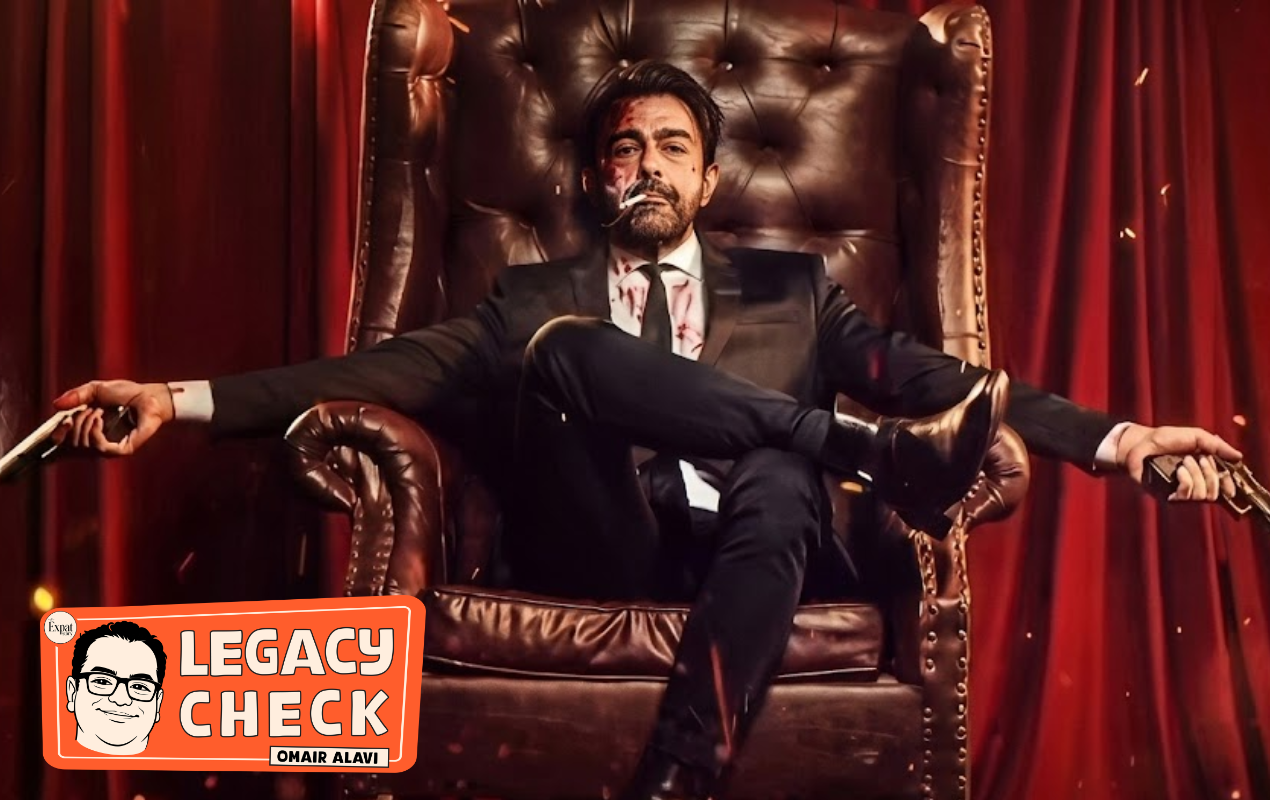
Bullah could have been much better. It featured Shaan Shahid in a tailor-made role. It had action sequences that only he could have pulled off with conviction. It had an Eid release — a time when even the weakest films manage to find an audience and generate business. Yet, despite ticking all the right boxes, the film doesn’t do justice to the lead actor’s charisma or his legacy.
The biggest problem is that it refuses to break away from the same tired Lollywood mold that keeps dragging the industry back into the wilderness. This is not the first time a film with potential has fallen victim to outdated storytelling, but it is certainly one of the more frustrating examples because everything needed for success was right there — except the will to evolve.
Step up for Shaan
No one does action better than Shaan Shahid. That is not an exaggeration; it is a fact established over decades. He looks completely at ease in action sequences, whether he is walking into danger or confronting it head-on. There is a certain rhythm to his movements, a confidence that cannot be taught. Even when the camerawork fails him — and it often does, with excessive close-ups ruining the scale of the action — he manages to rise above the technical shortcomings.
There are moments when the film almost wins you over. The two times I nearly clapped were when Shaan’s character entered the frame unexpectedly — first in the courtroom, and later when goons attempted to set a car on fire with a girl trapped inside. Those are the moments where the star power kicks in, where you are reminded why Shaan still matters.
Since he isn’t directing this time, he appears fully invested as an actor, and that works in the film’s favor. There is focus, restraint, and a visible effort to let the character take center stage. However, one can’t help but feel that the director Shoaib Khan should have listened to his ideas more. Shaan is not just an actor; he is a filmmaker with experience, instincts, and understanding of the audience. Ignoring that resource is not just a missed opportunity — it is a mistake.
Step down for the cinema
If Shaan is the film’s strength, the writing is its biggest weakness. Nasir Adeeb, known these days as much for his highly controversial podcasts as for his film work, brings with him a legacy that is both prolific and problematic. Out of the countless films he has written, only a few can be watched with families — not because of violence, but because of the dialogue and the mindset behind them.
I once had the chance to confront Ghulam Mohiuddin about a controversial dialogue he delivered on screen in Nasir Adeeb's classick’ Sawal Saat Sau Crore Dollar Ka. In that film, Gullu bhai’s character told a character (played by his real-life son Ali Mohiuddin) that if he didn’t do his bidding, he would undress his girlfriend in front of him. When confronted, he was genuinely remorseful, and that kind of reflection is missing here.
In Bullah, Nasir Adeeb repeats the same mistakes, only this time they feel even more out of place. It’s 2026 — what exactly is he promoting? A gangster spots a young couple experiencing car trouble while he is relieving himself on a highway, kills the husband, rapes the wife, and then orders his men to burn the car to make it look like an accident. The same man later kidnaps the hero’s sister simply because she is pretty. On both occasions, he is shown under the influence of drugs, which is something no film should be promoting these days.
In another completely unrelated and needless track, a Sikh girl finds herself surrounded by dacoits who debate who gets to assault her first — until Bullah appears out of nowhere to save the day. This isn’t storytelling; it's exploitation disguised as film.
On top of that, the film is overcrowded with characters. So many faces, so many subplots, yet so little purpose. It reaches a point where you feel tempted to check your phone rather than stay engaged. Had the performances been exceptional, perhaps the chaos could have been justified. But apart from Naeema Butt, no one really leaves an impression.
From Bullah’s sidekicks to the people surrounding Bakhshi, most actors seem unprepared. It honestly feels like many of them should take acting classes before facing the camera again. As for Nasir Adeeb, he needs to realize that times have changed. Shock value is no longer a substitute for storytelling. Writing lines like “undress her” for villains does not make them menacing — it makes the writing lazy and uncomfortable.
Most people already acknowledge that The Legend of Maula Jatt worked primarily because of Bilal Lashari’s vision. The sooner that is accepted, the better — otherwise we will keep getting films that mistake noise for impact.
Too many characters, but for what?
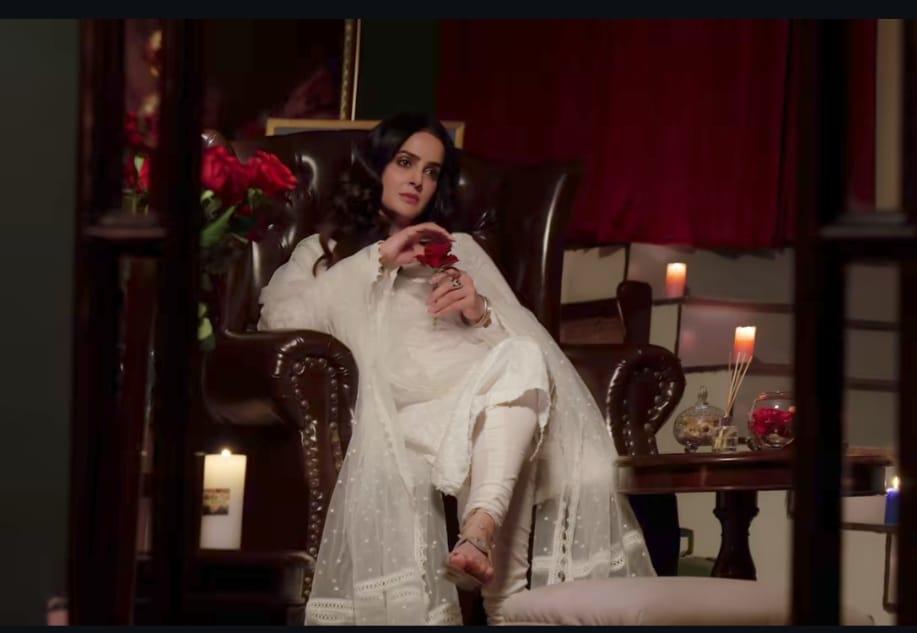
Sara Loren — originally Mona Lisa — plays Sophia, an undercover cop, but you do get it, right? Sara Loren plays Sophia. The irony is hard to miss, but the laziness is harder to ignore. She tries hard to channel the glamour of Ana de Armas in No Time to Die, but dressing up like that isn’t enough. Style without substance only highlights the absence of depth. If her character fell in love with Bullah after a simple handshake, then we all need to learn the trick from Shaan Shahid; there was no reason for the two to become lovers so quickly.
The aftermath of Bullah and Sophia’s first meeting seems inspired by Uday Chopra’s character in Dhoom, where a simple interaction turns into a fantasy sequence in which he imagines marrying the girl and raising a family in four slides. In Dhoom, it worked because it was meant to be comic. Here, the montage feels misplaced and awkward, almost unintentionally funny. Did they marry in real or was it a dream sequence? It was hard to tell.
In contrast, Naeema Butt has far more to work with, and she makes the most of it. Her character Fakeera feels real — not just in appearance, but in presence. She brings a certain authenticity that the rest of the film lacks. If anything, Bullah might mark a strong comeback for her, especially with her simultaneous appearances in Eid telefilms that could give her career the boost it deserves.
It is also disappointing to see Saleem Sheikh cast as an antagonist opposite Shaan. He is a contemporary actor, someone who has proven his worth in the past, but here he doesn’t look threatening at all. The role doesn’t suit him, and he deserves better casting choices.
As for Adnan Butt, no amount of investment can compensate for a lack of acting ability. He might have excelled in an earlier era alongside names like Humayun Qureshi and Shafqat Cheema, but times have changed — and so have audience expectations.
The subplot involving the Sikh girl crossing into Pakistani Punjab due to floods feels like filler and is inspired by Rishi Kapoor and Zeba Bakhtiar’s Henna. Yes, it gives Shaan a heroic entry in a style reminiscent of Shatrughan Sinha from Kaala Patthar, and yes, it echoes moments from his own film Tere Pyar Mein — but was it necessary? Not really.
The film wastes time on her wedding in an open field, only to have it raided by villains who kill Bullah’s friend, abduct his sister, and assault his elderly father, who, earlier, claimed to be a government minister. And then, conveniently, the Sikh girl’s storyline is forgotten. What happened to her? Where did she go after her car tire got punctured? The film doesn’t care, so why should the audience?
Loopholes after loopholes.
Bullah: Hit or Miss?
The film begins with a disclaimer: “No animals were harmed in the making of this film.” Perhaps it should have ended with another: “Sorry for lowering your intelligence level,” because that is exactly how it feels.
It seems Shoaib Khan's focus was more on releasing the film on Eid than on crafting a coherent story. There is no narrative backbone, no backstory for the characters, and the revelation that Asif Khan is Bullah's father feels lethargic. Characters appear and disappear without explanation. Motivations are unclear. Logic is optional.
Why is a character supposedly in hiding, easily detected in an abandoned building near a highway? Why is the climax set inside a cinema hall — is that where gangsters now conduct meetings? And if these gangsters spend all their time drinking and doing drugs, when exactly do they run their operations?
One of the biggest missteps is revealing Bullah’s ‘death’ in the first few minutes. The gimmick kills suspense before it even has a chance to build. Whoever suggested that decision clearly wasn’t thinking about audience engagement.
The songs don’t help either. They appear abruptly and disappear just as quickly, leaving no impact — much like the film itself.
In the end, Bullah feels like a missed opportunity. It had the potential to be something bigger — perhaps our version of Shahenshah or even a stylized action film in the league of John Wick. Instead, it ends up resembling Shoaib Khan’s previous outing, Jackpot — and that is not a compliment.
Two films in, and the director is already 2-0 down.
For Shaan Shahid, Bullah is a reminder that he still has what it takes. For Pakistani cinema, it is a reminder that unless storytelling evolves, even the biggest stars won’t be enough to save it.