
Drama Serial “Muamma”: Echoes of a Silent Scream
Muamma- as the name suggests-is a mystery in itself.
Mar 25, 2026
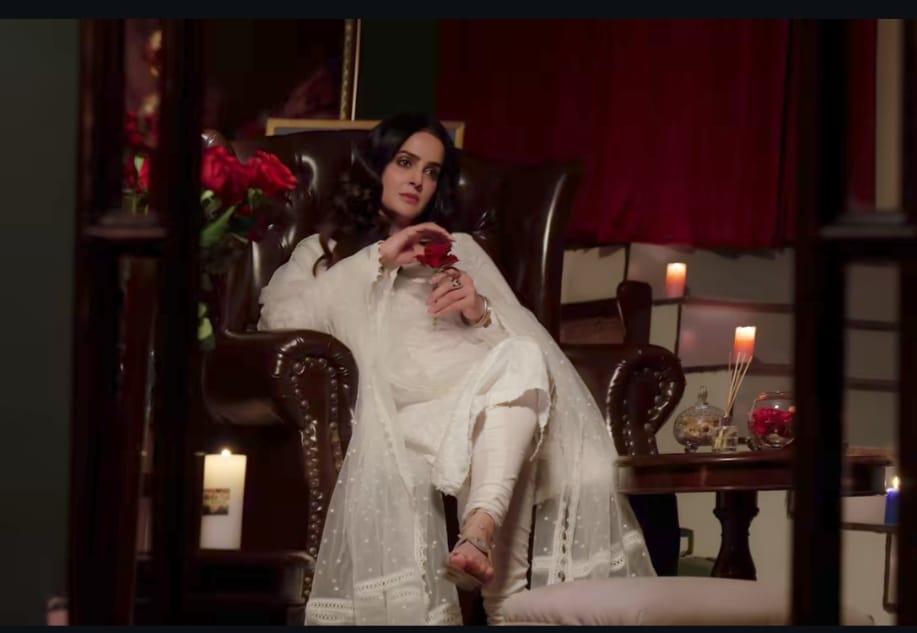
With every episode, a new layer unfolds, deepening the intrigue and leaving the audience questioning what is real and what is not. At the heart of this enigma is Saba Qamar’s character, Jahan Ara, portrayed with such finesse that perception constantly shifts. One moment she appears suspicious, the next she evokes sympathy, and just as quickly, doubt returns. This emotional unpredictability becomes the drama’s most gripping element.
Pakistani dramas often follow familiar patterns- romantic entanglements, family conflicts, and predictable emotional turns. Muamma, however, breaks away from these conventions. It offers a narrative that is not only engaging but also introspective, urging viewers to look beyond surface-level storytelling and into the complexities of human psychology.
At its core, the drama is a study of internal transformation. The main character represents a woman enduring constant mental stress, emotional wounds, and insecurity within her relationships. Repeated neglect, betrayal, and indifference gradually reshape her personality. This change is not abrupt but unfolds silently, influencing her thoughts, behaviours, and emotional responses over time.
When a woman faces hurt, neglect, or injustice in her married life, she experiences a complex mix of emotions- fear, disappointment, anger, and helplessness- all at once. In such circumstances, she may either retreat into silence or develop a guarded, seemingly strong exterior. Yet this strength is often a defence mechanism, a shield protecting her from further emotional collapse.
What sets Muamma apart is how it presents these changes- not through loud confrontations, but through quiet, deeply personal moments. The storytelling allows the audience to witness the gradual psychological shift, making the experience feel authentic and deeply unsettling in its realism.
Saba Qamar’s performance stands as the backbone of this narrative. As Jahan Ara, she does not simply perform the role- she inhabits it. Her acting deserves special mention, as she is widely regarded as one of Pakistan’s most natural performers. There is no trace of artificiality in her craft; emotions are conveyed through her gaze, pauses, and subtle expressions rather than exaggerated dialogue.
A major reason for her impact is her remarkable versatility. She adapts to each role so convincingly that the audience feels a sense of authenticity throughout. Whether portraying strength or fragility, she breathes life into every character she takes on. In Muamma, she skillfully brings a psychologically complex woman to life, balancing vulnerability with quiet resilience in a way that feels deeply real.
This character (jiji) actually represents the countless women who appear strong but are deeply wounded inside. It reminds us that behind every strong woman, there is a story that is rarely told, yet its effects are profound.
At a deeper level, Muamma reflects experiences that resonate within many households. It sheds light on emotional struggles that often remain unspoken- quiet endurance, inner conflict, and the gradual emergence of resilience. Many women, faced with indifference, emotional neglect, or dependence within their marriages, find it difficult to express their pain openly. Instead, they internalize their struggles, questioning themselves and slowly losing a sense of identity. Yet, within this silence, a quiet strength begins to take shape- one that protects them from completely breaking down and, over time, gives them the courage to hold on and care for themselves.
What truly makes this drama special is its writing. The writer, Imran Nazir, deserves immense credit for crafting a story that so sensitively and accurately captures the emotional realities of women. Such depth and understanding- where pain, silence, and inner conflict are portrayed with honesty and nuance- are rare. The writing does not rely on exaggeration; instead, it quietly reveals, allowing the audience to feel rather than simply observe.
Importantly, the story does not impose a singular perspective on how one should respond to such circumstances. Instead, it acknowledges the diversity of human reactions- silence, restraint, or quiet strength- all of which are valid in their own way.
Whether or not every viewer fully relates to her character, Jahan Ara’s journey leaves an undeniable impression- one that stays with you long after the screen fades to black. Muamma presents a world of unfamiliar narratives and layered characters, yet somewhere within its mystery, it feels strangely personal. Perhaps that is its true purpose- not just to tell a story, but to gently force us to look within, to listen to our own silences.