
UAE Ramadan 2026: Retailers Face Dh100,000 Fines for Price Hikes on Essential Items
Ministry of Economy and Tourism announces strict price controls on nine essential food categories with penalties ranging from Dh500 to Dh100,000.
Feb 14, 2026
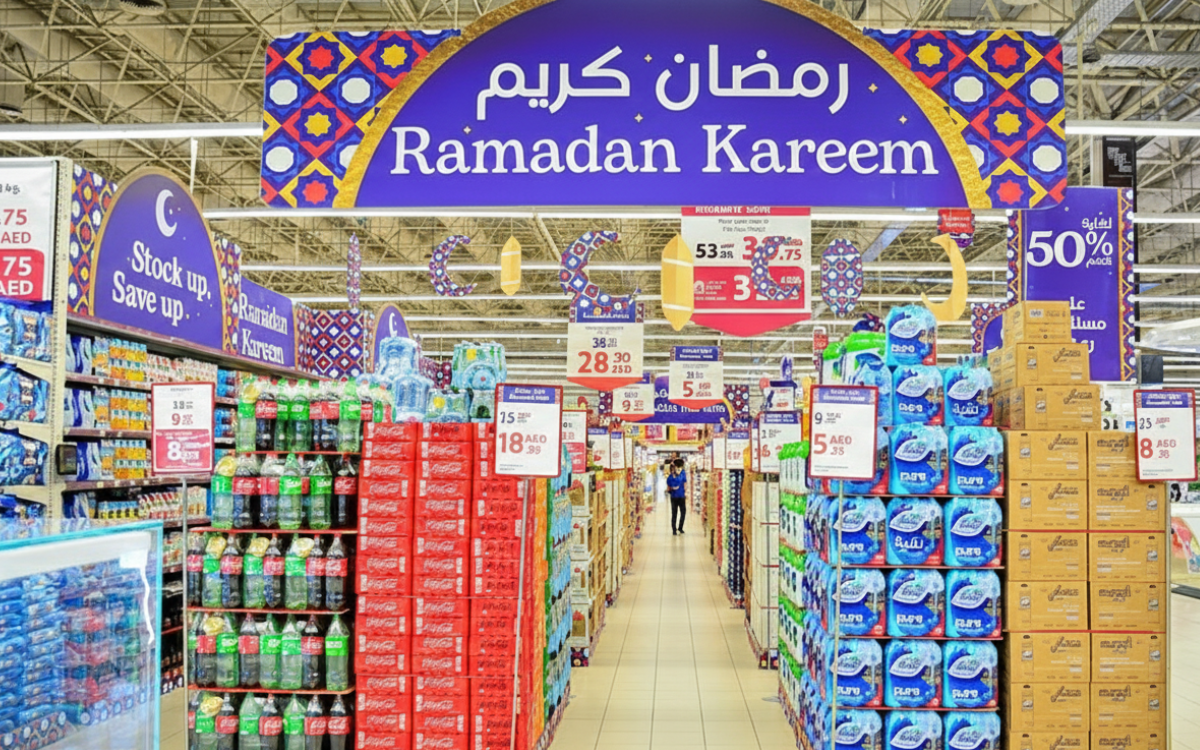
The UAE Ministry of Economy and Tourism will impose fines of up to Dh100,000 on retailers who increase prices on essential food items during Ramadan without government approval.
According to Khaleej Times, the announcement came during a media briefing on February 11, 2026, led by Abdulla bin Touq Al Marri, Minister of Economy and Tourism. The measures aim to protect consumers during the holy month and ensure stable access to staple goods.
Nine essential food categories cannot see price increases during Ramadan without prior approval from the Ministry of Economy and Tourism. These include cooking oil, eggs, dairy products, rice, sugar, poultry, legumes, bread, and wheat.
The controls fall under the Pricing Policy for Essential Consumer Goods, which was introduced in January 2025. Other goods remain subject to normal market competition and supply and demand factors.
The new pricing policy allows consumers to raise complaints about price hikes on these nine essential items. Retailers can apply for price increase requests, but new requests are only approved six months after the date of the last approval to prevent retailers from exploiting the system.
Penalties depend on the type of violation. Measures may include issuing a written warning and granting the violator a deadline to rectify the situation, or imposing fines starting from Dh500 and reaching up to Dh100,000.
Other administrative actions may also be considered, such as the temporary closure of the establishment for varying periods. In severe cases or upon repeated violations, stricter measures proportionate to the gravity of the violation may be implemented.
According to Gulf Business, violations include increasing prices on the nine essential consumer goods without prior approval, manipulating data related to goods, providing misleading data that hinders monitoring activities, and prior agreements between suppliers and traders to collectively raise prices.
Speaking at the media briefing, Al Marri commented that some retailers attempted to bypass the law by providing false information between the suppliers and goods so they could increase prices.
Ministry Records 7,702 Violations in 2025
In 2025, the Ministry recorded 3,167 complaints and 7,702 violations related to price hikes. Al Marri stated that the Ministry received over 3,167 complaints via its website in the past year, with 93.9 percent resolved in an average of four days.
In the past year, the Ministry worked with municipalities across the country and conducted a total of 155,218 inspection tours, which resulted in 7,702 violations. As part of these regular tours, authorities monitored the placement of price labels, the quality of products, and ensured retailers were not committing commercial fraud or infringing trademarks.
According to Gulf News, authorities also handled 130 product recall requests in 2025, resulting in the recovery of 551,976 goods from the market.
Al Marri announced that inspections will continue during the entire month of Ramadan to ensure prices for essential items remain stable throughout, unless retailers receive prior approval from the Ministry.
According to Travels Dubai, authorities have scheduled 420 inspection tours and field visits to retail outlets nationwide for Ramadan 2026. These will be carried out in coordination with local economic development departments and suppliers.
The Ministry plans to hold 26 meetings with major suppliers and importers to ensure smooth supply flows of essential goods. Inspection teams will check shelf prices, invoices, labeling, and compliance with approved rates. Legal action can be taken immediately under a graduated administrative penalty system if breaches are detected.
https://www.youtube.com/shorts/QO8B-nd7ABA
Digital Monitoring System Tracks 627 Major Retailers
The Ministry's digital price monitoring system is linked to 627 major retail outlets, including cooperatives, hypermarkets, and large stores, which represent over 90 percent of the domestic trade volume of essential goods across the country.
Retailers periodically submit price lists to the system, which automatically analyzes and compares them against reference benchmarks to identify deviations and flag unjustified price changes. The ministry stated this will play a pivotal role in directly monitoring prices during Ramadan.
According to Economy Middle East, the Ministry highlighted the role of Federal Decree-Law No. 14 of 2023, which regulates e-commerce and modern technology-based trade. This law ensures consumers shopping online enjoy the same rights as those in physical stores, including secure payment methods and data protection. Cabinet Resolution No. 200 of 2025 further defines specific penalties for breaches related to online trade.
The Ministry confirmed that strategic food reserves are sufficient, with stock levels for essential goods capable of covering demand for extended periods, supported by supply chain agreements under CEPA trade partnerships and continuous storage inspections.
Al Marri stated that the UAE maintains a robust strategic reserve of essential goods, ensuring sufficient supply during Ramadan without unjustified price increases. He attributed this resilience to prudent national policies and strong leadership support.
Consumers can report suspected price violations through the toll-free number 8001222 or via official digital platforms. The Ministry will launch awareness campaigns in cooperation with economic development departments to promote conscious consumption during Ramadan. These campaigns will guide consumers on their rights and encourage communication through the ministry's toll-free number.
Authorities are encouraging consumers to keep their receipts, as they serve as the primary guarantee of consumer rights during disputes, and to report any suspected price manipulation or misleading promotions.
Retailers across the UAE have rolled out extensive Ramadan promotions, announcing discounts of up to 70 percent on thousands of products, with some items priced from as low as Dh1.
Abu Dhabi-based ADCOOP allocated Dh20 million for its Ramadan campaign, offering discounts of up to 60 percent on more than 4,000 products, while reducing prices on 1,500 essential items. The retailer will also distribute 30,000 free iftar meals and provide 12,000 Ramadan essentials boxes priced at Dh99 and Dh149.
Choithrams launched one of the UAE's largest price resets, cutting prices on nearly 10,000 essential products. The phased rollout in early 2026 focuses on high-frequency items like rice, milk, lentils, tea, and dairy. The first 3,500-item phase alone is projected to return Dh13 million in savings to shoppers.
LuLu Group announced discounts of up to 65 percent across grocery, fresh food, electronics, homeware, and fashion, supported by sourcing offices in 27 countries to maintain supply stability.
Stay tuned for more updates!