
Scientists Train Lab-Grown Brain Cells to Solve Simple Problems
Scientists have successfully trained lab-grown brain organoids to respond to feedback and perform simple tasks, offering new insights into how neural networks learn and adapt.
Mar 16, 2026
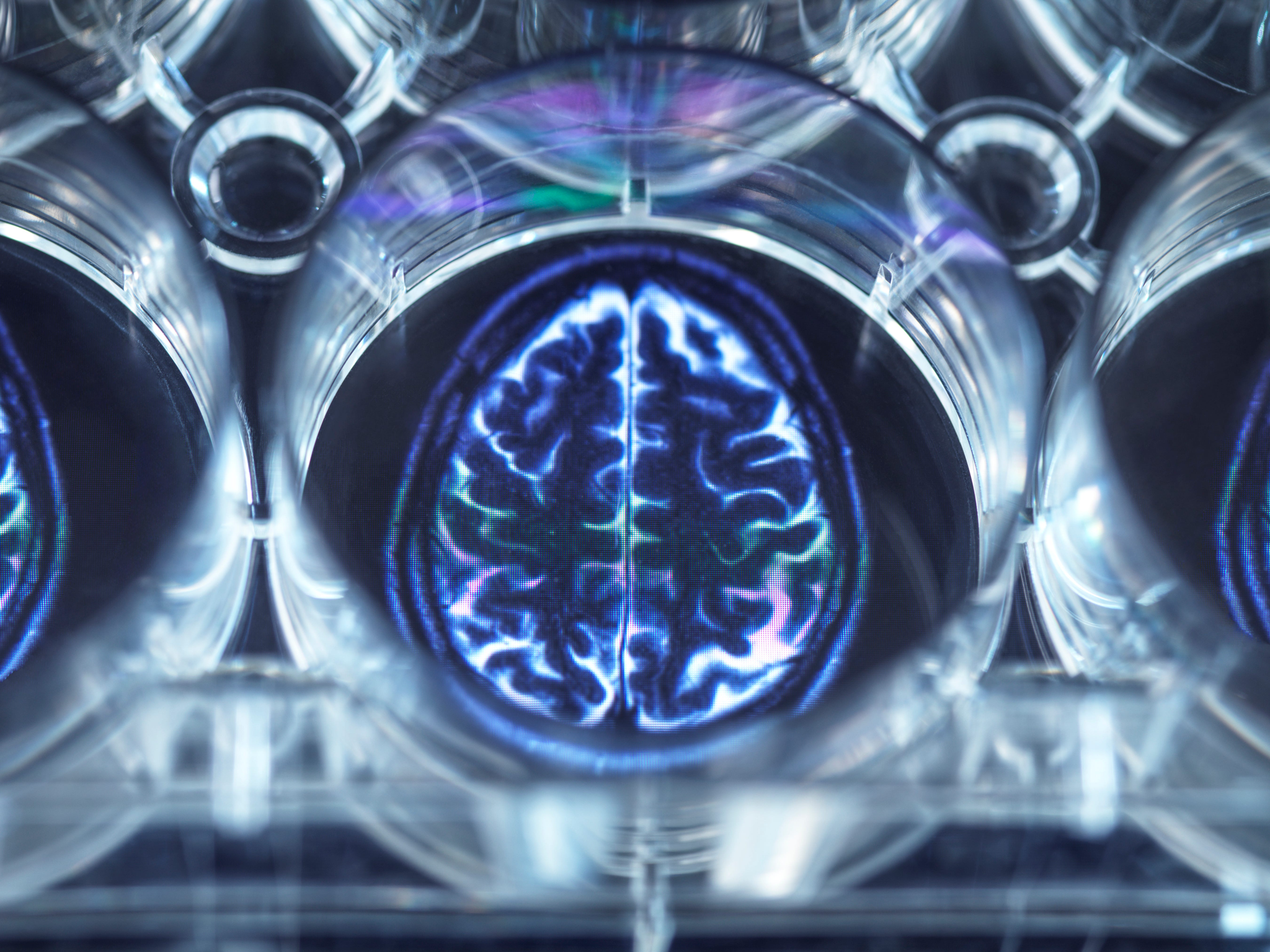
Scientists have begun training lab-grown clusters of human brain cells to perform simple problem-solving tasks, marking a significant step in research exploring how neurons learn and adapt outside the human body. The work builds on advances in stem cell science and neuroscience, where researchers cultivate miniature brain-like structures in laboratories to study how the brain functions.
Recent experiments show that these clusters of brain cells can respond to feedback and gradually improve their performance on certain tasks. The findings help researchers better understand how neural networks learn and process information, while also providing new models for studying neurological conditions.
What Are Brain Organoids?
The structures used in these experiments are known as brain organoids. Brain organoids are tiny clusters of neural cells grown from human stem cells in laboratory environments. Stem cells have the ability to develop into many different types of cells in the body, including neurons.
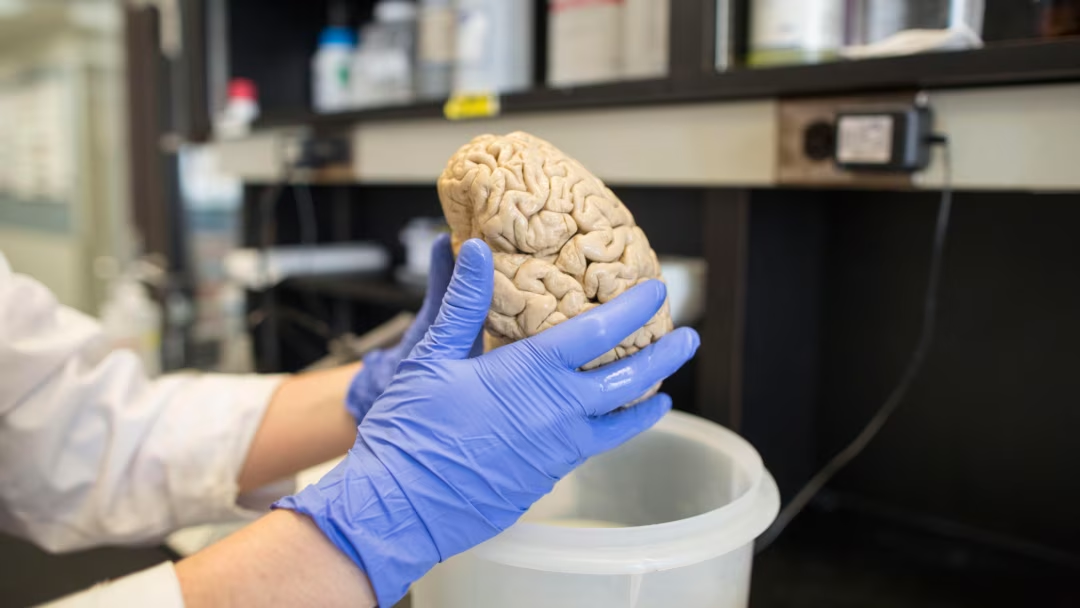
When scientists guide stem cells to develop into neural tissue, the cells organize themselves into small networks that share certain biological characteristics with developing brain tissue. These organoids typically measure only a few millimeters in size and contain tens of thousands to several million cells.
Although they mimic some aspects of the brain, brain organoids are far simpler than a fully developed human brain. They do not have blood vessels, sensory organs, or the complex structures responsible for higher-level cognitive functions. Their primary value lies in providing scientists with a controlled system for studying neural activity and development.
Connecting Brain Cells to Computers
To study how these neural networks behave, researchers connect brain organoids to electronic systems using microelectrodes. These electrodes allow scientists to both send electrical signals to the neurons and record the electrical activity produced by the cells.
The setup creates a two-way communication system between the organoid and a computer simulation. Electrical signals can represent information from a virtual environment, while the neural responses from the organoid can influence actions within the simulation. This type of interface allows researchers to observe how neural networks adapt to feedback and change their activity patterns over time.
Training Organoids to Solve Problems
One experiment involved training the organoid to solve a classic engineering and artificial intelligence challenge known as the cart-pole problem. The cart-pole task involves balancing a vertical pole on a moving cart by adjusting the cart’s position to keep the pole upright.
In the laboratory setup, electrodes transmitted electrical signals that represented information about the simulated environment, such as the pole’s position and movement. The neural signals produced by the organoid were then interpreted by the computer system to adjust the cart’s movement.
When the system performed well and the pole remained balanced, the organoid received more stable electrical feedback. When the system performed poorly, the feedback became less predictable. Over time, researchers observed changes in the neural activity patterns within the organoid. The neural network gradually improved its ability to keep the pole balanced in the simulation, indicating that the cells were adapting to the feedback signals.
Building on Earlier Experiments
This research builds on earlier experiments involving neural networks grown in laboratory dishes. In 2022, scientists demonstrated that networks of human and mouse neurons could be trained to play a simplified version of the video game Pong.
In that experiment, electrodes transmitted signals representing the position of the ball in the game. The neurons responded by altering their firing patterns to move a paddle in the simulation. Over time, the neural network improved its performance, showing evidence of learning through feedback.
Both experiments rely on the natural ability of neurons to reorganize their connections, a process known as neuroplasticity. Neuroplasticity enables neural networks to adjust their activity based on experience, and it is one of the biological mechanisms associated with learning and memory.
Applications in Medical Research
Brain organoids are increasingly used as models for studying neurological diseases. Because they can be grown from human cells, they allow scientists to examine how certain conditions affect neural development and activity.
Researchers have used organoids to investigate diseases such as Alzheimer’s disease, Parkinson’s disease, and epilepsy. They also provide a platform for testing new drugs and evaluating how treatments affect neural cells in controlled laboratory conditions.These systems make it possible to observe cellular processes that are difficult to study directly in living human brains.
Exploring Biological Computing
Another area of research involves exploring whether living neurons could contribute to future computing technologies. Biological neurons are capable of processing information while using significantly less energy than traditional silicon-based computer processors.
Scientists are studying whether hybrid systems combining biological neural networks with digital computers could perform certain computational tasks efficiently. Although this research is still in early stages, experiments with neural organoids demonstrate how living cells can interact with electronic systems.
A Field Still in Early Development
Despite the progress made in recent experiments, brain organoids remain much simpler than the human brain. The human brain contains approximately 86 billion neurons connected through trillions of synapses, forming highly complex networks responsible for cognition, memory, and behavior.
Organoids contain far fewer cells and lack the organized structures that allow for advanced brain functions. However, improvements in stem cell technology, bioengineering, and microelectronics continue to expand the capabilities of these laboratory models.
Current research shows that clusters of living neurons grown outside the body can respond to stimuli, adapt to feedback, and perform limited tasks in controlled environments. These findings provide scientists with new tools for studying the basic mechanisms of neural activity and learning.