
Pakistan Considers Remote Work, Online Classes Amid Global Oil Supply Concerns
Pakistan is considering work-from-home arrangements and online classes as part of a fuel conservation strategy while authorities monitor global oil supply disruptions and energy market uncertainty.
Mar 5, 2026

Pakistan’s federal government is considering introducing work-from-home arrangements and online classes as part of a broader national fuel-conservation strategy, amid concerns about potential disruptions in global oil supply and rising uncertainty in energy markets.
The proposal is currently under review by policymakers and forms part of a set of emergency measures aimed at reducing fuel consumption and ensuring the stability of the domestic petroleum supply. Authorities say the steps are precautionary and are being evaluated in response to developments affecting international energy transportation routes.
Government reviewing energy conservation measures
Officials in Islamabad have begun discussing a range of measures designed to manage fuel demand and safeguard supplies. Among the proposals under consideration are temporary work-from-home policies for offices where remote work is feasible and the use of online classes for educational institutions.
The discussions are part of a national action plan being examined by a cabinet committee tasked with monitoring petroleum supplies, prices, and the broader energy situation in the country. Provincial chief secretaries have also been asked to participate in deliberations so that any policy decision can be coordinated across the country.
Officials say the primary objective of the proposal is to reduce daily fuel consumption, particularly from transportation, which accounts for a significant portion of petroleum use in urban areas.
Global oil supply concerns influencing policy discussions
The government’s review comes at a time when disruptions in the Middle East have raised concerns about global oil transportation routes. In particular, the Strait of Hormuz, a critical maritime passage for global oil shipments, has been affected by regional tensions, which has slowed tanker movement and increased uncertainty in global energy logistics.
The strait connects the Persian Gulf with the Arabian Sea and is one of the world’s most important oil transit chokepoints. A significant share of global crude oil shipments pass through this route, making it a key component of international energy supply chains.
Disruptions or delays in this corridor can influence oil prices, freight costs, and shipping schedules worldwide. As a country that imports a large portion of its petroleum products, Pakistan remains sensitive to changes in international oil markets.
Authorities say that monitoring developments in global energy supply routes has become an important part of national planning, particularly when regional tensions increase the possibility of shipping delays or higher import costs.
Current petroleum stocks and supply situation
Despite the uncertainty in global markets, officials say Pakistan currently maintains sufficient petroleum stocks. Reports indicate that the country holds reserves of petrol and diesel exceeding half a million tonnes, which is enough to cover several weeks of domestic demand.
According to officials reviewing the situation, petrol reserves are estimated to cover approximately 26 days of consumption, while diesel stocks can last for about 25 days under current demand levels.
Authorities have stated that there is no immediate shortage of fuel. However, precautionary planning is underway to ensure supply stability in the event that global shipping disruptions continue or intensify.
To diversify supply routes and reduce reliance on any single shipping corridor, Pakistan State Oil has reportedly initiated import tenders for petrol and diesel from sources outside the Strait of Hormuz region.
Additional policy options under discussion
Along with work-from-home arrangements and online education, policymakers are reviewing a number of additional steps to manage fuel demand and maintain market stability. These include potential changes in petroleum pricing policies, adjustments to import strategies, and coordination with oil marketing companies to ensure steady supply across the country. Authorities are also exploring ways to manage fuel distribution and discourage stockpiling during periods of price volatility. Officials involved in the discussions have emphasized that the measures are part of a broader strategy designed to maintain market liquidity and avoid disruptions in fuel availability.
Role of remote work and online learning in reducing fuel consumption
The introduction of work-from-home policies has previously been used in various countries as a method to reduce fuel consumption and transportation demand. During the COVID-19 pandemic, remote work arrangements became widely adopted in both the public and private sectors across Pakistan.
Under the proposal currently being discussed, government offices and private organizations capable of operating remotely could allow employees to work from home for certain days of the week. Similarly, educational institutions may temporarily shift some academic activities to online platforms, reducing daily commuting by students and staff.
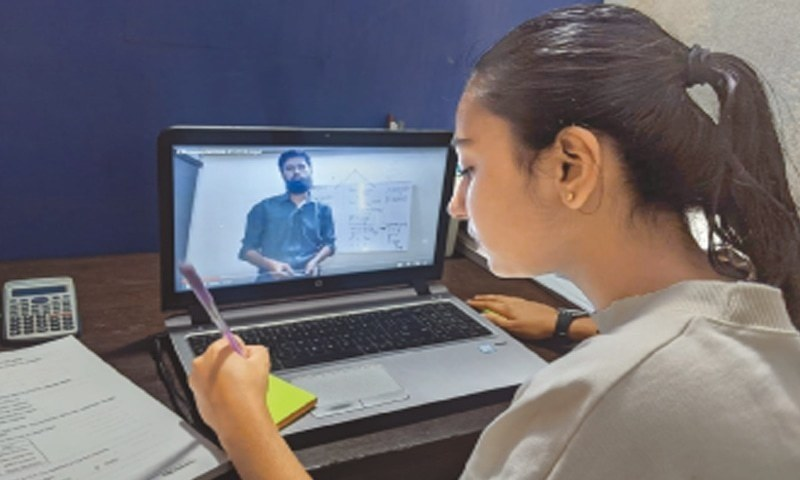
The potential transition to online classes would rely on digital learning systems that became more widely used in Pakistan during the pandemic period. Online learning platforms have since continued to be used by universities and educational programs offering distance education across the country.
Coordination between federal and provincial authorities
Because education and many administrative functions fall under provincial jurisdictions, the federal government has begun coordinating with provincial authorities to ensure any measures can be implemented effectively nationwide.
Meetings involving federal ministries, provincial chief secretaries, and energy regulators are expected to examine the feasibility of the proposed conservation measures and determine how they could be applied across different sectors.
Officials have indicated that any decision would take into account the operational requirements of industries where remote work is not possible, such as manufacturing, logistics, healthcare, and essential public services.
Preventing panic buying and ensuring market stability
Authorities have also urged the public to avoid panic buying or hoarding of fuel products. Regulators are monitoring supply levels and distribution patterns to ensure that petrol stations continue operating normally.
The Oil and Gas Regulatory Authority (OGRA) has been coordinating with oil marketing companies to monitor sales patterns and maintain supply stability in the retail market.
Officials say that maintaining consumer confidence and transparent communication will remain an important part of managing the situation while policymakers review potential conservation measures.
Policy decision yet to be finalized
At present, the work-from-home and online education proposals remain under consideration and have not yet been formally implemented. Government officials say further discussions will determine whether the measures are required and how they would be introduced if approved. The review process is continuing as authorities monitor global energy markets and developments in regional shipping routes that could affect Pakistan’s petroleum imports. For now, the government maintains that fuel supplies remain adequate, while planning and preparedness measures continue as part of its broader energy management strategy.