Pakistan and Saudi Arabia Discuss Joint Measures to Halt Iranian Attacks
Pakistan’s Chief of Army Staff and Chief of Defense Forces, Field Marshal Asim Munir meets Saudi defense minister in Riyadh as Islamabad to discuss joint measures to halt iranian attacks.
Mar 7, 2026
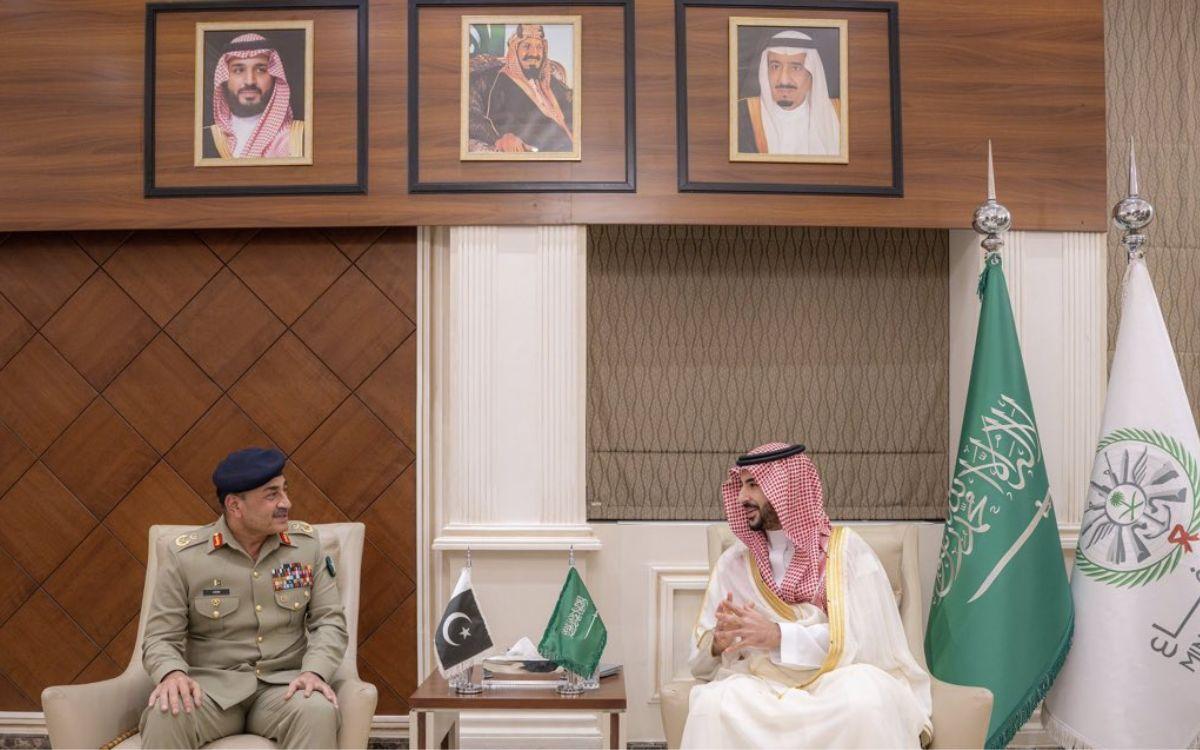
Saudi Arabia and Pakistan held a high-level security meeting in Riyadh on Saturday to coordinate their response to ongoing Iranian drone and missile strikes on the kingdom, formally invoking their bilateral defense agreement for the first time since it was signed.
Chief of Defense Forces Field Marshal Syed Asim Munir met Saudi Defense Minister Prince Khalid bin Salman to discuss Iranian attacks on the kingdom and joint measures to halt them under the Strategic Mutual Defense Agreement. Pakistan's military media wing, the ISPR, confirmed the meeting and said both sides discussed the gravity of the security situation arising from the drone and missile strikes.
In a statement on X, Khalid bin Salman said both sides stressed that the attacks "undermine regional security and stability" and expressed hope that Iran would "exercise wisdom and avoid miscalculation."
The meeting follows an escalation of regional tensions after the United States and Israel launched attacks on Iran on February 28, with Tehran retaliating by targeting US bases across the Gulf region with missiles and drones.
Pakistan's Diplomatic Balancing Act
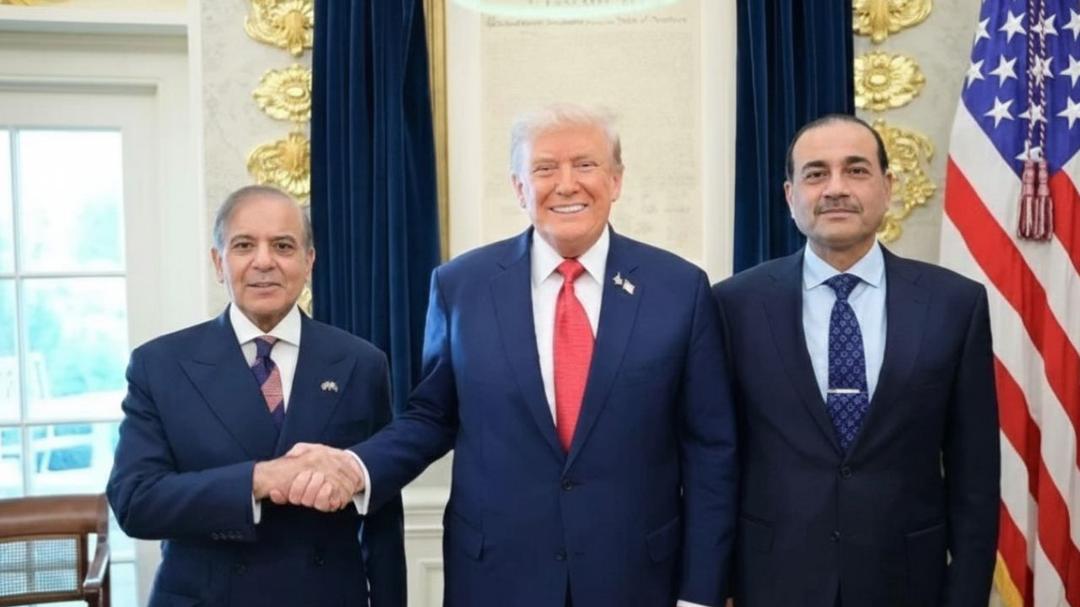
The Riyadh meeting came days after Pakistan's Deputy Prime Minister and Foreign Minister Ishaq Dar made a significant disclosure in the Senate. Dar said Pakistan's diplomatic intervention helped deter heavier Iranian strikes on Saudi Arabia. "We have a strategic mutual defence agreement with Saudi Arabia. Everyone knows about that, it is a sovereign agreement and we are bound by that," he told lawmakers, adding that he had personally sensitised the Iranian leadership to keep the pact in mind.
Iranian Foreign Minister Abbas Araghchi asked for assurances that Saudi soil would not be used to launch attacks against Iran. Dar said he obtained those assurances from Riyadh through back-channel exchanges.
"And look, unlike all other countries, Saudi Arabia faced the least attacks other than Oman that was the mediator," he said.
Dar said Pakistan stood ready to facilitate direct talks between the parties. "If both parties want to talk in Islamabad, we are ready for that. We are at any time ready for all sorts of mediation," he told the Senate.
What the Defense Pact Requires
Pakistan and Saudi Arabia signed the Strategic Mutual Defense Agreement on September 17, 2025, in Riyadh. Under the pact, both countries committed to treating any act of aggression against one as an act against both. Prime Minister Shehbaz Sharif and Crown Prince Mohammed bin Salman signed the agreement during a state visit to the kingdom.
Analysts say Pakistan's tightrope walk between two close partners could become harder to sustain as the conflict widens. Pakistan shares a 900-kilometer border with Iran and has millions of workers residing in Saudi Arabia and other Gulf states.
Umer Karim, an associate fellow at the Riyadh-based King Faisal Center for Research and Islamic Studies, said Islamabad likely never expected to find itself caught between Tehran and Riyadh, particularly after the China-brokered rapprochement between Saudi Arabia and Iran in 2023. "Perhaps this is the last time the Saudis will test Pakistan, and if Pakistan doesn't fulfil its commitments now, the relationship will be irreversibly damaged," he said.
Pakistan Citizens in the Region
Saudi Arabia hosts the largest number of Pakistani expatriates in the region, with around 2.5 million nationals residing there. Pakistan's embassies in Iran, the UAE, Qatar, Bahrain, and Saudi Arabia have been fully activated to support citizens caught in the conflict zone.
Dar noted that both Prime Minister Shehbaz Sharif and Field Marshal Asim Munir had played an "active and positive role" in diplomatic and defense-level engagements aimed at defusing the crisis. He said parliamentary leaders from both sides of the aisle would be given a detailed in-camera briefing on the evolving situation.