Dubai Police Arrest 37 Beggars in Second Week of Ramadan
Dubai Police arrested 37 individuals for begging in the second week of Ramadan, bringing the total for this year's holy month to 63 arrests as part of the annual Combat Begging campaign.
Mar 4, 2026
Dubai Police have arrested 37 individuals of various nationalities for begging during the second week of Ramadan 2026, bringing the total for this Ramadan to 63 arrests across the first two weeks.
The operation was carried out by the Suspicious Persons and Criminal Phenomena Department under the General Department of Criminal Investigation, in cooperation with police stations across the emirate. The arrests are part of Dubai Police's annual Combat Begging campaign, launched under the slogan "An Aware Society Without Begging," in partnership with the General Directorate of Residency and Foreigners Affairs Dubai and the Islamic Affairs and Charitable Activities Department.
Dubai Police recorded 26 arrests in the first week of Ramadan, followed by 37 in the second week, indicating an increase in enforcement activity as the holy month progresses. The figures are in line with the pattern seen in previous years, when begging cases tend to cluster around Ramadan and Eid Al Fitr due to the heightened spirit of generosity among residents.
According to official data, Dubai Police arrested a total of 1,801 individuals for begging between 2021 and 2025, with yearly figures of 458 in 2021, 499 in 2023, 320 in 2024, and 206 in 2025. The five-year trend reflects a 70 percent drop in arrests, which authorities attribute to the sustained impact of annual enforcement campaigns and legal deterrents.
During Ramadan and Eid Al Fitr 2025, 222 beggars were arrested in Dubai alone, with 127 recorded in the first half of that period.
Tactics Used and Legal Consequences
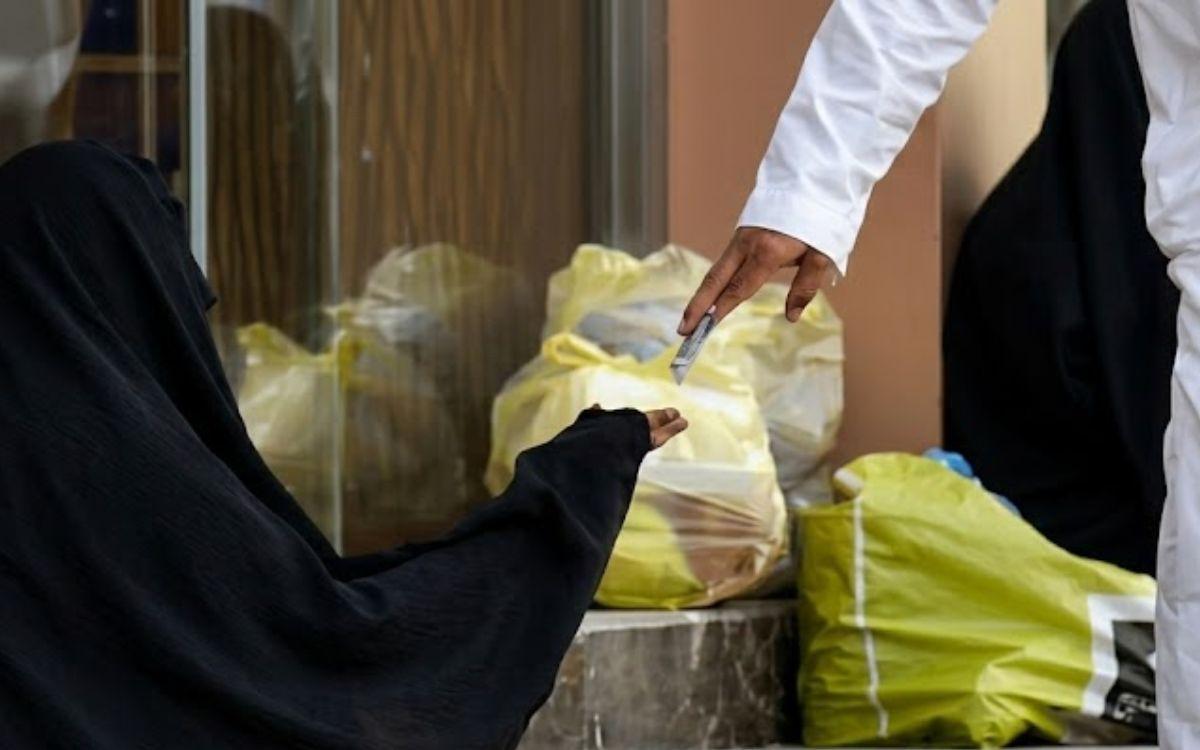
Brigadier Ali Salem Al Shamsi, Director of the Suspicious Persons and Criminal Phenomena Department, said authorities monitor and document the tactics used by beggars each year to develop more targeted enforcement plans. Common methods include fabricated hardship stories, feigned disabilities, and the use of children or sick individuals to evoke public sympathy. Begging hotspots include mosque entrances, hospitals, clinics, markets, and traffic intersections.
Among the cases recorded this Ramadan, one individual was found carrying Dh20,000 in cash after targeting luxury car owners at traffic lights and in parking areas. In Ras Al Khaimah, a separate operation resulted in 19 arrests, with one individual found in possession of Dh11,000.
Authorities have also flagged online begging as a growing concern. In 2024, nearly 1,200 online begging cases were recorded across the UAE, with fraudsters exploiting social media platforms to solicit money transfers to unknown accounts.
Under UAE Federal Law No. 9 of 2018, begging is a criminal offence punishable by up to three months in prison and a fine of Dh5,000. Individuals who organize begging rings or recruit people from abroad to beg face up to six months in prison and fines of up to Dh100,000. Raising funds without a permit carries fines of up to Dh500,000.
How to Report and Where to Donate
Dubai Police have urged the public not to give money directly to individuals on the street or respond to online solicitation. Brigadier Al Shamsi noted that official channels and licensed charitable organizations exist for those who genuinely need financial assistance, and that donations made through these channels are more likely to reach deserving beneficiaries.
Residents can report begging by calling the toll-free number 901, using the Police Eye service on the Dubai Police smart app, or filing a report through the eCrime platform for online cases.
The Combat Begging campaign is implemented annually in coordination with strategic partners and runs throughout the Ramadan period, with enforcement intensifying at known begging hotspots across the emirate.