
Dubai Launches AI-Powered ‘Ehsan Stations’ to Feed Stray Animals
Dubai has introduced AI-powered “Ehsan Stations” to provide organized feeding for stray animals while improving animal welfare and maintaining public hygiene across the city.
Mar 9, 2026
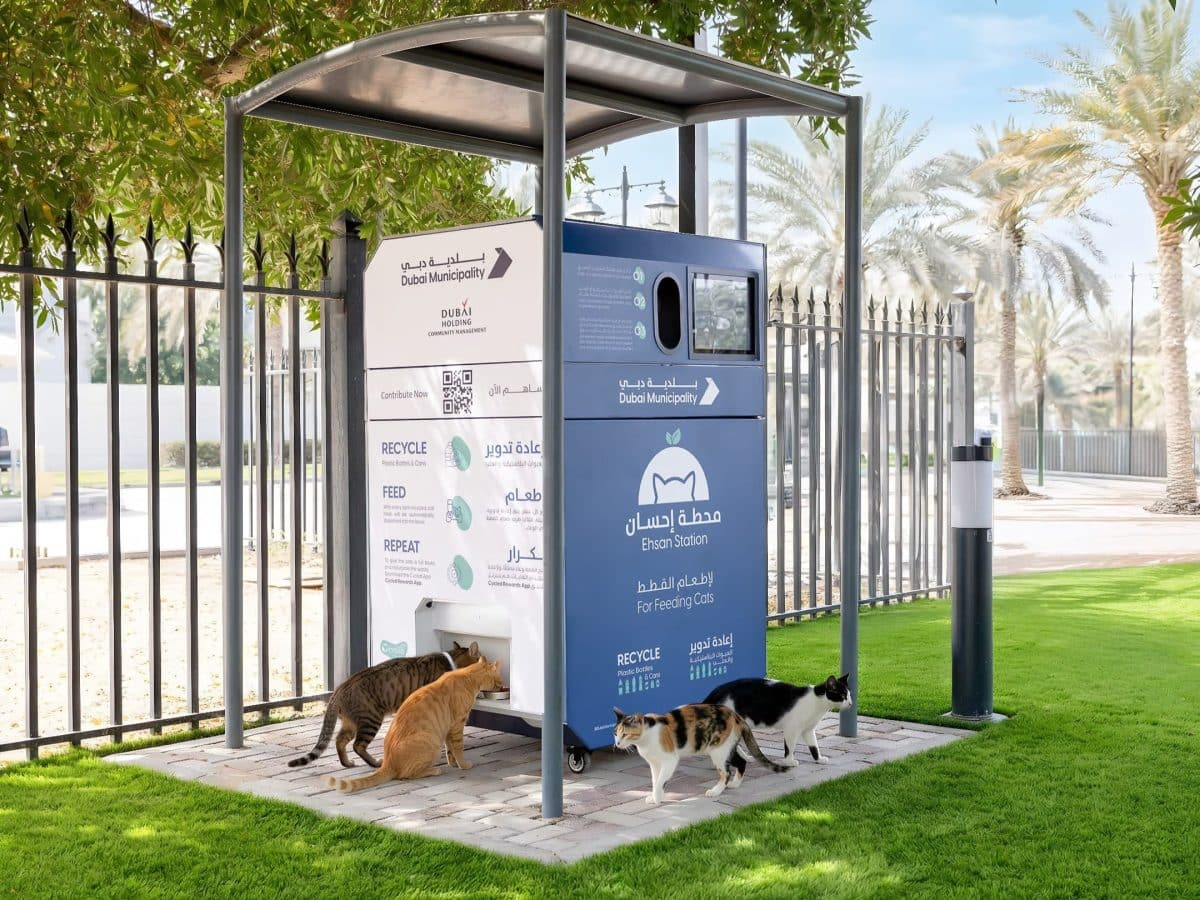
Dubai has launched a new initiative called “Ehsan Stations,” a network of artificial intelligence (AI)-powered feeding devices designed to provide food for stray animals in a controlled and organized manner. The initiative, introduced by Dubai Municipality, reflects the emirate’s growing use of technology to address urban challenges while supporting animal welfare and environmental sustainability.
The project is currently being implemented as a pilot program, with a limited number of stations installed across key locations in Dubai. Officials say the initiative will help create a more structured system for feeding stray animals while reducing unregulated feeding practices in public spaces.

AI-powered feeding stations
The “Ehsan Stations” project uses advanced smart devices capable of detecting stray animals and dispensing food automatically. These stations rely on artificial intelligence and sensor technology to identify animals that approach the device and provide food accordingly. The technology also allows authorities to collect data related to stray animals and feeding patterns, which can support future planning and management efforts.

According to Dubai Municipality, the stations are part of a broader strategy to develop an organized and sustainable approach to feeding stray animals. By automating the process, the city aims to prevent issues linked to random feeding, such as food waste, litter, and potential health risks in public areas. Officials note that the initiative represents one of the first projects in the region to combine artificial intelligence with animal welfare management in an urban environment.
Pilot rollout across Dubai
The current phase of the project involves installing 12 smart feeding stations across different parts of Dubai. Ten of these units will be located in public parks, while two will be installed within facilities operated by Dubai Holding.
Authorities describe this stage as a pilot phase, during which the stations will be monitored and evaluated. The collected data will help officials understand how effectively the system works and determine whether the initiative should be expanded in the future.
Dr. Naseem Mohammed Rafee, Acting CEO of the Environment, Health and Safety Agency at Dubai Municipality, stated that the pilot phase will provide insights that will help improve and further develop the initiative. Another notable aspect of the project is that the devices were designed and manufactured in the United Arab Emirates using advanced technologies, supporting local innovation and technological development.
Addressing stray animal management
Like many large cities, Dubai faces challenges related to stray animals, particularly cats. The introduction of Ehsan Stations is intended to help manage this issue while maintaining public hygiene and environmental balance.
Officials say that unregulated feeding of stray animals can lead to several problems, including overcrowding of certain areas, accumulation of food waste, and potential health concerns. The smart feeding stations aim to centralize feeding in specific locations where it can be monitored and managed more effectively.
By collecting data about animal activity and food consumption, the stations can also help authorities better understand the distribution and behavior of stray animals in the city. This information may support future policies and urban planning related to wildlife and animal welfare.
Integration with existing animal welfare programs
The Ehsan Stations initiative forms part of Dubai Municipality’s broader approach to animal welfare and stray animal management. The municipality already operates a temporary shelter that receives stray animals collected from different parts of the city and provides them with basic care.
In addition to shelters, Dubai Municipality implements internationally recognized animal population control programs such as Trap–Neuter–Return (TNR) and Trap-Neuter-Vaccinate-Return (TNVR). These programs involve capturing stray animals, sterilizing and vaccinating them, and then returning them to their original habitats if they do not pose a risk to the community. These measures aim to gradually stabilize and reduce stray animal populations while maintaining humane treatment standards. Some animals that are rescued through these programs are also made available for adoption through the municipality’s official platforms.
Encouraging responsible pet ownership
Alongside the launch of Ehsan Stations, Dubai Municipality has also urged residents to follow responsible pet ownership practices. Authorities have reminded pet owners to ensure their animals are properly cared for, especially when travelling or relocating.
Residents have also been encouraged to report concerns or incidents involving stray animals through the municipality’s hotline, allowing authorities to respond quickly and ensure animals receive proper care. These measures are intended to support both animal welfare and public safety while promoting community participation in maintaining the city’s environment.
Part of wider environmental initiatives
The Ehsan Stations project also aligns with Dubai’s broader environmental and sustainability programs. One example is the “Fountains of Mercy” initiative, which plans to install 50 water fountains across the emirate to provide drinking water for birds and wildlife. The project includes 25 fountains in urban areas and 25 in desert environments. Both initiatives are designed to support biodiversity while maintaining sustainable infrastructure within the city. By integrating technology, environmental planning, and animal welfare policies, Dubai authorities aim to develop long-term solutions that address urban challenges while protecting wildlife.
Future potential of the initiative
Although still in its early stages, the Ehsan Stations project represents a technological approach to managing urban animal welfare. If the pilot phase proves successful, the number of stations may be expanded to additional locations across Dubai. The data collected from the devices will play an important role in shaping the next stages of the program. Authorities expect the information gathered during the pilot phase to help refine the system and improve its effectiveness in supporting stray animals and maintaining clean public spaces.
As cities around the world explore new ways to manage urban wildlife, Dubai’s Ehsan Stations initiative highlights how emerging technologies such as artificial intelligence can be used in practical public-service applications.