
China Announces Visa-Free Entry for UK and Canadian Passport Holders
China has confirmed 30-day visa-free entry for ordinary passport holders from the United Kingdom and Canada starting February 17, 2026, in a move aimed at boosting tourism and business travel.
Feb 17, 2026
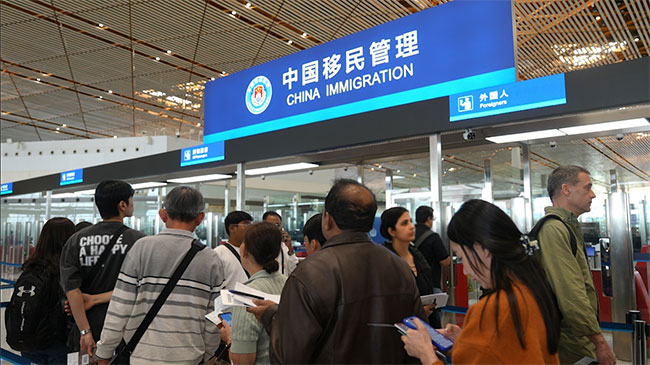
China has officially added ordinary passport holders from the United Kingdom and Canada to its unilateral visa-free program, allowing short stays of up to 30 days starting 17 February 2026 and running through 31 December 2026. This move, announced by China’s foreign ministry and posted by its embassies, is being pitched as a measure to boost tourism, business travel and people-to-people exchanges after a period of tighter travel rules.
Who is covered and for what purposes
Holders of ordinary (regular) passports from the United Kingdom and Canada may enter mainland China without a visa for stays of up to 30 days. The visa-free entry is explicitly for short-term purposes such as tourism, business, visiting family and friends, cultural or academic exchanges, and transit. It does not replace standard visas for long-term stays, work, study, or other residency purposes, travelers needing to work or study in China must still apply for the appropriate visa in advance.
When does visa-free entry begin
China’s Ministry of Foreign Affairs made public remarks confirming the inclusion of the two countries in the visa-free scheme; the Chinese embassies in Ottawa and London followed with guidance and FAQs for travelers. The policy’s effective window, 00:00 on 17 February 2026 (Beijing time) to 24:00 on 31 December 2026, is stated in the embassy notices. Because the announcement is an official unilateral measure, its exact future beyond the 2026 end date depends on further government decisions.
Why is Beijing doing this now
Analysts and official commentary frame the measure as part of a broader strategy to encourage inbound tourism and trade, and to normalize high-level diplomatic ties that have seen renewed engagement in recent months. Both the British and Canadian prime ministers visited Beijing earlier in 2026 as part of outreach aimed at deepening economic and diplomatic links; those visits preceded the visa announcement and are widely seen as part of the context for the change. Chinese officials say the move will facilitate business, cultural exchange, and travel. News agencies report the change also raises the total number of countries with visa-free access to China to around 79.
Practical requirements for travelers
Although the visa is not required for eligible short stays, travelers should still be prepared to show standard entry documentation at the border:
- A valid ordinary passport with at least six months’ validity remaining (best practice).
- Proof of onward or return travel and details of accommodation or contacts in China.
- Documentation specific to the purpose of visit (invitation letter for business exchanges, etc.), if requested by border officials.
Those who do not meet the visa-free entry requirements (for example, travelers who plan to stay longer than 30 days or who are going for employment or study) must apply for the appropriate visa at a Chinese embassy or consulate before travel. Embassy websites are publishing FAQs and local telephone/email contacts to help with any queries.
What this means for tourism and business
Travel and hospitality industries in China and the UK/Canada have welcomed the news, saying it should simplify short trips for tourists and business delegates and could help restart higher volumes of bilateral travel flows. Observers say the timing, just before and during China’s busy travel periods, could give an immediate lift to inbound tourism and simplify short business visits, especially for companies arranging quick meetings, supplier visits or trade events. Reuters and AP note the policy follows earlier rounds of visa relaxations Beijing introduced over the past year to revive post-pandemic travel.
Caveats and border-control realities
A few practical caveats are worth noting:
- Visa-free entry is not a guarantee of admission: border officials retain the right to refuse entry based on immigration rules.
- The program is time-limited until the end of 2026; travelers should check for extensions or policy changes before booking long or costly itineraries.
- Different ports of entry may have slightly different operational procedures, and local Chinese consulates/embassies will publish the most current implementation details and FAQs.
For travelers from the United Kingdom and Canada, China’s 2026 visa-free measure provides an easier route for short visits of up to 30 days for tourism, business and exchanges, but it is not a substitute for long-term visas or work/study permits. The policy is official, time-limited through 31 December 2026, and travelers should double-check embassy guidance and entry requirements before booking