
125K Years Ago, Human Settlers Lived in Sharjah
New archaeological research reveals that early humans repeatedly inhabited Sharjah’s Faya region over 125,000 years ago, reshaping understanding of human survival in ancient Arabia.
Mar 24, 2026
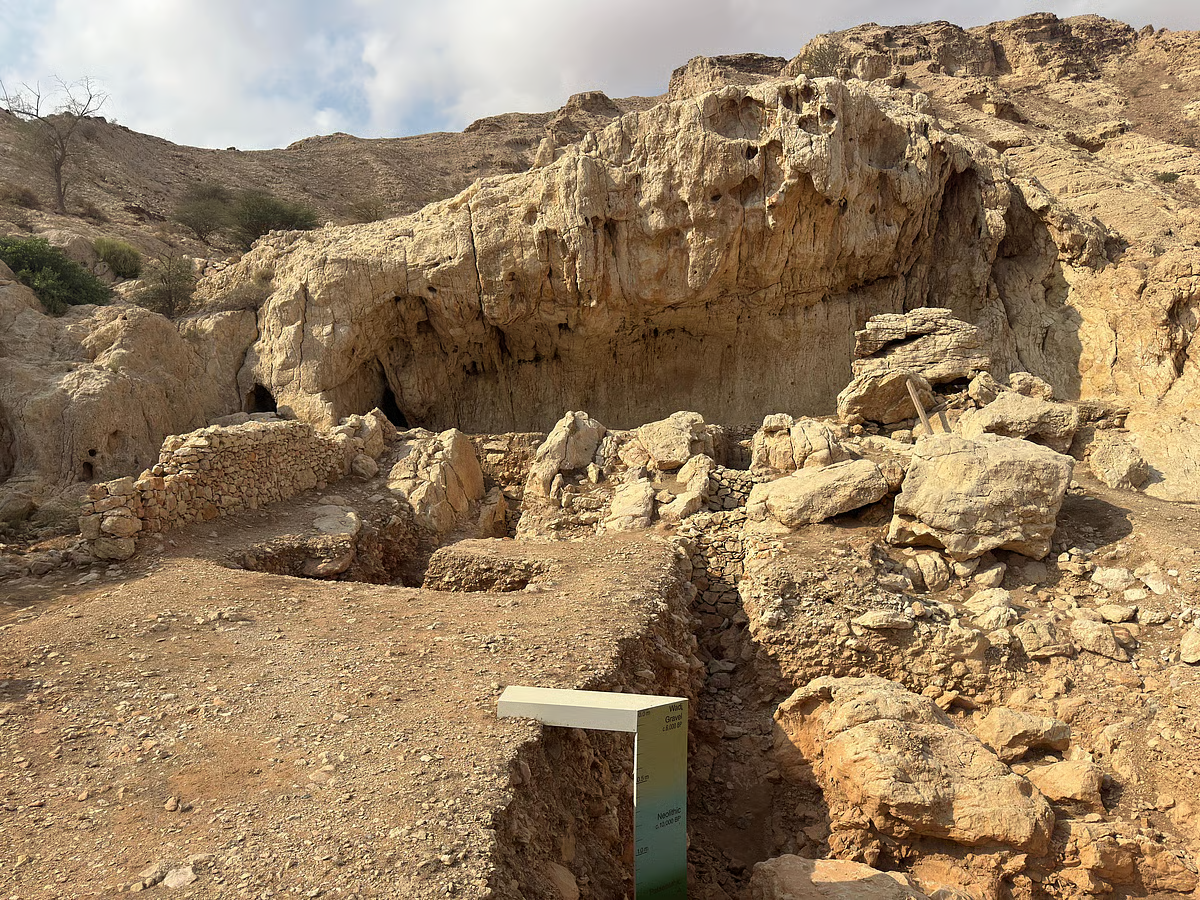
A recent archaeological study has uncovered new evidence of early human settlement in the Faya region of Sharjah, indicating that humans occupied the area as far back as approximately 125,000 years ago. The findings are based on excavations at the Buhais Rockshelter, located within the Faya Palaeolandscape, a site already recognized for its long record of human activity.
The research, published in the scientific journal Nature Communications, was conducted by an international team of archaeologists. It was led by experts from the Sharjah Archaeology Authority, in collaboration with researchers from institutions including Friedrich Schiller University Jena in Germany and Oxford Brookes University in the United Kingdom.
Multiple Phases of Human Occupation
The study identified several distinct phases of human presence at the Buhais Rockshelter. These occupation periods have been dated to approximately 125,000, 59,000, 35,000, and 16,000 years ago. The findings indicate that the site was not inhabited continuously but was revisited multiple times over tens of thousands of years. This pattern suggests that early human populations returned to the region repeatedly rather than occupying it during a single period.
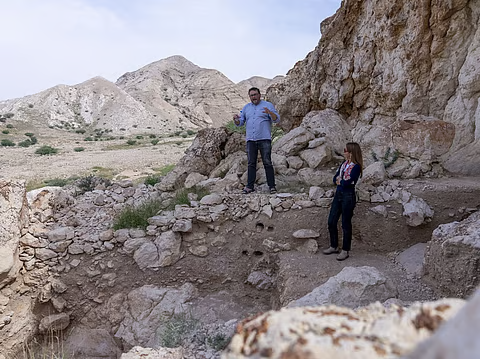
The latter three phases, 59,000, 35,000, and 16,000 years ago, had not been previously documented. Their identification helps fill significant gaps in the archaeological record of southeastern Arabia.
Challenging Earlier Assumptions
Prior to this study, it was widely believed that southeastern Arabia was largely uninhabitable between approximately 60,000 and 12,000 years ago due to extreme arid conditions during the last glacial period. However, the new evidence challenges this assumption. The research demonstrates that humans were present in the region during this timeframe, indicating that the area could sustain life even under changing environmental conditions.
Archaeological data from the rockshelter shows that the site functioned as a recurring location of human activity. This suggests that early populations adapted to environmental shifts and returned when conditions became favourable.
Environmental Factors and Habitability
The study also incorporated palaeoenvironmental analysis of the surrounding Faya Palaeolandscape. The results show that periods of human occupation coincided with phases of increased rainfall and water availability.
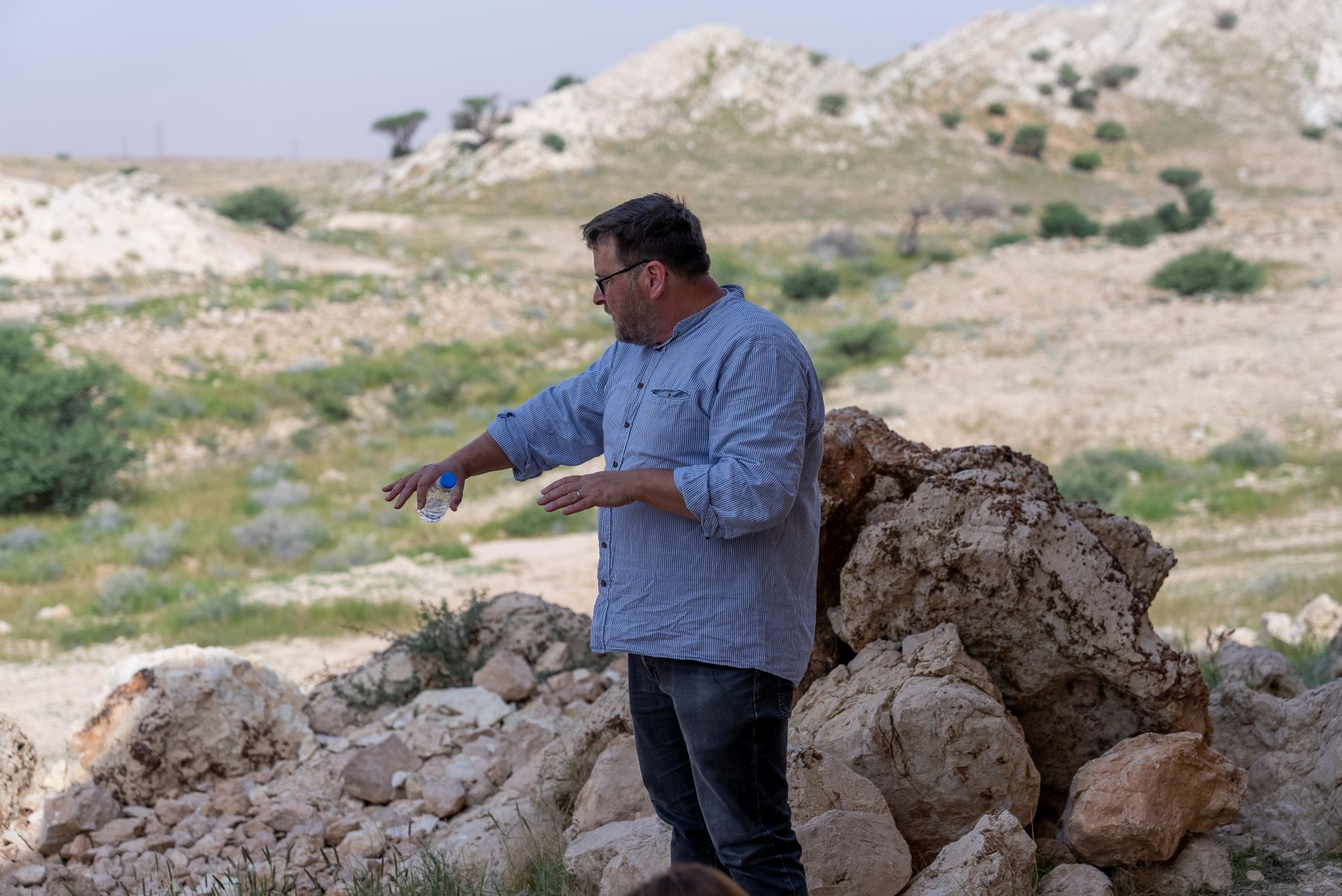
These wetter intervals likely created habitable conditions by supporting vegetation and providing essential water resources. This is considered the first clear evidence linking human presence in Arabia between 60,000 and 12,000 years ago to such environmental changes. The findings indicate that fluctuations in climate played a key role in shaping patterns of human settlement in the region.
Archaeological Evidence and Dating Methods
Excavations at the Buhais Rockshelter revealed layered sediment deposits that preserved archaeological materials, including stone tools. These deposits reached depths of approximately 1.7 metres, allowing researchers to reconstruct a detailed chronological sequence of human activity.
The team used luminescence dating techniques to determine the age of these layers. This method measures the last time mineral grains were exposed to sunlight, enabling scientists to establish timelines for human occupation with a high degree of accuracy. The preserved stratigraphy at the site is considered significant because it provides a continuous record of environmental and human activity over long periods.
Significance of the Faya Region
The Faya Palaeolandscape, located near Jebel Faya in central Sharjah, is one of the most important archaeological regions in Arabia. It contains evidence of human occupation spanning more than 200,000 years, making it one of the oldest records of human presence in arid environments.
The region has long been regarded as a key corridor for early human migration from Africa into Asia. The new findings support this understanding while also providing evidence that populations did not simply pass through the area but returned and settled there repeatedly.
Earlier discoveries in the region, including stone tools dated to around 125,000 years ago, have already indicated the presence of early modern humans and contributed to research on human dispersal routes out of Africa.
Contribution to Human History Research
The study adds important new data to the understanding of early human behavior and migration. By documenting repeated occupation over tens of thousands of years, it provides evidence of long-term adaptation to environmental variability in southeastern Arabia. The findings also position the Faya region as a central site in ongoing research into early human history, particularly in relation to migration patterns and the ability of populations to survive in challenging climates.