

One year ago, Indian news channels declared that major Pakistani cities were as good as dusted; that the ‘port’ in Lahore was destroyed; and that Karachi had fallen to Indian soldiers. They praised their armed forces for a job well done; their civilians felt proud of what they believed their soldiers had achieved; and their ruling party was ecstatic at a win that would boost their ratings. But the truth was exactly the opposite.
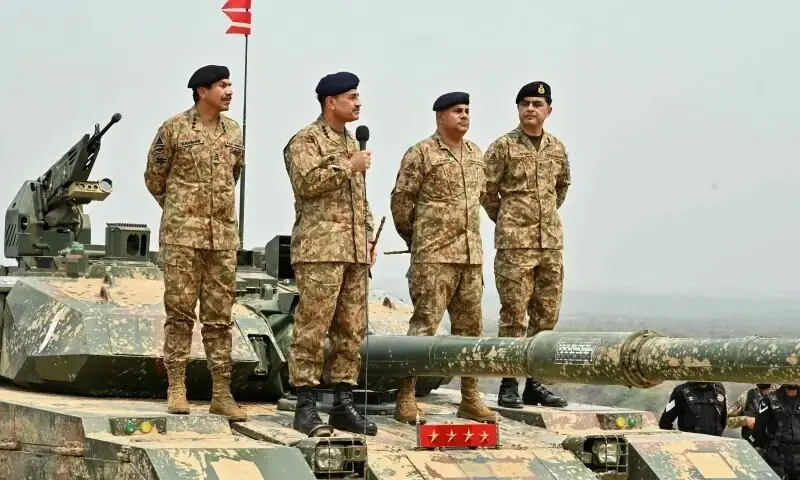
In reality, the Indian Air Force was unable to penetrate Pakistani territory despite claiming superiority before the attack; its soldiers couldn’t even cross their own borders, let alone enter Pakistan, and its opposition party had a field day ridiculing the government for its stupidity, all thanks to the timely intervention of the combined might of Pakistan’s armed forces. While the Pakistan Air Force downed as many as six Rafael jets, highly ranked by India, the Navy and the Army held their ground and didn’t let anything untoward happen to the civilians.
What was equally impressive was how Pakistani news channels covered the events, staying on the right side of history and providing truthful information without sensationalizing. Their reporting was hailed worldwide as authentic, while the Indian media became a laughing stock for spreading fake news and sticking to it until it was revealed they had been played.
This battle, known as Marka-e-Haq, is being celebrated by Pakistanis around the world with great passion on its first anniversary. From social media campaigns to community gatherings, people marked the occasion as a symbol of unity, resilience, and patriotism. Celebrities, artists, and public figures also joined the celebrations, calling Marka e Haq a defining moment in Pakistan’s modern history.
Why is Marka-e-Haq important?
Marka-e-Haq is remembered as a significant chapter in Pakistan’s national narrative, in which the country demonstrated unity, strength, and determination in the face of external challenges. For many Pakistanis, it became more than an operation — it became a symbol of national pride and sovereignty. The occasion also highlighted the importance of the media, public awareness, and the role of digital platforms in shaping global narratives.
Not only did those in the Armed Forces remember the day when India tried to take advantage of its peace-loving neighbor, but people from all walks of life also view the day as one that helped improve the international perception of Pakistan. Pakistan’s image instantly shifted from a less important country to a very important one, one that knows how to defend its borders, thanks to Marka-e-Haq. Neutral news coverage also helped Pakistan gain global recognition, and it emerged as a country that is now facilitating peace in the Middle East, while India is busy making propaganda films in which it is always the winner.
What do celebrities have to say?
Prominent figures from Pakistan’s entertainment industry paid tribute to the country’s armed forces on the first anniversary of ‘Marka-e-Haq,’ calling the military operation a defining national moment that strengthened Pakistan’s global standing and reinforced public confidence in national defense.
Actor Usman Mukhtar, who played an army officer in Sinf-e-Aahan, termed Marka e Haq a proud reminder of Pakistan’s strength and resilience.
According to him, “Marka e Haq has shown the world that Pakistan stands strong, united, and fully capable of defending its sovereignty at all costs. Our armed forces have once again proven their professionalism, strength, and preparedness in safeguarding every inch of our borders. This operation is a befitting response to those who constantly try to portray Pakistan as weak or vulnerable. Pakistan is a resilient nation, and today every Pakistani feels proud seeing our country stand tall on the global stage with dignity, courage, and unwavering resolve.”
Writer and director Mohsin Ali, who has been behind some of the most successful films and TV dramas in the country, also emphasized the importance of narrative warfare in today’s digital age.
Speaking about the impact of Marka e Haq, he said, “I think the biggest positive of all was that we fought the 5th-generation war in a very good way for 4-5 days. The Pakistanis kept their point of view on social media, and I think that was the biggest reason the international community got an idea of what the truth is. Because now whatever war there will be, it will be a war of narrative. It will be a war of narratives more than weapons. And I think that was the most positive point: the narratives of Pakistan were properly conveyed to the international media through every platform, with proof. That I think was the biggest positive.”
Singer Natasha Baig captured the emotions of millions of Pakistanis in just two words: “Pakistan Zindabad.” She said performing live at the Marka e Haq concert in Peshawar was a dream come true, and she felt goosebumps as she stepped onto the stage before a large crowd.
‘Marka-e-Haq has contributed to a stronger sense of national pride and global visibility for Pakistan. It reminded the world of Pakistanis’ resilience and unity and encouraged artists and creatives like us to represent the country with confidence on the global stage.’ Natasha said.
The way forward
Currently, celebrations marking the anniversary of Marka-e-Haq are taking place across the country, with Pakistanis worldwide expressing solidarity with the armed forces and acknowledging their sacrifices for the nation.
The first-year celebration continues to inspire feelings of unity, patriotism, and confidence in the country’s future. For many, it remains a reminder that when the nation stands together, it can overcome every challenge with courage and dignity.