



A young man accuses an older woman of touching him inappropriately below his lower back in an elevator. Not only does he present video evidence of the incident, he also consults his colleagues at a legal team, who advise him to have an FIR registered. However, the police refuse, claiming that there is no law against such an act against a man and, therefore, no crime has been committed.
Ironically, when the same woman approaches the police to file an FIR against the young man, her complaint is accepted without hesitation—despite the existence of video evidence against her. The police are ready to proceed until the woman proposes a compromise: the young man will continue living on the premises as a tenant and will neither report this incident nor any future ones.
This scenario reflects a troubling reality in parts of South Asia, where the burden of proof can become skewed and justice appears inconsistent. Thankfully, in the second season of Maamla Legal Hai, the sharp legal minds turn the tables. The female lawyers devise a clever strategy to expose the woman, ultimately defending their colleague, aptly named Law—the young man in the case.
This is just one of many life lessons delivered by the series’ makers, who tackle serious issues with humor and insight, ensuring viewers learn something new in every episode.
Lesson No. 1: Crime Never Pays—At Any Age
The fictional Patparganj High Court becomes the stage for multiple intriguing cases across the eight-episode season. In one instance, a young man deliberately seeks imprisonment in Tihar Jail so he can boost his social media image as a hardened criminal. In another, a 24-year-old accused of a double murder faces trial—his parents hope for leniency due to his age, while the victims’ families demand justice. The message is clear: crime, regardless of age or intent, comes with consequences.
Lesson No. 2: Always Read the Label
One particularly memorable case involves a man who overuses deodorant to impress the fairer sex, only to end up with severe burns. He takes the matter to court seeking compensation, but it is eventually revealed that reading the product label could have prevented the ordeal altogether.
The episode cleverly extends this lesson to everyday items—bread, jam, and other packaged goods—reminding viewers that things are not always what they seem at first glance.
Lesson No. 3: Excessive Phone Use Has Consequences
While smartphones keep us connected and efficient, overdependence can be damaging. The series subtly addresses this through a lawyer who becomes overly distracted by his phone. His lack of focus costs him professionally and personally—he loses a client and even gets stood up on a date by someone he met online.
The takeaway is simple: not everything in the digital world is genuine, and constant distraction can have real-world repercussions.
Lesson No. 4: Staying One Step Ahead Matters
One of the standout arcs features a High Court judge determined to assert his authority by nitpicking trivial issues. From challenging the oath of the Principal District Judge to blaming court staff for minor mishaps, he thrives on intimidation.
However, the PDJ—portrayed brilliantly by Ravi Kishan—handles each situation with remarkable tact. Instead of confrontation, he uses intelligence and strategy to outmaneuver the judge, eventually turning the tables. It’s a masterclass in dealing with difficult personalities without resorting to aggression.
The season also explores the PDJ’s personal challenges, including a confrontation with someone he once trusted. His approach reinforces the idea that wisdom and composure often triumph over impulsive reactions.
Lesson No. 5: South Asia Has More in Common Than We Think
While Maamla Legal Hai may not match the scale of Suits or The Good Wife, it offers a relatable, regional perspective that resonates with audiences in both India and Pakistan.
In this part of the world, court cases are often seen as exhausting and prolonged battles. Legal systems, still influenced by colonial-era frameworks, can feel outdated. The jury system, once present in both countries, is now a relic of the past, leaving decisions solely in the hands of judges—with mixed outcomes.
The series highlights why many prefer out-of-court settlements and uses its storytelling to educate viewers about their rights and responsibilities. From domestic disputes to serious criminal cases, the issues depicted mirror real-life challenges across both sides of the Wagah border.
Verdict: Characters make Maamla Legal Hai worth your time
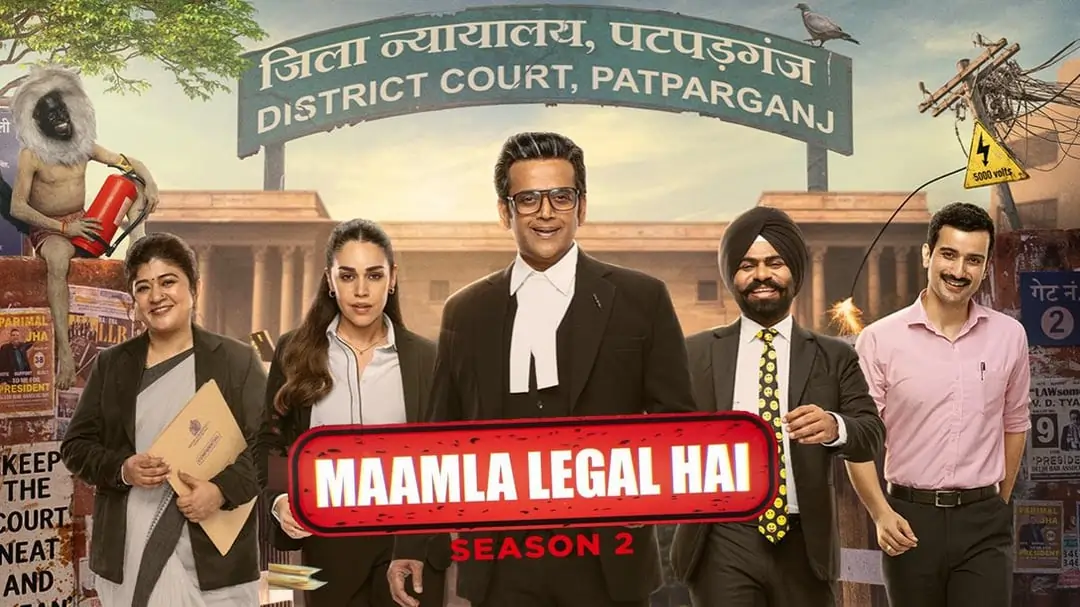
Ravi Kishan delivers a standout performance as Judge V.D. Tyagi, showcasing a significant transformation from his earlier portrayal of a street-smart lawyer in the first season. His nuanced performance adds depth to the narrative.
The supporting cast—including Naila Grewal and Kusha Kapila as the foreign-returned lawyers Ananya and Nayna, Nidhi Bisht and Anjum Batra as Sujata and Mintu, and Anant Joshi as Vishwas Pandey—complements the story effectively, each bringing their own charm and substance to the screen.
If you haven’t watched Maamla Legal Hai yet, now is the time. Whether you start with the first season or continue after finishing the first, the series promises both entertainment and education. By the end, you’ll not only have a smile on your face but also a better understanding of the legal and social dynamics that shape our everyday lives.