


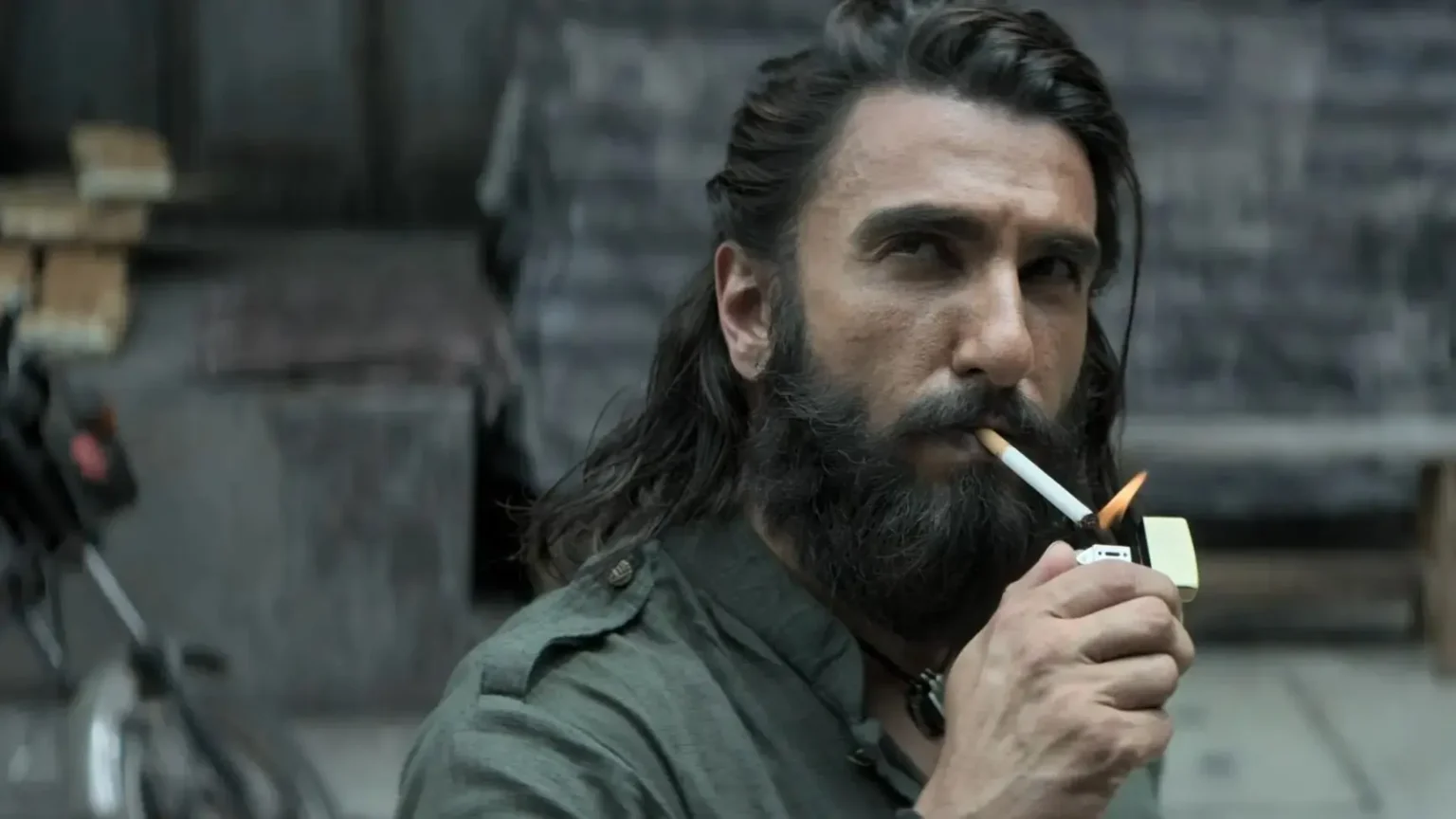

Every so often, a film or two arrives that forces us to confront not just its story, but the direction of an entire industry. Dhurandhar and its sequel Dhurandhar: The Revenge are such films for Bollywood.
On the surface, they tick all the commercial boxes—scale, spectacle, and relevance. But scratch beneath that surface, and a more troubling question emerges: is this what Bollywood is becoming?
More importantly, is this what audiences should accept as the future of Hindi cinema?
To answer that, we must look back—not out of nostalgia, but to understand what Bollywood once stood for and what it now risks losing.
When Cinema Built Bridges, Not Walls
There was a time when Bollywood wasn’t just entertainment—it was cultural diplomacy.
Step outside the subcontinent, and you’ll still see it. Indians and Pakistanis, often at odds politically, bonding effortlessly over films. They quote the same lines, laugh at the same jokes, and celebrate the same stars. Bollywood created a shared emotional space where borders blurred and identities overlapped.
And this wasn’t accidental—it was intentional storytelling
Films like Amar Akbar Anthony wore their message proudly. Three brothers, three religions, one family. It may seem simplistic today, but its impact was profound—it normalized coexistence at a time when division could easily have dominated narratives.
Where Amar Akbar Anthony is mentioned
Similarly, Aap Ke Deewane showed that a Hindu and a Muslim could be best friends, while Naam presented friendships and alliances that transcended religious and national identities. In Naam, a Pakistani character, played by Akash Khurana, helps bail out the protagonist portrayed by Sanjay Dutt—a detail that mattered far more than the film perhaps realized at the time
These films didn’t shout their messages—they lived them.
The Subtle Genius of Inclusion
Then there was the quiet brilliance of filmmakers like Hrishikesh Mukherjee, who delivered thought-provoking films such as Anand, Bawarchi, Chupke Chupke, Gol Maal, Khoobsurat, Naram Garam, Rang Birangi, and Jhoothi in the 1970s and 1980s.
His cinema didn’t rely on grand speeches about unity. Instead, it reflected everyday India, where diversity existed without explanation. A Muslim friend, a Christian uncle, a Sikh neighbor—these characters were not “inserted” for representation; they were part of the narrative fabric.
They mattered. They contributed. And most importantly, they were human. That subtlety is what made those films timeless.
Even Mainstream Cinema Got It Right
Inclusivity wasn’t limited to parallel cinema or socially conscious filmmakers—it existed in mainstream blockbusters as well.
Take 3 Idiots, for instance. At its heart, it was a story about friendship, pressure, and the education system. But it also quietly normalized diversity. One of the three central characters—played by Aamir Khan, R. Madhavan, and Sharman Joshi—was a Muslim, yet his identity was never weaponized or politicized. It simply existed.
Ask yourself this: would 3 Idiots be received the same way if it were released today? Or would it be dissected, debated, and possibly even rejected for not aligning with current ideological expectations?
The uncomfortable truth is that films like PK and OMG – Oh My God!, which dared to place logic and questioning above blind belief, would struggle to find the same acceptance in today’s climate. These films challenged systems, questioned norms, and trusted audiences to think. That trust now seems to be fading.
Enter the 2020s: The Age of Simplification
Modern Bollywood, particularly in the 2020s, appears increasingly comfortable promoting division, to say the least. Characters are often defined by their religious or ideological identities rather than their humanity. The “other” is no longer a character to be understood, but one to be opposed.
This is not storytelling—it is simplification.
And simplification, when repeated often enough, becomes normalization.
Gone are the days when cinema halls erupted with applause when Amitabh Bachchan’s Iqbal in Coolie was saved in a moment that transcended logic and leaned into faith without targeting any one belief. What mattered was not what saved him, but how it connected with audiences emotionally.
Today, films seem less interested in asking questions and more invested in providing answers—often convenient ones. The grey areas that once made cinema compelling are being replaced by black-and-white narratives that leave little room for interpretation.
The Rise of Mythology as a ‘Safe Bet’
Another noticeable trend is the surge in mythological and pseudo-historical films.
There was a time when such content was largely confined to television—Sunday morning staples that audiences consumed out of habit rather than cinematic excitement. Today, the same themes are being repackaged as grand theatrical spectacles and, more worryingly, positioned as the “savior” of Bollywood.
But are they truly saving cinema—or limiting it? When an industry begins to rely heavily on a single genre or narrative style, it risks creative stagnation. Mythology has its place, undoubtedly. But when it becomes the default—overshadowing contemporary, diverse storytelling—it signals a lack of confidence in original ideas.
Cinema thrives on variety. Repetition, no matter how grand, eventually leads to fatigue.
Where Dhurandhar and Its Sequel Fit In
This brings us back to Dhurandhar and Dhurandhar: The Revenge.
These films are not outliers—they are part of a pattern. Their storytelling choices, character portrayals, and thematic direction align with a broader shift in the industry. They reflect a Bollywood that is increasingly aware of immediate audience reactions, but perhaps less concerned about long-term impact.
There is a calculated precision in how narratives are constructed—designed to resonate quickly, provoke strong reactions, and dominate conversations. But in doing so, they often sacrifice depth.
The question is not whether these films work—they likely do, at least commercially. The real question is what they represent. Do they challenge audiences to think? Do they attempt to bridge divides? Or do they simply reinforce what is already being said elsewhere?
If it is the latter, then Bollywood is no longer leading the conversation—it is merely echoing it.
The Diaspora Disconnect
For audiences abroad, this shift carries even greater consequences.
Bollywood has long been a shared cultural thread for Indians and Pakistanis living overseas. It provided common ground—a neutral space where identity was celebrated rather than contested.
But as narratives become more divisive, that shared space begins to erode.
Two friends watching a film together may now find themselves interpreting it differently—not because of artistic ambiguity, but because of ideological positioning. The experience of cinema, once unifying, risks becoming isolating.
And when that happens, Bollywood loses one of its greatest strengths—its ability to connect.
What Bollywood Risks Losing
At its best, Bollywood told stories that transcended identity. It reminded audiences that humanity was larger than religion, that friendships could exist beyond borders, and that differences were not threats but strengths.
Today, that philosophy feels increasingly distant.
Films like Dhurandhar and its sequel are not solely responsible for this shift—but they are indicative of it. They represent an industry at a crossroads, one that must decide whether it wants to challenge its audience or simply cater to it. Because the two are not the same.
The Way Forward—or Backward?
Bollywood doesn’t need to return to the past—but it does need to remember it.
It must rediscover the balance between entertainment and responsibility, between spectacle and substance, between identity and individuality.
Because if cinema stops reflecting the complexity of the world, it risks becoming irrelevant to it.
For decades, Bollywood taught us that different faiths could coexist under one roof, that logic and questioning had a place in storytelling, and that unity was not just an ideal, but a reality worth striving for.
The question now is simple, yet urgent: Does Bollywood still believe in that vision? Or has it already chosen a different path?
Dhurandhar and Dhurandhar: The Revenge suggest a different story—one that feels increasingly disconnected from the values many grew up associating with Bollywood, and one that risks alienating audiences who can no longer relate to what they see on screen.