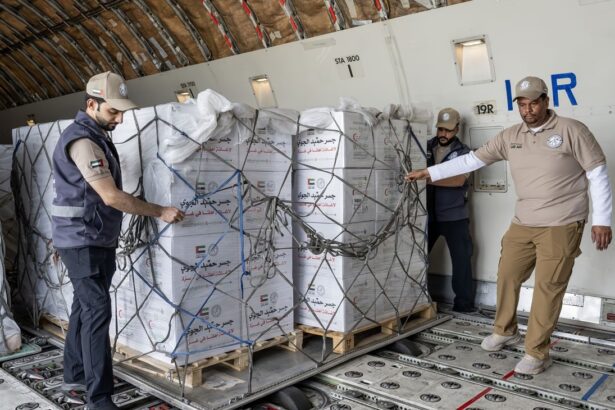


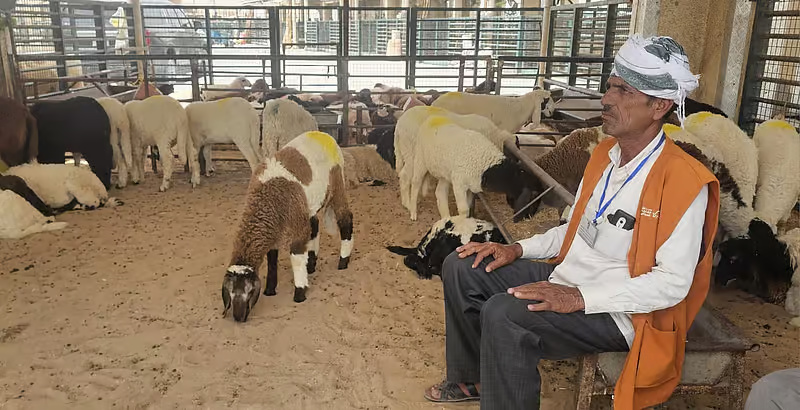
Indian goats are landing in the UAE by air cargo this year, with traders at the Sharjah livestock market saying shipping disruptions in the region have forced them to switch routes ahead of Eid Al-Adha. The change has pushed prices up, with goats now selling from Dh800 to Dh2,200 per head depending on breed and weight.
With less than a week to go before the festival, residents have started visiting the Sharjah livestock market in Sajaa to compare breeds, check rates, and plan their sacrifice. Khaleej Times reported that buyers are also asking about Somali and Sudanese livestock, though Indian breeds remain the top choice this season.
Market officials told the publication that new tracking systems and additional facilities have been put in place to handle the rush. The biggest crowds are expected on Arafat Day and the first day of Eid, when thousands of residents typically arrive to select and slaughter their animals.
Indian goats prices in UAE
Abdul Qureshi, a trader at the Sharjah market, told Khaleej Times that prices currently start at around Dh800 and can reach Dh2,200 depending on breed, size, and weight. Somali goats are selling between Dh1,000 and Dh2,000, while Indian goats are going for Dh900 to Dh1,600 and above.
Shahid Mirza of Al Rukn Livestock Trading said prices have moved up slightly this year because of the shift to air cargo. He said Indian goats used to arrive by sea on a journey that took five to seven days. Now, because of regional shipping conditions, some traders are flying the animals in instead.
Most families this year have a budget of around Dh1,000 to Dh1,500 per goat, traders said. Gulf News reported earlier this month that overall livestock demand across the UAE is expected to climb by as much as 80 percent in the days leading up to Eid Al-Adha, with prices about 10 percent higher than last year.
Gulf News also quoted trader Ali Ibrahim as saying Somali sheep are selling between Dh700 and Dh800, while Indian goats weighing around 60 kilograms are going for Dh2,000 to Dh2,500. Sheep prices in the broader market range from Dh800 to Dh2,500, with calves priced between Dh6,000 and Dh8,000.
Sharjah Livestock Market and Eid al Adha Arrangements
Abdullah AlShamsi, regional market manager in Sharjah, told Khaleej Times that all preparations for Eid Al-Adha have been completed in cooperation with Sharjah Police, Sharjah Municipality, and other entities. He said a new tracking system for sacrifice orders has been introduced to speed up service.
The market has also added dedicated customer pathways to reduce congestion and set up equipped waiting tents for visitors. The number of butchers, cleaning staff, and supervisors has been increased to keep hygiene and operations on track during the rush.
AlShamsi said that once a goat is handed over for sacrifice, it moves through slaughtering, skin removal, waste removal, inspection, and cutting. Under normal conditions, the full process takes around 20 to 25 minutes. He added that wait times during peak Eid hours are difficult to predict because of the large number of expected visitors.
On the first day of Eid, the market will stay open after Eid prayers until 10pm, AlShamsi said. Apartment residents who do not have space to keep livestock at home can still select and pay for their goats in advance.
Animals can stay inside the market pens for one or two days before the customer returns to send them to the slaughterhouse. AlShamsi said the option has helped apartment residents avoid last-minute rushes and transport problems.
UAE Eid Al-Adha Preparations
Traders said enquiries for sacrificial animals are already coming in, though most sales are expected closer to Arafat Day and Eid morning. Sheep, goats, cows, and camels are the only animals permitted for Qurbani under Islamic teachings. Sheep and goats must be at least one year old, cattle two years, and camels five years, and all animals must be healthy and free from major defects.
For now, market traders in Sharjah said supply is steady despite the shift to air cargo. Indian breeds remain the most-asked-for option, and the airlift route has kept stock flowing into the UAE as Eid approaches.