A Golden Era Begins
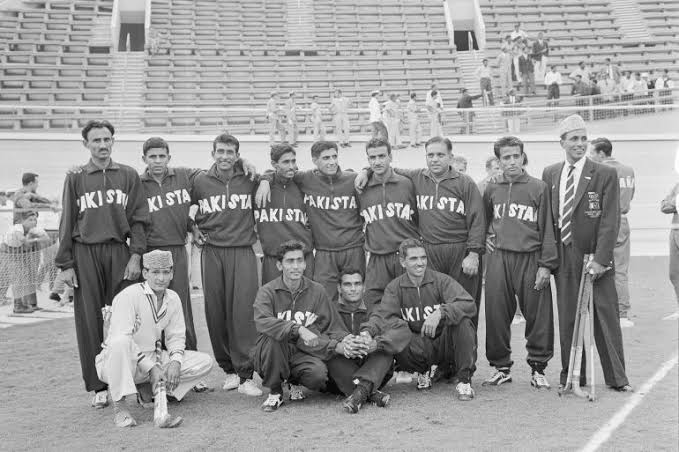
In the mid-twentieth century, few nations dominated a single sport the way Pakistan dominated field hockey. Between 1956 and 1984, the Pakistan men’s hockey team claimed eight Olympic medals — three gold, three silver, and two bronze — a haul that placed the country among the true giants of the sport, standing shoulder to shoulder with India and the Netherlands. For a nation barely a decade old at the time of its first medal, this was an extraordinary statement of sporting identity.
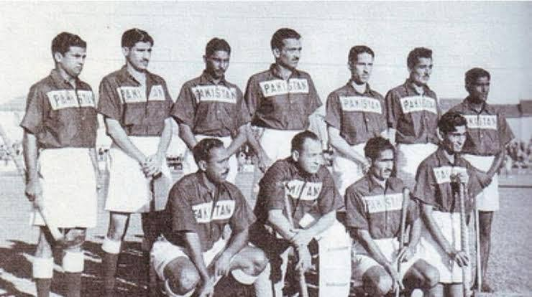
The historic 1960 Rome Olympic Gold medal winning squad. Source: Asian Hockey Federation
The Rise to Prominence
Pakistan’s Olympic hockey journey began at the 1956 Melbourne Games, where the team won silver, narrowly losing to India in the final. That result set the tone for the next three decades: fierce, closely fought contests, often against India, that captivated audiences across South Asia. The rivalry between the two nations became one of the most storied in Olympic hockey history, with matches drawing enormous crowds and even greater emotional investment back home.
Pakistan broke through for its first gold medal at the 1960 Rome Olympics, defeating India 1-0 in the final. It was a landmark moment — the first time India had lost an Olympic hockey final since the sport’s introduction to the Games decades earlier. The victory established Pakistan as a genuine hockey superpower and a source of immense national pride.
Sustained Excellence
The following decades saw Pakistan maintain remarkable consistency. Silver came again at Tokyo 1964, followed by a second gold at Mexico City 1968. The team added a silver at Munich 1972 and a bronze at Montreal 1976, showing that its success was no fluke but the product of a deep, well-organized hockey culture built around domestic leagues, departmental teams, and a steady pipeline of skilled players.
The pinnacle of this golden period arrived at the 1984 Los Angeles Olympics, where Pakistan captured its third Olympic gold medal, cementing its status as one of the most successful hockey nations in Olympic history. A further bronze at Barcelona 1992 rounded out the tally of eight medals — a record that remains a defining chapter of Pakistani sport.
Innovators of the Game
Beyond medals, Pakistan’s teams were known for their flair and technical brilliance. Players became famous for close ball control, quick stick-work, and attacking creativity that set new standards for the sport. Pakistan was also among the pioneers in adapting to hockey’s shift from grass to synthetic turf in the 1970s, a transition that changed the game’s speed and tactics worldwide.
Legends Who Defined an Era
Pakistan’s Olympic success was built on the brilliance of individual players who became household names across the hockey world. Manzoor Hussain Atif captained the team through its formative years and led the squad to gold at the 1960 Rome Olympics. Islahuddin Siddiqui emerged as one of the most iconic figures in Pakistani hockey, known for his dazzling dribbling skills and sharp finishing across multiple Olympic campaigns in the 1970s.
No discussion of Pakistan’s hockey legends is complete without Hassan Sardar, widely regarded as one of the greatest forwards the sport has produced. His blistering pace and clinical goal-scoring were central to Pakistan’s gold medal triumph at the 1984 Los Angeles Olympics, where he was named Player of the Tournament.
Shahbaz Ahmed, often called the “Maradona of Hockey” for his extraordinary dribbling and ball control, became one of the sport’s most recognizable stars through the late 1980s and 1990s. Samiullah Khan, nicknamed the “Flying Horse,” was renowned for his searing pace on the left wing and remains one of the most celebrated wingers in the sport’s history.
These players didn’t just win matches — they shaped the identity of the sport itself, influencing playing styles that hockey nations around the world sought to emulate. Their names remain etched in Pakistan’s sporting folklore, even as the team’s fortunes have since changed dramatically.
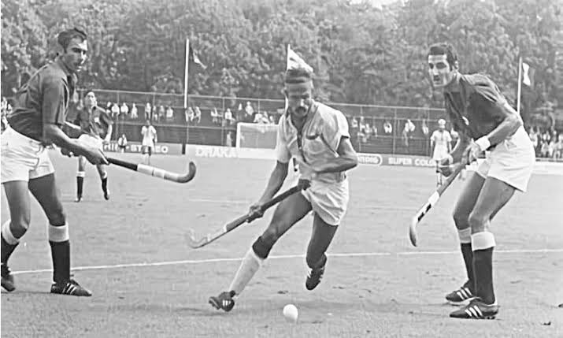
A classic, high-stakes clash between Pakistan and India during the golden era. Source: Dawn
A Legacy Worth Remembering
Today, Pakistan’s hockey heritage exists largely in memory and archive footage rather than active competition. Yet the achievements of those eight Olympic medals, and the legends who delivered them, remain a powerful reminder of what the nation once accomplished on the world stage. For many Pakistanis, hockey was the original national sport, and its golden era stands as proof of what focused investment, talent development, and national passion can produce.
Reviving that legacy would require sustained commitment from sporting authorities, but the historical record leaves no doubt: Pakistan was once a hockey powerhouse whose story deserves to be remembered, celebrated, and perhaps one day, revived.