
Pakistani cinema delivered two vastly different cinematic experiences with Luv Di Saun and Psycho, but neither fully rises above its flaws. One succeeds by keeping things simple, while the other collapses under the weight of its own ambition.
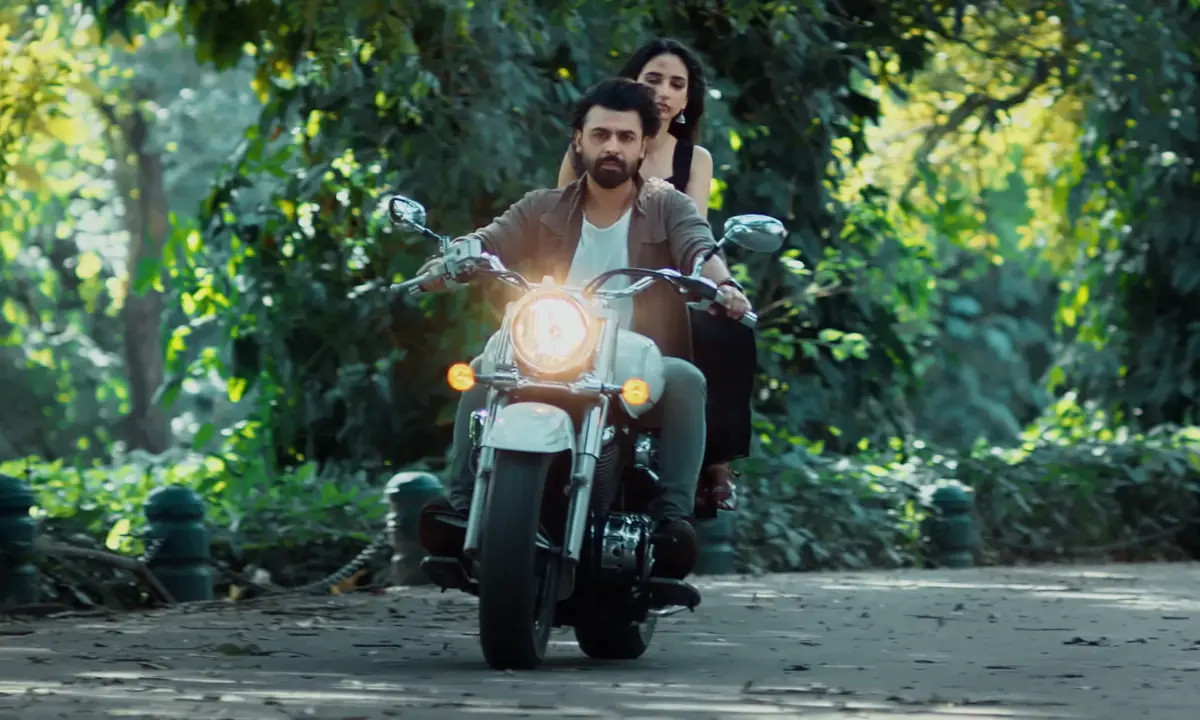
Luv Di Saun follows Zeeshan (Farhan Saeed)—or “Zayshan,” as the characters repeatedly call him—as he becomes entangled in a story blending romance, tradition, and social commentary. While hardly groundbreaking, the film offers sincerity that keeps viewers invested until the climax, which ultimately falls flat.
Psycho, on the other hand, suffers from an identity crisis. It begins as a courtroom romance between opposing counsel, then shifts focus to their shared mentor’s marriage to a much younger woman, before veering into psychological thriller territory, with twists that feel more confusing than compelling. The result is a film that never seems certain of what it wants to be.
Why Luv Di Saun lingers longer than Psycho
If both films had been released in 2006, they might have been more readily accepted by audiences. The greenscreen was acceptable in those days, as was cheesy romance, which doesn’t work today, when the filmmakers have a second screen to counter as well—the mobile.
Also, in this day and age, filmmaking demands sharper storytelling and a stronger command of contemporary cinematic language, as hinted at in Luv Di Saun but missing in Psycho, despite Psycho being Shaan’s most modern work in recent years.
Even then, Luv Di Saun works better because it doesn’t try too hard. Its tawaif-inspired angle may feel old-school, but its exploration of interfaith harmony gives it a freshness rarely seen in local cinema.
Psycho, meanwhile, grows increasingly chaotic with each passing scene. Despite the presence of seasoned performers such as Shabbir Jan, Sonya Hussyn, and Javed Sheikh, the film spirals into excess. While its use of spy cameras and location tracking might seem innovative for Pakistani cinema, that says more about how slowly local filmmaking has evolved than about the film itself.
Abrupt endings, but one is far worse
Both films end abruptly, but Psycho takes abruptness to another level.
Luv Di Saun at least has enough strengths to offset its weak conclusion. Farhan Saeed carries the entire film on his shoulders and doesn’t falter, whether in the fight sequences, the dramatic moments, or the romantic ones. More films can make him a dependable star, provided he chooses them wisely.
Mehrunnisa Iqbal proves she can both perform and command the screen, while Mamya Shahjaffar shows promise. Though still finding her footing as a film actress, she demonstrates the ability to act and dance, making her a definite asset.
Rana Ejaz’s Kartar Singh Happy gradually grows on the audience, whereas Tabrez Khan’s exaggerated villain feels like a relic of a bygone era. There was a time when over-the-top antagonists dominated Pakistani cinema, but modern audiences respond better to subtlety.
The excessive use of AI-generated outdoor shots in both films is disappointing. In Luv Di Saun, what could have been an exciting stunt sequence meant to establish the lead’s daredevil persona is undermined by obvious green-screen work, which robs the scene of authenticity.
Psycho: A missed opportunity
Despite boasting a star-studded cast, Psycho fails spectacularly. Its few positives include Shaan Shahid’s return to feel-good normal acting, Sonya Hussyn’s confirmation as a bankable film actress, and Shabbir Jan’s commanding performance as the antagonist. Every time he appears on screen, he elicits a genuine audience reaction—proof that he is tailor-made for the big screen.
Unfortunately, these bright spots are buried beneath technical and narrative missteps. The unnecessary background score overwhelms rather than elevates the scenes, especially in the courtroom scene. The camera remains distractingly jittery, scenes feel disconnected, and repetitive shots render the film visually monotonous.
The second half is particularly disastrous. Poor editing and visibly mismatched dialogue syncing make it feel like a hastily assembled montage rather than a coherent continuation of the story. Director of Photography Saleem Daad appears to be the only person committed to crafting something visually compelling, yet even his efforts seem lost in the final cut.
The twist itself had potential, but its execution fell flat. Had Alfred Hitchcock been alive, he might have barred the makers from tainting the name of his film, which is now a classic for playing with the mind rather than the audience’s funny bones.
Performances that miss the mark
Both films feature heavy English dialogue, but while it suits Farhan Saeed’s character returning from abroad in Luv Di Saun, it feels forced and unnatural in Psycho.
Fans of Better Call Saul or of psychological thrillers like Misery would do well to avoid Psycho. Meera, despite being the producer, is the film’s weakest link, and even though she chose a role that suited her age, the character’s motivation was never revealed properly.
Nayyar Ejaz’s odd blend of Sherlock Holmes and Columbo is more irritating than intriguing. It may have worked on a weekly television show, but it feels out of place in a cinematic setting, especially when the film is about a Psycho.
Talat Shah’s role does exactly what Adnan Butt’s character did in Bullah – harass, rape, and kill girls, all while under the influence. No acting skill required. Even though Adnan Butt has a relatively better role here, he fails to make an impression. As for Javed Sheikh, he was used wisely in Zombeid but not in Psycho. His towel dance is a moment best forgotten.
One cameo strikes gold, one doesn’t
Luv Di Saun delivers two notable cameos, but only one truly lands.
Babar Ali’s portrayal as the head of security of a rich man is effortlessly effective. He looks the part, commands authority, and leaves an immediate impact. After also impressing in Zombeid, he continues to prove his relevance in contemporary Pakistani cinema.
Humayun Saeed’s cameo, however, feels rushed and underdeveloped. Unlike Babar Ali’s carefully staged entrance, his character is introduced without buildup or payoff. A more thoughtfully crafted sequence could have made his appearance memorable.
Final Verdict
Luv Di Saun isn’t a great film, but it is watchable and occasionally engaging. Had it avoided the unnecessary “To Be Continued” ending, it might have earned a higher rating. Also, I believe that had the makers delayed the film’s release and completed it before opening it to the public, they would have done themselves and the audience justice.
Psycho, meanwhile, desperately needed tighter editing and a shorter runtime. If any film needed a ‘To Be Continued’ ending, it was Psycho, with one film ending after the resolution of a case and the other when the Misery-style misery ends. That way, it could have been a sharper, more effective thriller. Not following that pattern only drags it down.
Rating:
Luv Di Saun: 5/10
Psycho: 3/10