

Eid Al Adha falls on Wednesday, May 27 in the UAE this year. Beyond the celebrations lies one of the most important lessons in Islamic history.
- The Story Behind Eid Al Adha
- When Is Eid Al Adha 2026?
- The Meaning of Sacrifice
- The Equality That Eid Al Adha Teaches
- The First Ten Days of Dhul Hijjah
- The Day of Arafah
- How Eid Al Adha Is Observed Across the Muslim World
- Pakistan and Bangladesh
- Saudi Arabia
- United Arab Emirates
- Turkey
- Indonesia and Malaysia
- Egypt and North Africa
- The Diaspora
- A Reminder for Every Believer
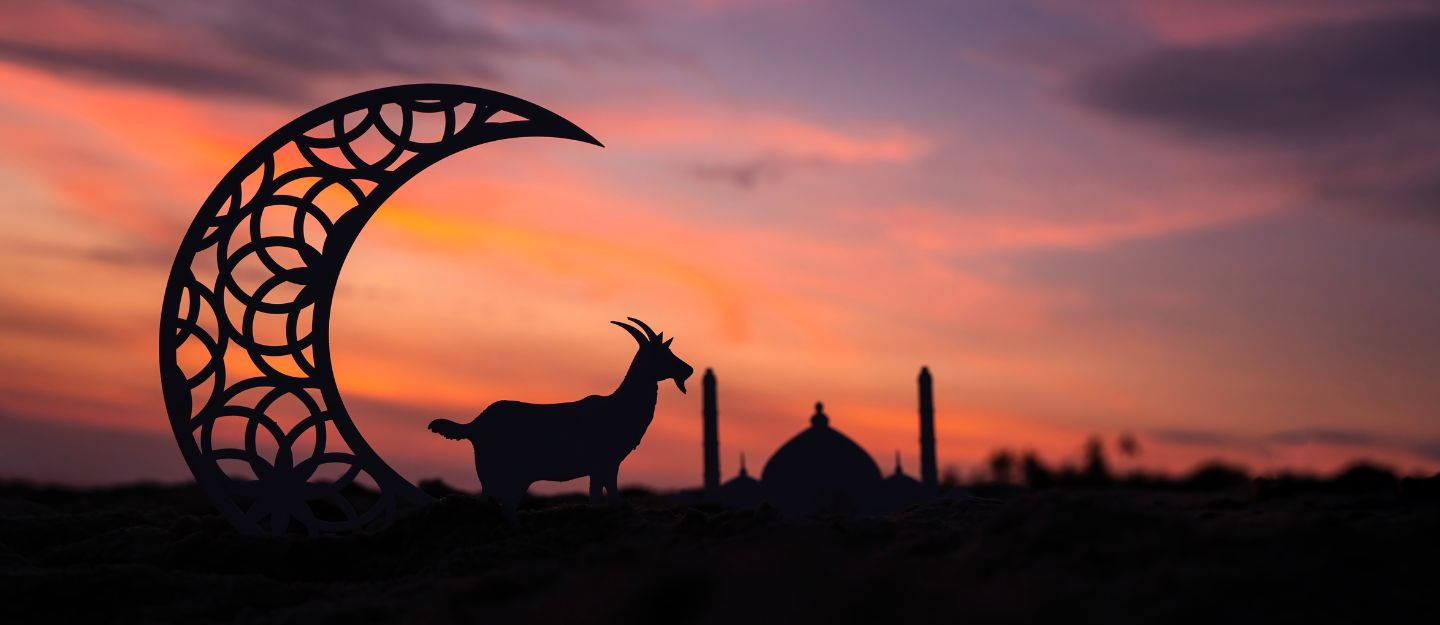
Eid Al Adha is the second of the two major festivals in Islam and one of the most significant observances in the Muslim calendar. It marks the culmination of Hajj, the annual pilgrimage to Makkah, and commemorates the willingness of Prophet Ibrahim, peace be upon him, to sacrifice his beloved son Prophet Ismail, peace be upon him, in obedience to Allah.
The UAE Council for Fatwa has confirmed that Arafat Day will fall on Tuesday, May 26, 2026, with Eid Al Adha beginning on Wednesday, May 27, corresponding to 10 Dhul Hijjah 1447 AH. Observances continue through Thursday, May 28 and Friday, May 29. Public sector employees and students across the UAE will observe a nine-day break.
The Story Behind Eid Al Adha
Prophet Ibrahim, peace be upon him, was tested by Allah throughout his life. He had stood alone against an entire nation of idol worshippers, been cast into a fire that Allah turned cool upon him, and left his family in a barren valley with nothing but trust in his Lord. In his old age, Allah blessed him with a long-awaited son, Prophet Ismail, peace be upon him.
The final and greatest test came in a dream. Prophet Ibrahim was shown that he must sacrifice this beloved son. Knowing that the dreams of prophets are revelations, he shared the vision with his son and asked what he thought. Prophet Ismail responded with extraordinary submission, telling his father to do as Allah had commanded.
Father and son set out together. At the very moment the command was to be carried out, Allah intervened and sent a ram in place of the boy. The Quran tells us that Allah ransomed him with a great sacrifice (37:107).
What Allah had truly asked for was never the life of the son. It was the submission of the father and the trust of the son. That submission was offered without hesitation, and it was accepted.
When Is Eid Al Adha 2026?
The UAE moon-sighting committee confirmed the crescent of Dhul Hijjah on Sunday evening, May 17, marking Monday, May 18 as the first day of the Islamic month. Saudi Arabia confirmed the same.
The Meaning of Sacrifice
The Arabic word for sacrifice is Qurbani, derived from the root Qurb, meaning closeness. The sacrifice is not about the animal itself. It is about drawing closer to Allah through an act of submission and remembrance.
The Quran is clear that the meat and the blood of the sacrifice do not reach Allah. What reaches Him is the piety and sincerity of the one offering it (22:37). A Qurbani performed without proper intention is no more than an ordinary slaughter. The animal becomes meaningful only when it carries the weight of submission behind it.
Sacrifice in Islam is not limited to one day in Dhul Hijjah. It is a lifelong practice. Sacrificing ego for humility, comfort for the needs of others, time for worship, and wealth for charity. The annual Qurbani is the reminder of a principle meant to run through every day of a believer’s life.
The Equality That Eid Al Adha Teaches
Of all the lessons Eid Al Adha carries, one stands above the rest. It is the lesson of equality before Allah.
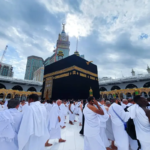
When the pilgrim removes his everyday clothing and puts on the two simple white sheets of Ihram, something profound happens. The king cannot be distinguished from the labourer. The wealthy merchant stands shoulder to shoulder with the farmer. The scholar prays beside the unlettered. Every marker of status is stripped away. What remains is the human being, standing before his Creator, with nothing to offer but his soul.
This is the message that the Prophet Muhammad, peace be upon him, delivered in his Farewell Sermon on the plain of Arafah more than fourteen hundred years ago. He reminded the gathered believers that all of humanity descends from a single father, and that no Arab is superior to a non-Arab, no white person superior to a black person, no rich man superior to a poor one, except through piety.
Every year, when Muslims gather for the Eid prayer, when pilgrims circle the Kaaba, when families distribute meat to those who have less than they do, this principle is renewed.
The meat of the Qurbani must be shared in three portions. One third for the family. One third for relatives and friends. One third for the poor. This division is not arbitrary. It is the structure designed to ensure that on the holiest day of the year, the wealthy do not feast while their neighbours go hungry. In countries where poverty runs deep, the Qurbani is often the only time of year when families taste meat.
The First Ten Days of Dhul Hijjah
The ten days leading up to Eid Al Adha are considered the most blessed days of the year. Scholars across all four major schools of Islamic thought agree that these days carry a spiritual weight unmatched at any other time, with even small acts of worship multiplying in reward. Allah Himself swears by these ten nights in Surah Al-Fajr.
The Day of Arafah
The 9th of Dhul Hijjah, the Day of Arafah, holds a station unmatched by any other day in the Islamic calendar. It was on this day, on the plain of Arafah, that Allah revealed the verse completing the religion of Islam (5:3). For pilgrims, standing at Arafah is the moment that completes Hajj. For Muslims at home, it is a day of fasting, supplication, and deep reflection. Fasting on this day is said to expiate the sins of the previous year and the year to come.
How Eid Al Adha Is Observed Across the Muslim World
Although the rituals are identical, every Muslim culture brings its own depth to the festival.
Pakistan and Bangladesh
In Pakistan and Bangladesh, Eid Al Adha is observed with extraordinary reverence and preparation. Families begin selecting their sacrificial animals weeks in advance, treating them with care until the day of sacrifice. The Eid prayer is performed in large congregations, often at Eidgahs that have served communities for generations. Meat is distributed widely, with families ensuring that no neighbour is overlooked. Traditional dishes such as biryani, korma, and nihari are prepared for three days of family gatherings.
Saudi Arabia
The kingdom’s observance is inseparable from Hajj itself. The holy cities of Makkah and Madinah become the spiritual centre of the Muslim world, with pilgrims completing the final rites at Mina, Arafah, and Muzdalifah. Saudi families across the country mark the day with morning prayers and traditional meals featuring Kabsa, Mandi, and slow-roasted lamb. National efforts ensure meat is distributed to the poor.
United Arab Emirates
In the UAE, Eid Al Adha is marked by a unified national observance. Mosques across all seven Emirates fill for the Eid prayer. Qurbani is performed at licensed slaughterhouses, with meat distributed to charities, low-income families, and workers in labour accommodations. Traditional dishes such as Harees, Machboos, and Ouzi anchor family gatherings.
Turkey
Known as Kurban Bayramı, the four-day observance is a national event. The sacrifice is conducted at authorised abattoirs, and many families choose to donate the equivalent cost to charity, a practice considered permissible. Children visit grandparents and receive Bayram Harçlığı, the Turkish equivalent of Eidi, while families gather over multi-course meals featuring lamb and traditional sweets.
Indonesia and Malaysia
Home to the world’s largest Muslim populations, these countries observe Eid with deep community spirit. The day begins with mosque prayers, often held in open fields, followed by communal Qurbani organised by neighbourhood committees and mosques. Traditional dishes such as Rendang and Sate are shared among family and community.
Egypt and North Africa
In Egypt, Eid Al Adha begins with large prayers at historic mosques such as Al-Azhar. Families perform the sacrifice and gather over Fattah, a layered dish of rice, bread, and meat prepared specifically for this day. In Morocco, the observance is known as Eid Al Kabir, the Greater Eid, with families preparing Mechoui, Tagine, and couscous over the four days.
The Diaspora
Across the United States, the United Kingdom, Canada, Australia, and Europe, Muslims gather at community centres, mosques, and rented venues for Eid prayers. The Qurbani is often arranged through halal butchers or international charities that perform the sacrifice in regions of need such as Yemen, Syria, Palestine, Somalia, and Sudan. In doing so, the spirit of the day continues to feed those who otherwise would not eat meat for an entire year.
A Reminder for Every Believer
Eid Al Adha is a day, but its lessons are not confined to it. It reminds the believer that wealth, status, and worldly position mean nothing before Allah. It reminds the believer that no act of worship is complete without sincerity. It reminds the believer that the worship of Allah and the service of His creation are not separate paths but one. And it reminds the believer that every gift in this life, every loved one, every blessing, ultimately belongs to the One who gave it.
Prophet Ibrahim, peace be upon him, was asked to give up the most beloved thing in his life. He did not hesitate. And in return, Allah did not take his son. He accepted his trust, his obedience, and his love as the true sacrifice.
This is the legacy that Muslims inherit every year on the 10th of Dhul Hijjah.
Eid Mubarak in advance to readers across the UAE and around the world.