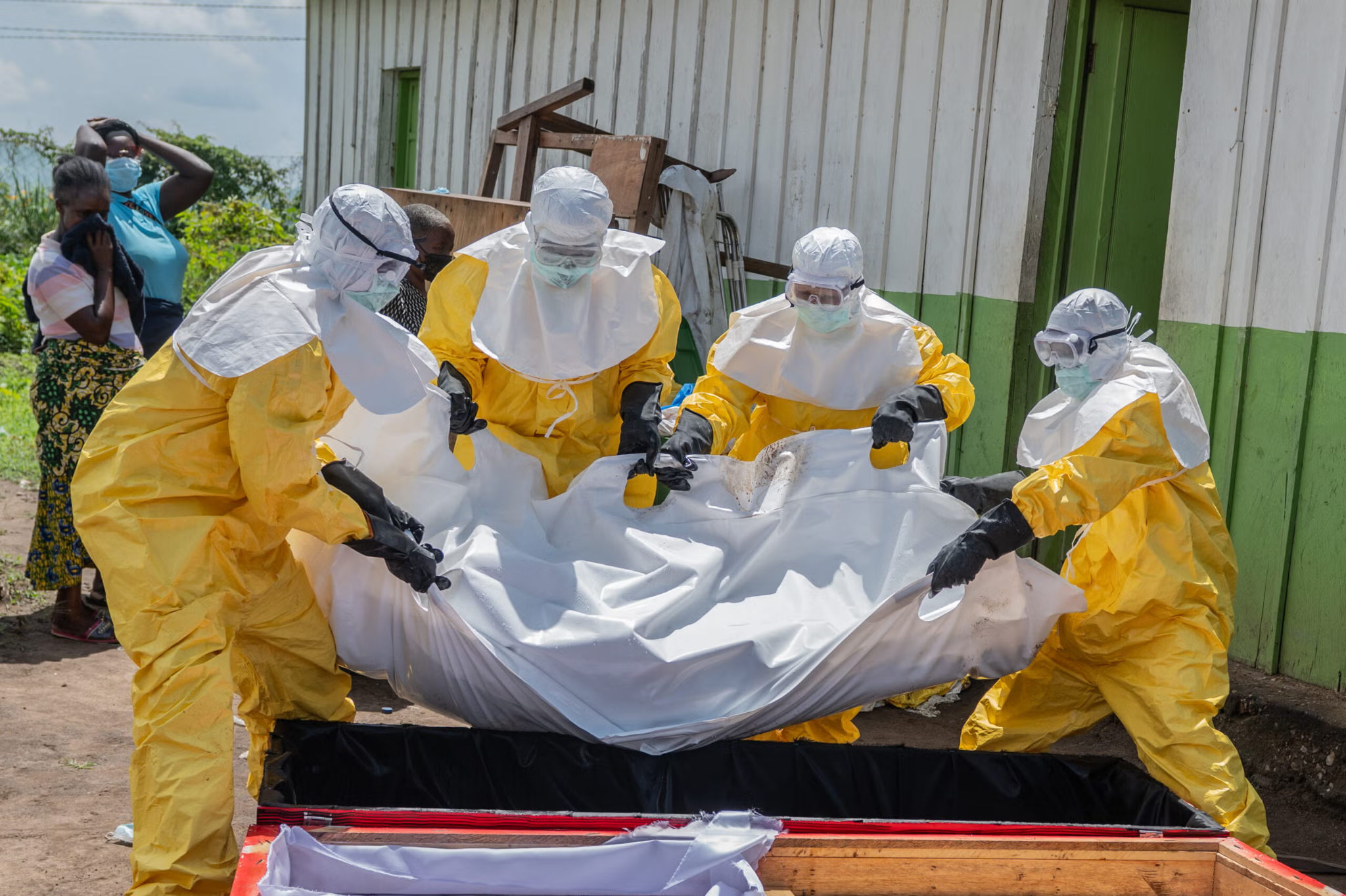
An Ebola outbreak in Central Africa has renewed pressure on world leaders to finalize a global pandemic agreement.
A growing Ebola outbreak in Central Africa has renewed pressure on world leaders to finalize a long-delayed global pandemic agreement. A group of former heads of state and senior health figures published an open letter on June 8 warning that the world keeps meeting disease outbreaks with what they described as a cycle of panic and neglect. The letter, first reported by Politico, characterized the current outbreak as a preventable disaster.
The outbreak is caused by the Bundibugyo virus, a rare strain of Ebola, and is affecting the Democratic Republic of the Congo and Uganda. The World Health Organization declared it a Public Health Emergency of International Concern in mid-May, its highest level of alert, which signals a serious cross-border risk requiring coordinated international action.
As of this week, the outbreak had reached 608 confirmed cases and 102 deaths, and had crossed at least one international border. Officials note that the Bundibugyo strain is harder to control than the more commonly seen Zaire ebolavirus. The virus spreads through direct contact with the body fluids of a symptomatic patient.
The human and economic effects have been significant in affected areas. Families have been separated in isolation wards, health workers are operating under pressure in stretched facilities, and some markets and schools have closed as communities respond to the spread.
To contain it, the WHO and the Africa Centres for Disease Control and Prevention launched a joint response plan in early June. The plan runs from June to November 2026 and is costed at 518 million US dollars, drawing on support from agencies including UNICEF, the UN refugee agency, the World Food Programme, the International Federation of Red Cross and Red Crescent Societies, and the diagnostics group FIND. The approach has been summarized as one plan, one budget, and one team.
Outside the affected region, the European Centre for Disease Prevention and Control has assessed the risk to people in the European Union as very low, citing the way the virus transmits and the low likelihood of cases spreading there.
Leaders push for a global pandemic agreement
The open letter was headlined by four bodies that monitor global pandemic preparedness: the Independent Panel for Pandemic Preparedness and Response, the Global Preparedness Monitoring Board, the Panel for a Global Public Health Convention, and the Global Council on Inequality, AIDS and Pandemics. It was also signed by former New Zealand Prime Minister Helen Clark, former Liberian President Ellen Johnson Sirleaf, and a former British foreign secretary, among others.
The signatories argue that three outbreaks since the Covid-19 pandemic could have been avoided: mpox, hantavirus, and the current Ebola outbreak. They call on governments to make decisions that prevent and stop infectious disease outbreaks from killing people, draining economies, and weakening public trust.
At the center of their appeal is the WHO Pandemic Agreement. Member states were expected to finalize the accord in Geneva in May, but the process has now been postponed for the third year in a row. According to the letter, the delay stems from a failure to reach consensus on how to share pathogen samples, data, and vaccines.
The idea for the agreement took shape during the Covid-19 pandemic. At the urging of the European Union, member states agreed that an international framework was needed to address the fragmented and uneven national responses seen during that crisis. The agreement is intended to set out countries’ responsibilities to identify the cause of an outbreak more quickly, and to provide for cooperation and fair distribution of vaccines and medicines. Supporters say such measures would help reduce the high death tolls that fell hardest on poorer countries during Covid-19.
The letter urges world leaders to conclude and ratify the agreement as rapidly as possible and to put it into practice. It also calls for fair, predictable, and affordable funding for the international health system, along with stronger arrangements for sharing information during outbreaks.
The appeal arrives ahead of a high-level meeting on pandemic preparedness scheduled for later in 2026, which the signatories view as an opportunity to move from commitments to action. They have framed the meeting as a moment to focus on practical steps, including faster deployment of health measures and clearer financing.
The Ebola outbreak in the Democratic Republic of the Congo and Uganda is turning into a severe crisis. The response plan launched by the WHO and Africa CDC is in its early months. The agreement that the letter’s signatories want finalized remains unresolved after three years of negotiations.
Read more about Ebola symptoms, spread and treatment: https://theexpatstory.com/ebola-outbreak-2026-symptoms-spread-treatment-and-latest-updates/