


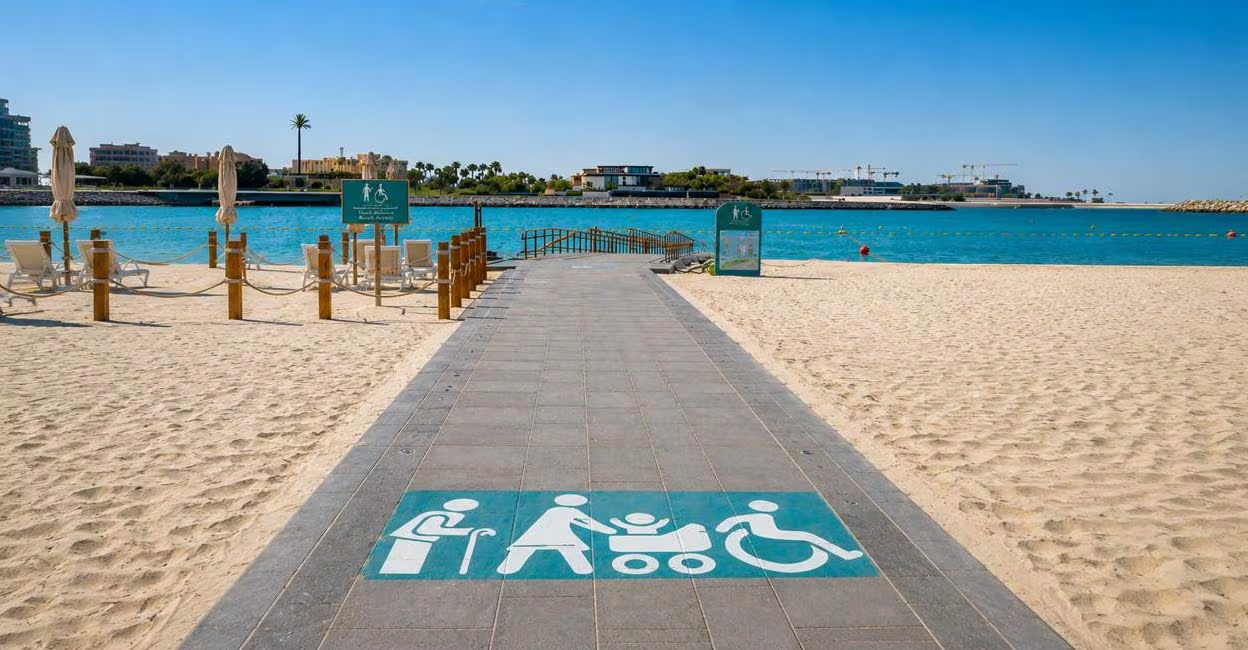
Dubai has taken another step towards making its public spaces more inclusive after Jumeirah Beach 2 became the city’s first beach to receive the Gold Accessibility Certification from the World Disability Union. The recognition reflects the beach’s compliance with international accessibility standards and its efforts to create an environment that can be enjoyed by people with different physical, sensory and cognitive needs.
One of the most notable additions accompanying the certification is the opening of the Middle East’s first beach sensory room. Located within the beach facilities, the dedicated space has been designed to provide a calm and controlled environment for visitors who experience sensory sensitivities, including many People of Determination and individuals on the autism spectrum. The initiative forms part of Dubai Municipality’s broader strategy to improve accessibility across public recreational spaces.
Unlike traditional beach amenities, a sensory room is specifically designed to help visitors regulate sensory input. Beaches often present multiple sensory challenges, including loud sounds, bright sunlight, strong winds, crowded spaces and unfamiliar textures. For some individuals, these conditions can become overwhelming and make it difficult to fully enjoy a visit. A sensory room offers a quieter environment where visitors can take a break, relax and return to the beach when they feel comfortable, making the experience more accessible for a wider range of people.
The Gold Accessibility Certification recognises more than the addition of a single facility. It evaluates how well a destination accommodates people with disabilities through its infrastructure, services and overall visitor experience. According to the World Disability Union, the certification aligns with internationally recognised accessibility principles and supports the objectives of the United Nations Convention on the Rights of Persons with Disabilities.
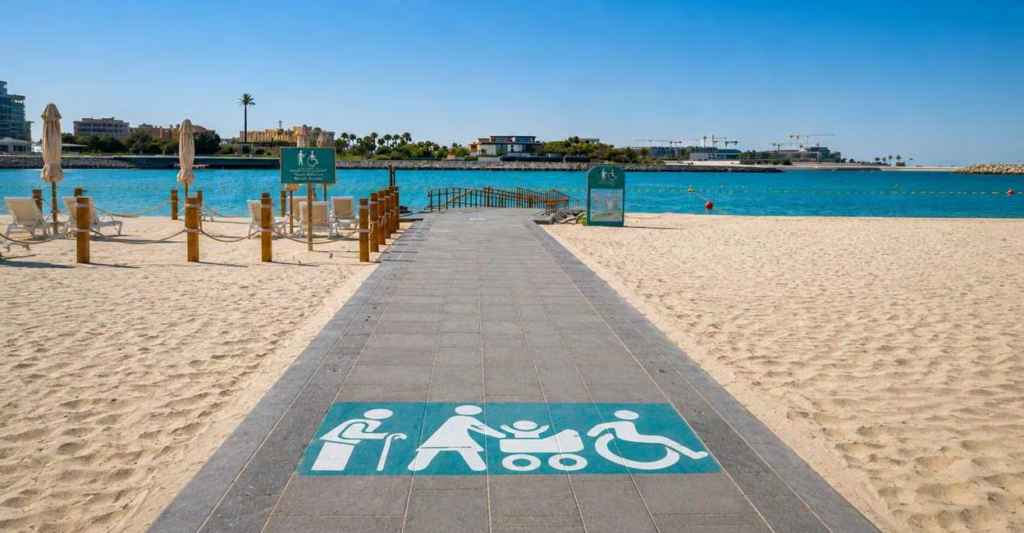
In addition to the sensory room, Jumeirah Beach 2 includes several accessibility features designed to improve the visitor experience. These include wheelchair-accessible pathways leading to the shoreline, accessible changing rooms and restrooms, mobility support facilities, and beach infrastructure that enables People of Determination to access different parts of the beach more easily. Together, these improvements aim to reduce barriers and encourage greater independence for visitors.
The latest achievement builds on Dubai’s ongoing efforts to enhance accessibility across its public attractions. In 2024, Dubai’s public beaches became the first in the world to receive Certified Autism Center™ designation from the International Board of Credentialing and Continuing Education Standards (IBCCES). That certification recognised staff training and visitor services developed to better support individuals with autism and sensory sensitivities. The introduction of the beach sensory room further expands these efforts by adding dedicated infrastructure to complement existing accessibility measures.
Dubai has placed increasing emphasis on inclusive urban planning as part of its long-term development strategy. Government entities have introduced accessibility improvements across transportation, tourism attractions, parks and recreational facilities to make the city more welcoming for both residents and visitors. Public beaches remain an important focus because they are among Dubai’s most popular leisure destinations throughout the year. The addition of a sensory room to a beach also represents a relatively uncommon approach internationally. While sensory spaces have become more common in locations such as airports, museums, shopping centres and sports venues, they are still rare in outdoor recreational environments. Incorporating such a facility into a public beach demonstrates that accessibility extends beyond physical infrastructure to include support for individuals with sensory processing needs.
People of Determination, the official term used in the UAE to refer to individuals with disabilities, remain at the centre of many of the country’s accessibility initiatives. These efforts aim to ensure that public facilities, services and recreational spaces can be used more independently and comfortably by everyone. Recreational areas such as beaches play an important role by providing opportunities for leisure, physical activity and community participation.
For families, the new sensory room offers greater flexibility during beach visits. Individuals who require a temporary break from sensory stimulation can use the dedicated space before returning to outdoor activities. Combined with the beach’s accessible infrastructure, the facility is intended to make visits more comfortable while encouraging greater inclusion for people with diverse accessibility needs.