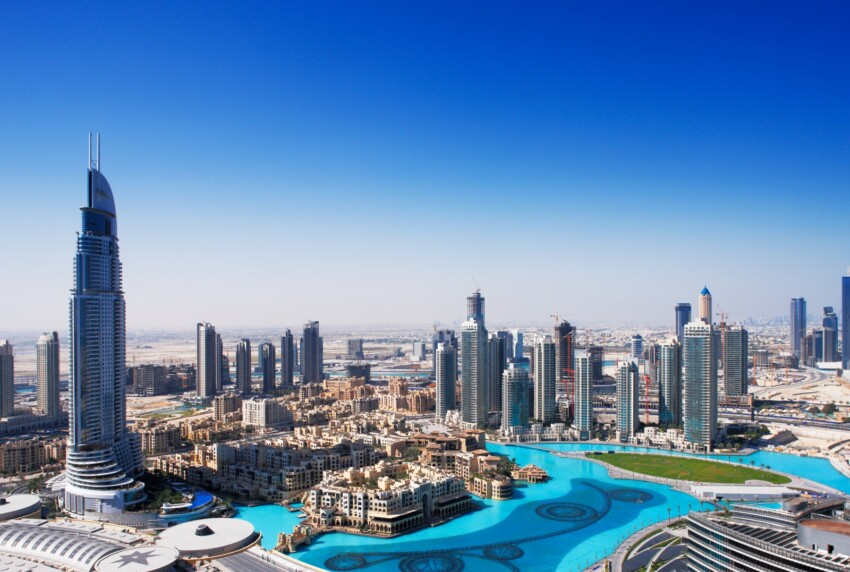
Dubai has turned its work philosophy into a verb with the launch of the Dubai-it initiative.
Dubai has coined a new term for the way it works, and it has already spread across government offices and social media feeds. On June 17, Sheikh Mohammed bin Rashid Al Maktoum, Vice President and Prime Minister of the UAE and Ruler of Dubai, launched the Dubai-it initiative, a model built around turning ambition into visible results without sacrificing speed or quality.
Sheikh Mohammed laid out the thinking behind it in a post shared through the Dubai Media Office. Dubai’s philosophy, he wrote, rests on achieving exceptional results in record time with mastery and excellence. Speed does not mean haste, quality does not mean slowness, and ambition has no value without execution. The initiative also carries an Arabic name, Dubai Al Af’al, meaning Dubai of Actions.
The purpose runs deeper than a single campaign. Sheikh Mohammed said he wants to pass this philosophy on to future generations and embed it as a lasting work culture across the emirate’s institutions and companies. It ties back to a line he has repeated for years and which has become something of a governing motto: the city says what it does, and does what it says.
The Meaning Behind Dubai-it
Defined as a verb, to Dubai-it is to achieve something extraordinary with excellence in record time, turning a bold idea into reality. Sheikh Mohammed drew the comparison to the emirate itself, which grew from a modest creek settlement of roughly 60,000 people in the 1960s into a metropolis of more than 3.4 million today. That transformation, delivered at speed, is the standard the initiative aims to protect.
The response from government bodies was immediate. Sharing images under the hashtag Dubai_it, entities across the city posted before-and-after snapshots of their own growth. Dubai Police traced its path from an early training formation to a modern police force. Expo City Dubai set an empty stretch of desert against the finished development that stands there now, while the Ports, Customs and Free Zone Corporation contrasted archival shots of early port infrastructure with present-day views of Jebel Ali Port, one of the busiest in the world.
How the Dubai-it Philosophy Shapes Major Projects
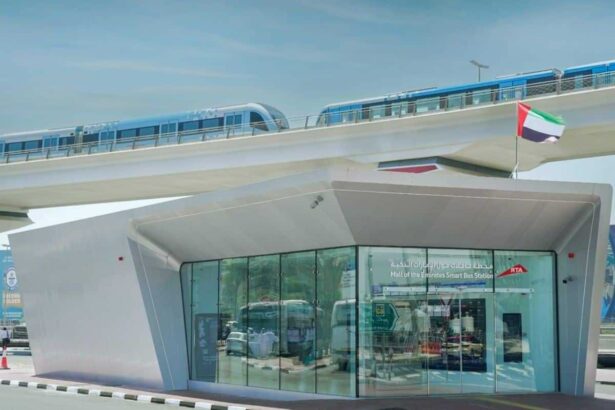
For Mattar Al Tayer, Director General of the Roads and Transport Authority, the ability to convert ambitious plans into finished projects has become one of Dubai’s defining strengths. He points to the Metro as the clearest case in point, a network expanded in stages that included the completion of Route 2020 during the pandemic. The Dubai Water Canal and Infinity Bridge sit alongside it as examples of infrastructure built to open up the city, and Al Tayer notes that autonomous taxis are already on the roads, with commercial air taxi services expected before the end of 2026.
The same pattern shows up in the city’s landmarks. The Burj Khalifa remains the tallest building in the world at 828 meters. The Museum of the Future opened in 2022 and drew a million visitors in its first year. The Dubai International Financial Centre, first envisioned in 2004, has since grown into a global financial hub. Each moved from drawing board to reality at a pace that has come to define the emirate.
That approach was tested during the pandemic, when Dubai rolled out health measures, scaled up testing and vaccination, and reopened in phases. Aviation, tourism, and retail bounced back earlier than in many other global cities. Policy followed the same instinct, with Golden Visa residency and remote work permits introduced to draw talent to the city quickly.
Why the Dubai-it Award Matters
The initiative picked up further momentum on June 24, when Sheikh Hamdan bin Mohammed bin Rashid Al Maktoum, Crown Prince of Dubai and Chairman of The Executive Council, directed the launch of the Dubai-it Award. The annual honor is designed to recognize the individuals, institutions, companies, and projects that turn bold ideas into tangible results, delivered with excellence and in record time.
Sheikh Hamdan described the philosophy as a driving force behind innovation and progress in the emirate, and said the award would celebrate those who live by it while inspiring the next generation to do the same. Mohammad Al Gergawi, Chairman of The Executive Office of Sheikh Mohammed bin Rashid Al Maktoum, added that ideas gain real value only when they become projects that improve people’s lives, noting that Dubai has produced hundreds of such success stories by translating vision into reality.
The award spans several categories, from technology-enabled and educational projects to real estate developments, government institutions, and companies that have delivered exceptional transformation. Between them, they give formal shape to a work culture the city plans to carry into its next chapter.