


Players, journalists and fans flood X with tributes to the late Pakistani cricket reporter.
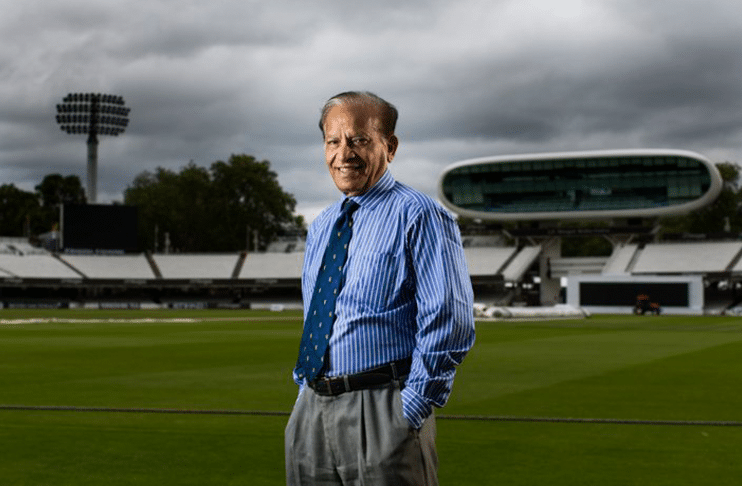
Qamar Ahmed, the veteran Pakistani cricket journalist, broadcaster and former first-class cricketer, passed away in Karachi on Thursday at the age of 88. He had been suffering from a heart ailment and had undergone a procedure earlier this month before being advised to rest. His family confirmed he passed away quietly in his sleep. Funeral prayers were held at Masjid Bait-ul-Salam in DHA Phase IV.
Known across press boxes simply as “Q,” Ahmed spent close to six decades covering the game he loved. He reported on more than 400 Test matches and worked for the BBC, Reuters and AFP, building a reputation as one of Pakistan’s most respected and recognizable voices in cricket. His passing has been felt far beyond the boundaries of the sport.
Within hours of the news, tributes filled X. Players, fellow reporters, broadcasters and fans all reached for the same word. Legend.
Javed Miandad shared a memory from his early days in England. The former captain recalled that he and Imran Khan once stayed at Ahmed’s flat in London during their youth. Ahmed had handed them the keys and left everything at their disposal, Miandad said, a small story that captured the kind of host and friend he was to a generation of Pakistani cricketers abroad. Senior politician Chaudhry Fawad Hussain also paid his respects, describing Ahmed’s death as the end of an era in sports journalism and calling him an icon.
Former captain Younis Khan led the tributes from the playing side with a video message shared widely on the platform.
Journalist Shakir Abbasi posted the clip, calling Ahmed a legend and writing that his passing marked the end of a golden era. “He was one of his kind,” Abbasi wrote.
Qamar Ahmed Career in Cricket and Journalism
Born in 1937, Ahmed began his life in cricket as a player before turning to the press box. A slow left-arm orthodox spinner, he played 17 first-class matches for Sind and Hyderabad, with a career noted for dismissing all the Mohammad brothers, including the great Hanif Mohammad. He moved to England in the early 1960s and settled there, working as a freelance journalist for newspapers, magazines and major news agencies.
His career placed him at the center of cricket history. He covered every World Cup until the 2007 edition in the Caribbean, reaching his 400th Test as a journalist during a match in Sharjah in 2014. Only a handful of reporters have ever covered more. Along the way he witnessed many of the game’s defining moments and chronicled them with a distinctive style that earned him admiration around the world.
Qamar Ahmed Remembered by Fellow Journalists
The press box, where Ahmed spent most of his life, offered some of the warmest words. Senior journalist Haroon Rashid said he had met Ahmed many times in London and remembered him as a down-to-earth man with no arrogance, despite his stature. Rashid recalled that when Sunil Gavaskar refused to accept MCC membership in protest at Lord’s, it was Ahmed who broke the story.
Reporter Rasheed Shakoor shared an old photograph from the press enclosure at Arbab Niaz Stadium in Peshawar, calling it Pakistan’s sports journalism in one frame. The image showed Ahmed alongside a generation of cricket writers who shaped how the country covered the game.
Tributes also came from across the border. Indian commentator Harsha Bhogle said he was deeply saddened by the loss of the generous and large-hearted reporter, recalling how Ahmed had guided him through his first tour of England in 1990, when Bhogle was a nervous newcomer.
Indian sports journalist Neeru Bhatia remembered him as a great human being and a mentor to many Pakistani cricket journalists, who was also a dear friend to Indian reporters. She wrote about how he once drove her from London to Southampton for a match and back, playing old Hindi film songs on his car stereo the whole way.
For younger fans, the affection ran just as deep. One cricket writer recalled getting a personal response from Ahmed only months ago for a review of his autobiography, “Far More Than A Game,” and signed off with a simple thank you for his service.
The volume and warmth of the tributes said as much about Ahmed as any career milestone. He was a bridge to the game’s past, a mentor to those who followed, and a familiar, smiling presence wherever Pakistan played. As one tribute put it, the end of a golden era.