


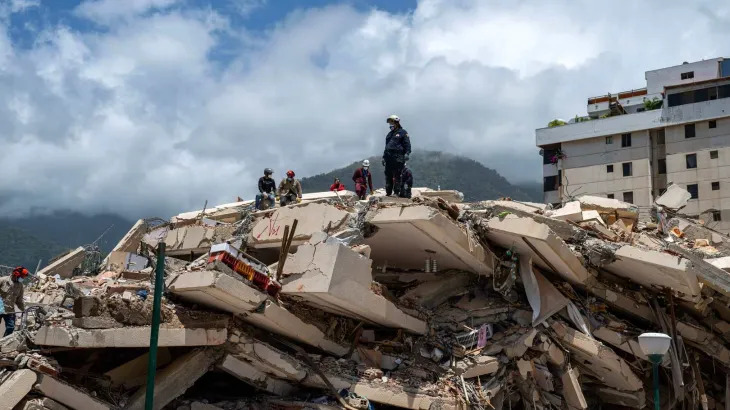
An extraordinary rescue operation in Venezuela has captured global attention after an 18-day-old baby was pulled alive from the rubble of a collapsed building approximately 32 hours after powerful earthquakes devastated parts of the country. The dramatic rescue, which has been widely shared around the world, has become one of the most remarkable survival stories to emerge from the disaster.
The infant was trapped beneath the debris in the coastal city of La Guaira, one of the areas hardest hit by the twin earthquakes that struck northern Venezuela on June 24. Rescue teams worked continuously through the day and night, using specialized equipment to search collapsed structures for signs of life. During one of these operations, rescuers located the baby beneath the rubble and carefully lifted the infant to safety. Videos from the rescue show emergency workers gently passing the baby from one rescuer to another before carrying the child to safety, where emotional applause broke out among those gathered at the scene.
According to reports, the baby was wrapped in a blanket and appeared to have survived without major visible injuries despite spending more than a day trapped beneath the collapsed building. Shortly after the rescue, the infant was reunited with the father in an emotional moment witnessed by rescuers and bystanders. Approximately 90 minutes later, rescue teams also succeeded in locating and rescuing the baby’s mother alive from the same collapsed structure, making the family’s survival one of the most uplifting stories amid an otherwise devastating disaster.
The rescue occurred against the backdrop of one of Venezuela’s deadliest natural disasters in recent history. The twin earthquakes caused widespread destruction across northern Venezuela, with La Guaira suffering some of the heaviest structural damage. Thousands of buildings were damaged or destroyed, leaving many residents trapped beneath collapsed homes and apartment complexes. Rescue operations have involved both Venezuelan emergency personnel and international search-and-rescue teams equipped with specialized tools, trained dogs, and advanced detection equipment.
Emergency responders have continued searching for survivors despite difficult conditions, including unstable buildings, repeated aftershocks, and the growing challenges that accompany prolonged rescue efforts. International rescue teams have worked alongside local authorities in an effort to locate anyone who may still be trapped beneath collapsed structures. While survival becomes less likely as time passes, rescuers have continued to find survivors several days after the earthquakes, demonstrating the importance of sustained search operations.
Experts explain that survival beneath earthquake rubble depends on several factors rather than time alone. People trapped in what rescuers call a “void space”—an air pocket created by fallen walls, furniture, or structural elements—may survive for extended periods if they avoid serious injuries and have access to breathable air. Environmental conditions such as moderate temperatures and protection from further collapse also play significant roles in determining survival. Medical specialists note that although the highest number of rescues generally occurs within the first 24 hours after an earthquake, successful rescues have taken place days later in previous disasters around the world.
The baby’s rescue is one of several notable survival stories that have emerged during the ongoing response. Rescue teams have also pulled other survivors, including families trapped beneath collapsed buildings for multiple days. These rescues have provided moments of hope for both emergency workers and communities affected by the disaster, even as authorities continue to assess the full extent of the damage and casualties.
Medical professionals examined the infant following the rescue before transferring the baby to hospital for further evaluation and observation. Reports indicate that both the baby and the mother were in stable condition after being rescued, although they remained under medical care as a precaution following their prolonged entrapment beneath the rubble.
The rescue has since been widely shared across international media and social media platforms, with many describing it as a symbol of resilience amid the destruction caused by the earthquakes. While the disaster has resulted in significant loss of life, extensive property damage, and the displacement of thousands of people, the successful rescue of the 18-day-old infant serves as a reminder of the determination of search-and-rescue teams and the possibility of survival even after many hours beneath collapsed buildings.


