
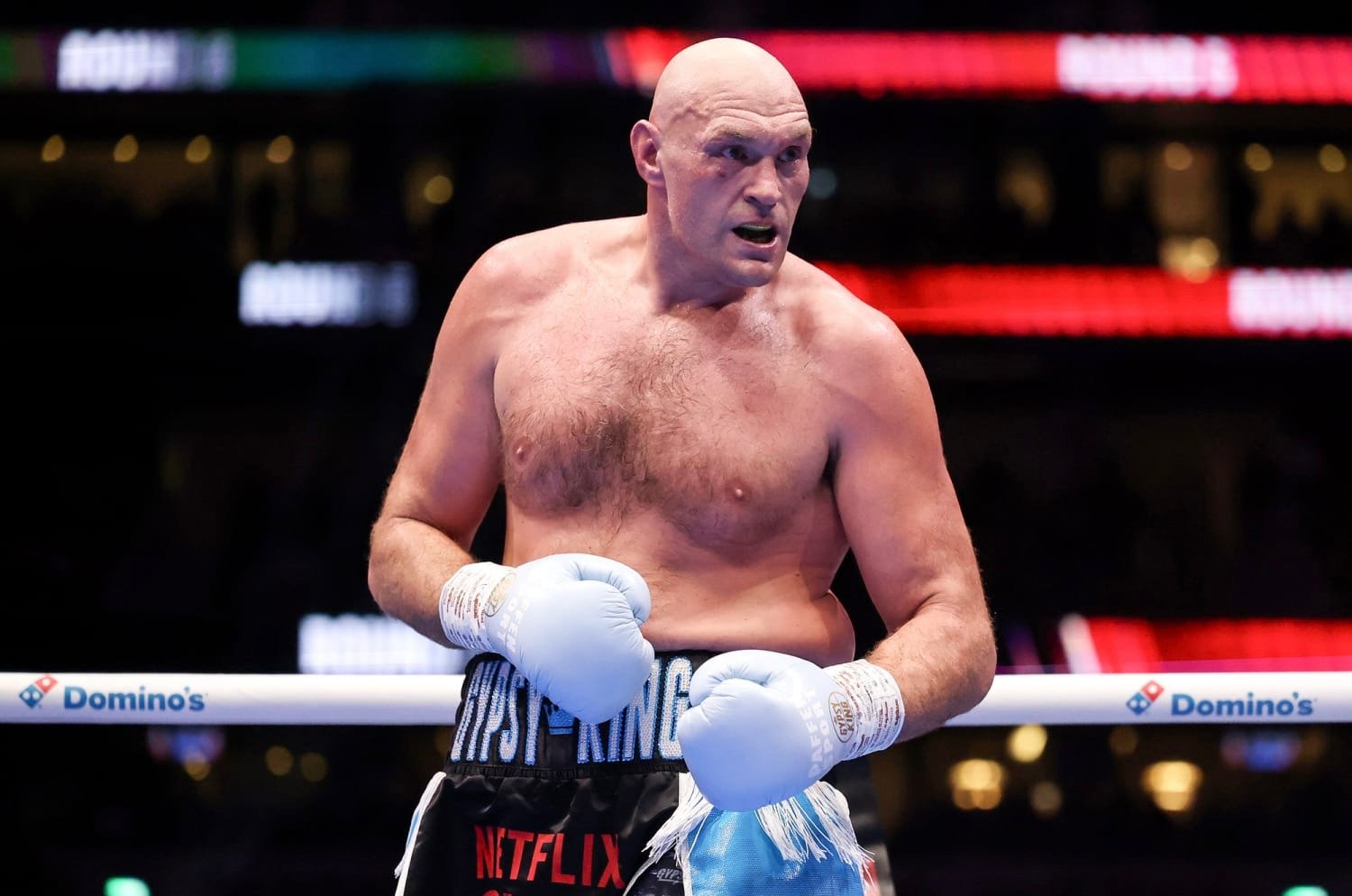
British heavyweight boxer Tyson Fury has revealed that he was diagnosed with schizophrenia and bipolar disorder following his victory over Wladimir Klitschko in 2015. The 38-year-old discussed his mental health struggles in an upcoming Netflix documentary, offering details about the psychological difficulties he experienced after reaching the peak of his boxing career.
The documentary, titled TYSON FURY, features interviews with the boxer, his wife Paris Fury and his father John Fury. It explores his career, family life and personal struggles, including the period when he stepped away from professional boxing.
Fury defeated Ukrainian boxer Wladimir Klitschko by unanimous decision in November 2015 to become the unified heavyweight world champion. However, he said that achieving his childhood ambition was followed by a difficult period in his personal life.
In the documentary, Fury explained that after defeating Klitschko, he struggled with depression, anxiety and substance abuse. He also experienced significant weight gain and lost interest in boxing, his health and other aspects of his life.
His mental health deteriorated further in June 2016, when he was admitted to hospital after experiencing what was initially suspected to be a heart attack. Doctors subsequently identified the episode as an anxiety attack. During this period, Fury described experiencing severe anxiety and hearing voices in his head.
He recalled that the voices sometimes threatened to harm him and his family. He also described believing that the radio was communicating directly with him while he was in hospital.
Fury eventually sought psychiatric help in London, where he underwent an assessment. He said the psychiatrist identified several conditions, including depression, anxiety and bipolar disorder. His wife, Paris, also revealed in the documentary that doctors described him as having mild schizophrenia.
Reflecting on that period, Fury described the experience as extremely distressing. He said he feared being placed in a psychiatric institution and struggled to understand what was happening to him.
Paris Fury also discussed the family’s initial reaction to the diagnosis. She said she had difficulty understanding the medical terminology and did not initially recognise schizophrenia as a condition that could affect her husband. However, she later understood more about his experiences after learning about the symptoms.
His father, John Fury, also spoke about his son’s mental health. He acknowledged that, looking back, he had noticed signs of emotional difficulties but had not fully understood what Tyson was experiencing at the time.
Fury’s struggles kept him away from professional boxing for nearly three years following his victory over Klitschko. During this period, he battled alcohol and drug use, depression and significant weight gain. He later described a Halloween night in 2017 as a turning point, recalling that he became aware of how much his circumstances had changed.
He subsequently returned to training and resumed his professional boxing career in 2018. In December that year, Fury fought Deontay Wilder for the WBC heavyweight title. Their first meeting ended in a controversial split draw, before Fury defeated Wilder in their February 2020 rematch to claim the title.
Fury later lost two consecutive fights against Oleksandr Usyk in 2024, suffering the first defeats of his professional career.
The documentary is directed by Lucy Wilcox and is scheduled to premiere on Netflix on November 27, 2026. It includes interviews with members of Fury’s family and previously unseen archival footage documenting different stages of his life and career.
The release comes ahead of Fury’s scheduled fight against fellow British heavyweight Anthony Joshua on December 11, 2026, in Cardiff, Wales. The bout is expected to be broadcast live on Netflix.
Through the documentary, Fury has publicly discussed a diagnosis that he says significantly affected his life and career, providing further insight into the mental health challenges he experienced away from the boxing ring.