


Finally, the day is near when Pakistan’s presence on the global platform Netflix will be visible through Jo Bachay Hain Sang Samait Lo. It will be visible to an audience that adores Pakistani content but has been unable to access it for reasons known only to the platform’s officials. It will be visible to those who admire Pakistani artists but cannot watch their work beyond the few dramas available on YouTube due to political restrictions. It will be visible to an entire wave of audiences who don’t know the difference between Indian and Pakistani content and mix them up because they sound and look similar.
The series’ arrival on Netflix is an opportunity to put Pakistani storytelling in front of international viewers who grew up on dramas like Humsafar, Zindagi Gulzar Hai, and Yaqeen Ka Safar and were waiting for the OTT platform to add more dramas to its list. For local audiences, there is also the pleasure of seeing some of the country’s biggest names come together in one production.
Produced under the banner of MD Films, Pakistan’s first Netflix original series premieres on December 4, 2026. Written by novelist and playwright Farhat Ishtiaq and created and directed by Momina Duraid, Jo Bachay Hain Sang Samait Lo: Part 1 spans three generations and six love stories, linked by a question: Is the love we carry enough?
The story primarily follows Sikandar (Ahad Raza Mir), a Harvard law student grappling with emotional trauma, and Liza (Iqra Aziz), a gifted artist with a complicated past. In Italy, they meet, and their lives take an unexpected turn. The premise has its appeal, but will the rest of the drama resonate with audiences? Let’s find out.
A cast worth talking about
The drama features the Who’s Who of the Pakistani drama industry, and that’s hard to imagine. Besides Ahad Raza Mir and Iqra Aziz, the ensemble cast comprises Fawad Khan, Mahira Khan, Hania Aamir, Hamza Ali Abbasi, Sanam Saeed, Maya Ali, Aamina Sheikh, Khushhaal Khan, Ahmed Ali Akbar, and Bilal Ashraf. Even a handful of these names would be enough to draw attention to a Pakistani series.
Here, they share the credits with Samina Ahmed, Samiya Mumtaz, Shahzad Nawaz, Omair Rana, Nadia Jamil, Nadia Khan, Adeel Husain, and Saife Hasan, whereas the series also introduces Shahzayn Duraid.
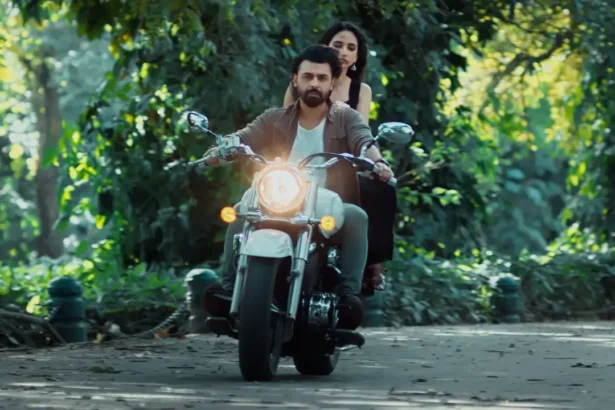
For Pakistani viewers, much of the excitement will come from seeing familiar favorites in the same production. The enduring appeal of the Humsafar duo Fawad and Mahira is an obvious draw, while Hamza, Sanam, Ahad, Iqra, and the rest of the ensemble bring their own followings. With performers from different generations, the series has plenty of ways to engage audiences.
International viewers may come to it without recognizing a single name, or may remember Fawad Khan from Ms. Marvel, Mahira Khan from Raees, and Hania Aamir from Sardaarji 3. That makes the opportunity all the more interesting: they will meet these actors through their performances rather than their reputations.
For Pakistanis abroad, meanwhile, the attraction may be more personal. Watching familiar faces speak a familiar language on a platform already part of their everyday lives offers a welcome connection to home.
An experienced partnership behind the camera
A star-studded cast can persuade people to watch the first episode. Giving them a reason to stay is another matter. That is where Farhat Ishtiaq and Momina Duraid’s involvement becomes important.
The dynamic duo has been around for over 15 years and has delivered countless hits on the HUM platform. Their collaborations include Humsafar, Dayaar-e-Dil, Udaari, Bin Roye, Yaqeen Ka Safar, and Meem Se Mohabbat for TV, as well as Parwaaz Hai Junoon for the big screen. Now they are entering another platform, and if they click like their previous collaborations, doors will open for other filmmakers.
On one hand, there is Farhat Ishtiaq, whose strength has always been her understanding of relationships. Her stories give weight to emotional conflict and the complications that shape people’s lives, qualities that have earned her a loyal readership and television audience in Pakistan and abroad.
On the other hand, MD Productions has thrived under Momina Duraid over the past 20 years. Not only has her name been associated with all the major hits produced for HUM TV during that time, but her experience also brings an understanding of both a project’s creative demands and the audiences it aims to reach.
Together, they offer an encouraging starting point. The hope is that the series builds on what Pakistani drama already does well, rather than chasing an idea of what international television is supposed to look like.
What it could mean for the wider industry
Beyond the cast and the story, a larger question remains: could this release make it easier for other Pakistani projects to find an international home?
Our dramas already travel, particularly among South Asian communities. Social media is filled with memes from India that show parents taking a liking to the Urdu language and Pakistani mannerisms. However, a sizeable audience still has no clue what a Pakistani drama is, and that’s where Netflix comes in. The hugely popular OTT platform offers a chance for discovery for someone who has never watched a Pakistani drama and has no prior connection to the country.
Of course, availability is not the same as success. The series will compete for attention alongside productions from around the world. Its writing, performances, and production values will have to do the work once the initial curiosity fades.
Still, a strong response could prompt other platforms to take a closer look at Pakistan. That could create opportunities for writers, directors, actors, and production houses to develop work beyond the conventional television model.
A starting point, not a victory lap
There is a temptation to treat a Netflix release as an achievement in itself. It is a significant step, but the real test begins when audiences press play. They need to stay connected to the series, and that’s where the bigger problem comes in—Pakistani TV dramas tend to lose viewers as the project ages.
Yes, we know TV dramas are often unnecessarily dragged out to generate more revenue, but that needs to end. The Netflix way should be incorporated into whatever dramas are being produced so that when the first Netflix series succeeds, there will be a cache of follow-up projects in the pipeline. The secret lies in making characters and their struggles accessible without stripping away the details that make them distinctly ours.
Jo Bachay Hain Sang Samait Lo has an impressive cast, an experienced creative team, and a platform capable of taking it far beyond its home audience. Its December 4 premiere will attract attention from fans but also from people across the industry, wondering what this might make possible.
Whether it marks the beginning of a new era will depend on what follows: how audiences respond, whether platforms invest again, and whether more Pakistani storytellers get their chance. For now, it is an opening worth watching.