

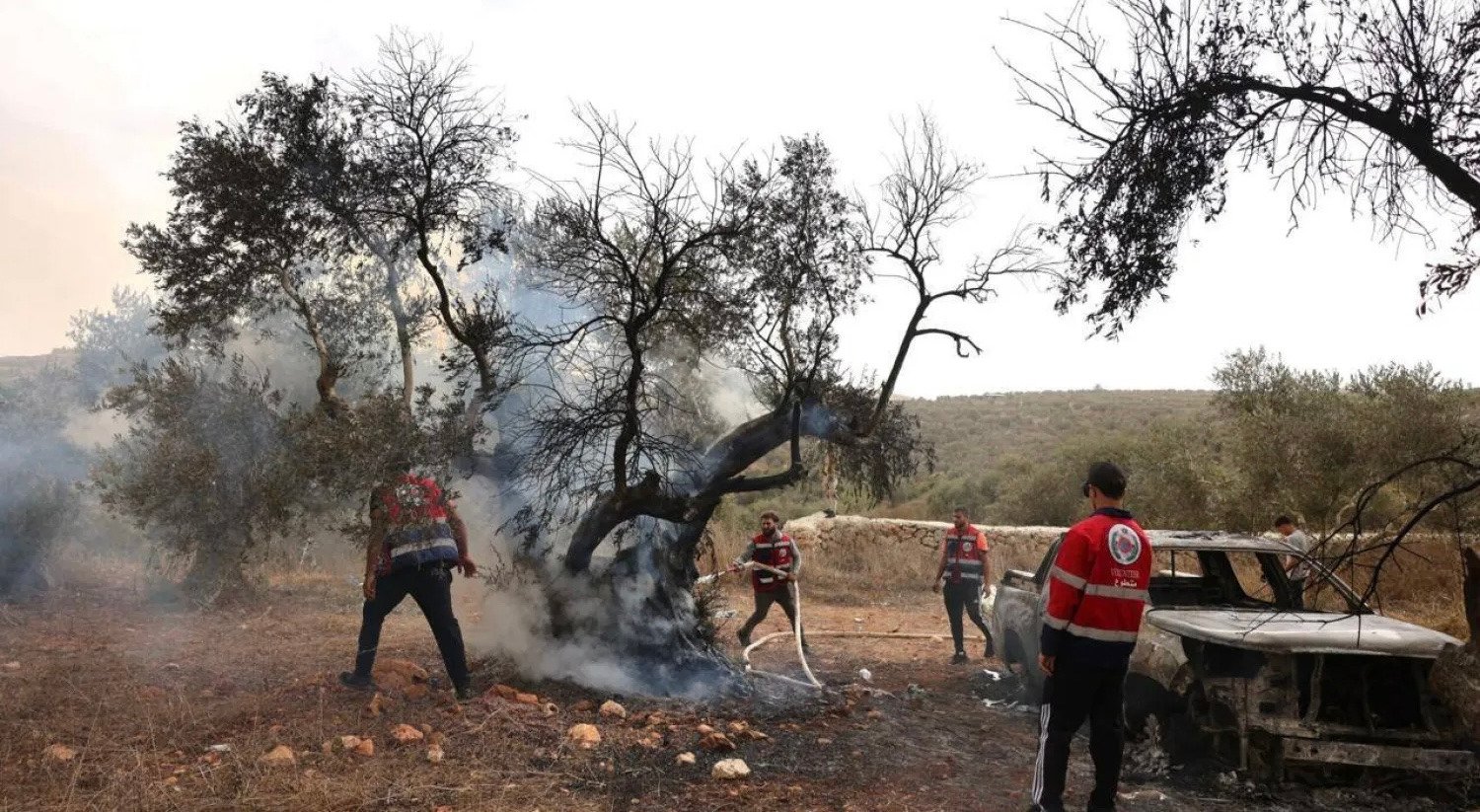
A Houthi missile attack on a government security forces training camp in Yemen’s southern Shabwa province killed at least 53 people and injured 200 others on Monday, October 19, 2026, according to local authorities. The strike targeted recruits undergoing training at the Al-Alam military camp amid renewed fighting between the Iran-aligned Houthi movement and Yemen’s internationally recognised government.
Local authorities said three ballistic missiles struck the camp during a training exercise. A military official told news agencies that recruits were lining up for training when the missiles hit. The provincial government said the casualties were preliminary and warned that the death toll could rise as authorities assessed the situation.
The injured included newly recruited members of Yemen’s internal security forces. According to reports, emergency services transported wounded personnel to hospitals for treatment. Medical facilities in the provincial capital, Ataq, received casualties, while some critically injured patients were transferred to neighbouring provinces, including Hadramout and Aden, as local hospitals faced pressure.
The Shabwa provincial government condemned the attack and called for stronger protection of military and security installations. Authorities also appealed for improved air-defence and early-warning systems to strengthen the province’s ability to respond to further attacks. Local residents reportedly came forward to donate blood for the wounded.
The Houthis acknowledged targeting the camp. The group’s military spokesperson, Yahya Saree, said the facility was operated by Saudi forces and described the target as a Saudi-backed military installation. Saudi authorities had not immediately responded to requests for comment following the attack, according to Reuters.
Yemen’s internationally recognised government is supported by a Saudi-led coalition, which has intervened in the conflict against the Houthis. The group controls the capital, Sanaa, and significant parts of northern Yemen.
Rashad al-Alimi, chairman of Yemen’s Presidential Leadership Council, condemned the attack and promised a firm response. He also directed authorities to provide medical treatment to the wounded and support the families of those killed.
The strike represents a significant escalation in the conflict, which has intensified in recent weeks as government forces have attempted to recover territory held by the Houthis.
Yemen’s civil war began in 2014, when Houthi forces seized Sanaa and forced the internationally recognised government from the capital. A Saudi-led military intervention followed in 2015, leading to years of fighting between the Houthis and government-aligned forces.
A United Nations-backed truce agreed in 2022 substantially reduced fighting, although it did not produce a comprehensive political settlement. Hostilities have intensified again in 2026, with both sides carrying out attacks as territorial control and military positions remain contested.
Earlier in October, government forces launched operations aimed at recapturing areas controlled by the Houthis, including territory near the Red Sea coast. The Houthis have also expanded attacks against Saudi targets during the latest escalation.
The renewed fighting has increased concerns about security in southern and western Yemen, where military operations have affected important transport routes and strategic locations.
Shabwa is an energy-rich province in south-central coastal Yemen, overlooking the Gulf of Aden. It is home to the Balhaf liquefied natural gas facility, one of Yemen’s most important energy installations and a major industrial investment.
The province’s location also gives it strategic significance because of its proximity to maritime routes connecting the Gulf of Aden and the Red Sea. The nearby Bab el-Mandeb Strait is a major international shipping chokepoint through which commercial vessels travel between the Indian Ocean and the Suez Canal.
The attack adds to the security challenges facing Yemen as fighting between the Houthis and government forces continues. Aid agencies have repeatedly warned that renewed conflict could worsen conditions in a country already experiencing one of the world’s most severe humanitarian crises.
As of October 19, local authorities had reported at least 53 deaths and 200 injuries. Further developments, including any official military response and updated casualty figures, remained pending.