


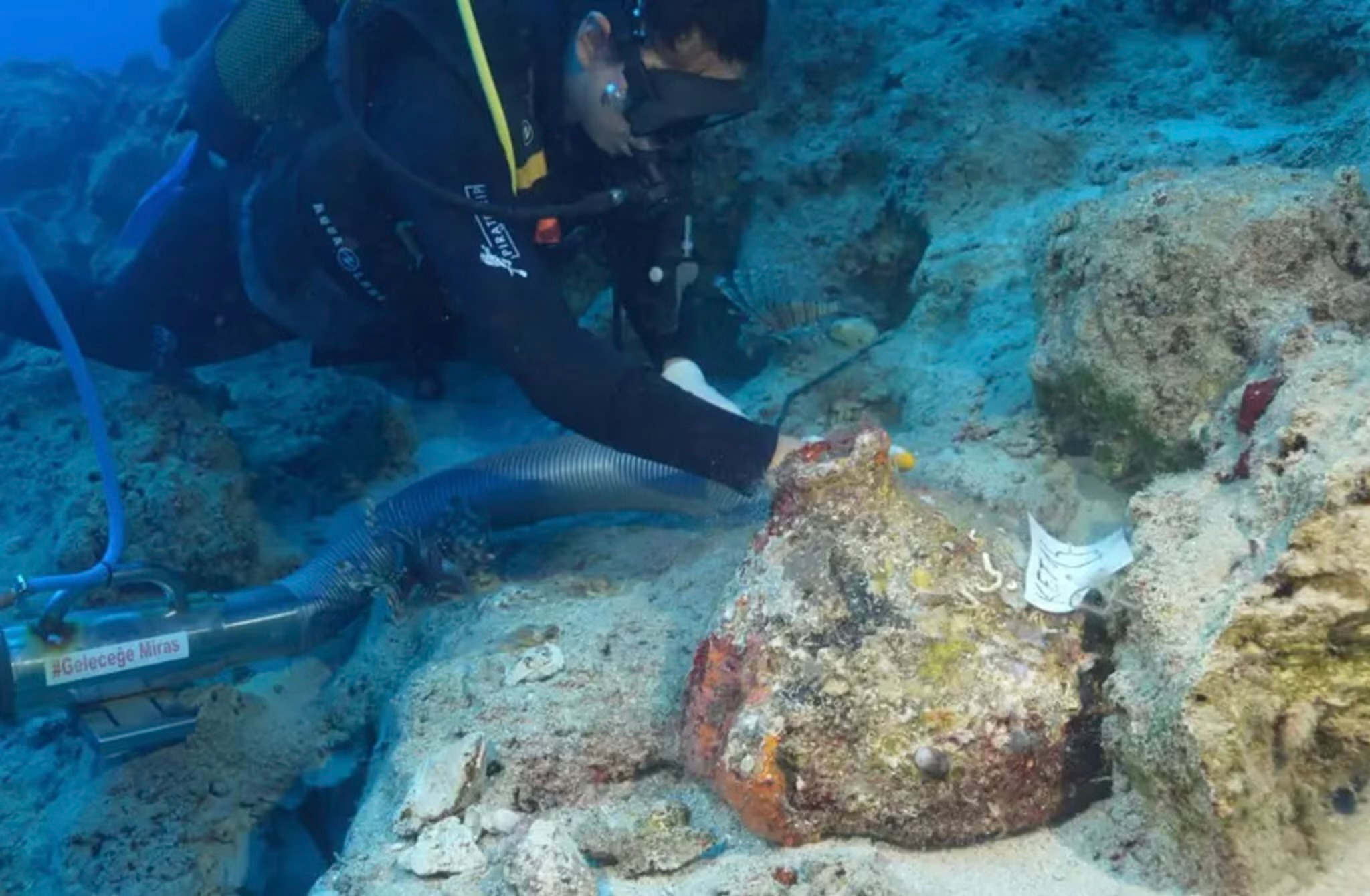
Archaeologists have identified an ancient shipwreck off the Mediterranean coast of Turkey, now officially known as Türkiye, that may be the world’s oldest known shipwreck. Located near Kekova Island in Antalya province, the wreck dates to approximately 2600–2400 BC, placing it in the Early Bronze Age, around 4,400 to 4,700 years ago.
The discovery was documented by researchers from Akdeniz University in Antalya during underwater investigations led by archaeologist Professor Hakan Öniz. The findings provide evidence of early maritime activity and offer an opportunity to study how goods were transported across the ancient Mediterranean.
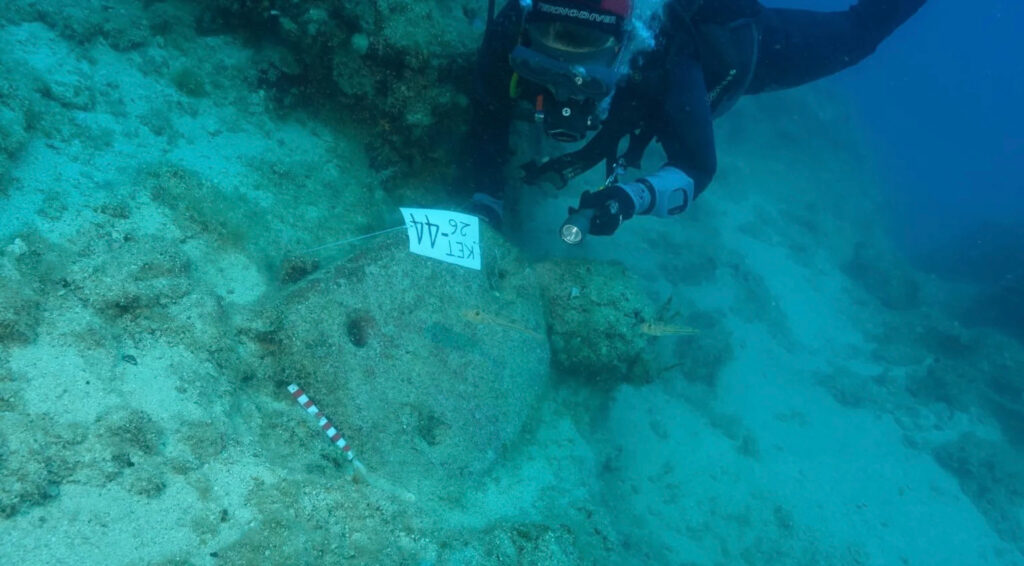
The wreck lies approximately 30 metres beneath the sea, near Kekova Island in southern Türkiye. Archaeological remains are scattered across a seabed consisting of both sandy and rocky surfaces.
Although the wooden structure of the vessel has not survived, researchers recovered more than 30 ceramic storage vessels, known as amphorae, from the site. Three stone anchors were also found in the surrounding area.
Researchers estimate that the vessel was approximately 10 metres long and likely transported cargo across the Mediterranean. However, the ship’s precise construction, ownership and destination have not been established.
The discovery is particularly significant because relatively few shipwrecks from the Early Bronze Age have been documented with such a collection of surviving cargo.
The researchers could not use radiocarbon dating on the vessel because its wooden structure had disappeared. Instead, they examined the ceramic vessels and compared their characteristics with pottery recovered from other archaeological sites.
The amphorae feature two handles, a ridge around the middle and a flat base. Their shapes and decorative patterns resemble Early Bronze Age pottery found in Egypt and the eastern Mediterranean, including areas associated with the ancient Levant.
Based on these comparisons, researchers dated the wreck to approximately 2600–2400 BC. This places it within the same broad historical period as the construction of Egypt’s Great Pyramid of Giza.
The pottery’s design and decoration are central to the dating process because archaeological ceramic styles changed over time, allowing researchers to associate particular forms with specific historical periods.
The ceramic vessels are among the most important finds because they may help researchers identify the goods transported by the vessel. Some containers resemble pottery used in the ancient eastern Mediterranean.
One amphora features two parallel lines made with a pointed tool, along with a zigzag pattern. Its shape and decoration provide information about the pottery-making techniques used during the Early Bronze Age.
Researchers have also identified a thick, glossy residue inside some of the recovered vessels. Scientific analysis of this material could help determine what the containers originally held. However, the precise contents of the ship’s cargo have not yet been conclusively identified.
The three stone anchors found near the wreck are another important aspect of the discovery. Their designs resemble anchors documented at other Bronze Age sites in Anatolia, Cyprus and the Levant. Researchers have noted, however, that it remains uncertain whether all three anchors belonged to the vessel.
The wreck provides evidence of seafaring and cargo transportation during the Early Bronze Age. The similarities between the pottery found at Kekova and vessels from other regions suggest connections between communities around the eastern Mediterranean.
Researchers believe the ship may have been travelling from east to west when it sank. Its exact route remains uncertain, and further investigation will be needed to establish where the vessel originated and where it was heading.
The discovery also adds to archaeological research into ancient maritime networks connecting Anatolia, the Levant and Egypt. Studying the pottery’s composition, manufacturing techniques and possible contents may help researchers establish where the vessels were produced and how goods moved between settlements.
The wreck takes the distinction from the Dokos shipwreck near Greece, which dates to approximately 2200 BC. If the dating of the Kekova wreck is confirmed, it would represent an earlier example of a shipwreck carrying archaeological evidence of ancient maritime trade.
The recovered artefacts are being examined to learn more about their age, origin and original use. Analysis of the ceramic vessels and the residue inside them could provide additional information about the ship’s cargo and the trading activities of the period.
Although the vessel’s wooden structure has disappeared, the surviving artefacts offer researchers valuable evidence of early seafaring. Further studies may help establish the ship’s origins, the goods it transported and its place within the maritime networks of the Early Bronze Age.
The discovery near Kekova Island therefore represents an important contribution to the study of ancient ships and Mediterranean trade, providing physical evidence of maritime activity thousands of years before the rise of many later Mediterranean civilizations.