


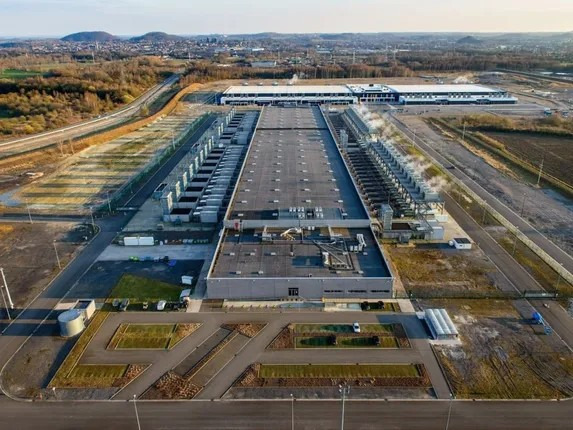
The $15 billion AI hub on India’s east coast has drawn questions from farmers and residents over land and water.
Google is building its biggest data center outside the United States in Visakhapatnam, a port city on India’s east coast. The $15 billion project, planned over five years through 2030, is the company’s largest investment in India to date.
The facility is designed as a one-gigawatt AI hub that could later scale to several gigawatts. It is being developed with AdaniConneX, which is setting up the data center infrastructure, and Bharti Airtel, which is building a cable landing station that will connect the site to subsea internet cables.
When the plan was announced, Google Cloud CEO Thomas Kurian said the hub would serve not only India but also “Asia and other parts of the world” from India, TechCrunch reported.
As construction moves ahead on a site of around 600 acres, some residents and farmers in the area have raised concerns about land compensation, water supply and the impact on nearby forest land.
Google Visakhapatnam Data Center Raises Land and Water Questions
Water is at the center of the debate. Visakhapatnam reportedly receives about 410 million liters of water a day, while demand is estimated at around 480 million liters. Parts of the city already face rationing in dry months.
Campaigners have put up posters with the line “we cannot drink data,” and some protest material has shown Google’s logo in handcuffs. Activists have called for an independent audit of the facility’s water needs.
Land is another concern. Chandala Sadamma, a farmer, received about $82,000 for her two-acre plot of mango and cashew trees. She said the amount does not reflect what the land is worth. The state is building housing for families who have had to move, though some residents say they are not satisfied with it.
The site lies roughly 860 meters from the Kambalakonda Wildlife Sanctuary, which is home to leopards and pangolins. A public interest case has been filed in the Andhra Pradesh High Court, and environmental cases have also been taken to the National Green Tribunal.
Google and Andhra Pradesh Government Respond
Google says the facility will use advanced air cooling rather than water-heavy cooling systems, and that it will not draw from water sources serving areas that face shortages.
Alexander Smith, Google’s head of infrastructure and energy for Asia-Pacific, said the company’s own water assessment found pressure on the local watershed, and that this “shaped our choice of cooling configuration from the outset.”
He described the project as a multi-decade commitment. “The watershed, the grid and the communities around our facilities must be better off for our being here,” Smith said.
On electricity, he said that if supply was not sufficient, or would have to be taken from local communities, Google would either find ways to add more power or would not build there.
The Andhra Pradesh government has said that no water meant for rural or residential use will be diverted to data centers.
Visakhapatnam was chosen in part because of its role as a landing point for undersea cables linking India with Southeast Asia. The state government has promoted the project as a major boost for investment and technology jobs in the region.