

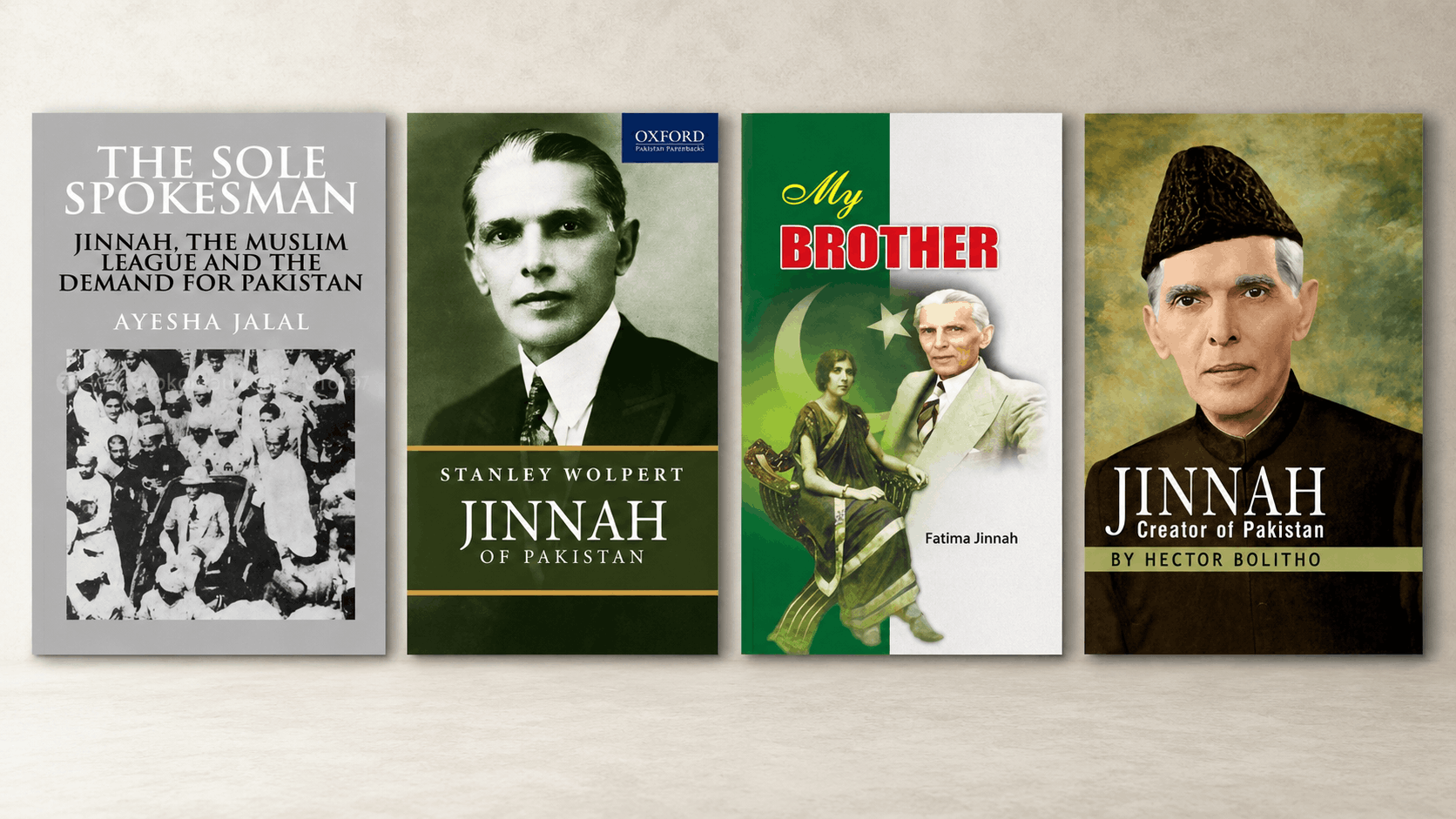
More than seven decades after Pakistan’s independence, Quaid-i-Azam Muhammad Ali Jinnah remains one of the most consequential figures in twentieth-century South Asian history. Celebrated as the Father of the Nation, he led the Pakistan Movement with constitutional precision and unwavering resolve. His speeches and political milestones are well documented, but understanding the man behind them requires turning to the books that have shaped his historical record.
Written by family members, contemporaries and historians across seven decades, these five books offer distinct and interesting portraits of Jinnah’s personality, leadership and vision for Pakistan. Together, they show how a single life can be read in very different ways depending on who is doing the telling.
1. Jinnah of Pakistan — Stanley Wolpert
The definitive single-volume biography
Widely regarded as the most comprehensive biography of Muhammad Ali Jinnah available in English, Jinnah of Pakistan (Oxford University Press, 1984) traces his journey from a successful barrister in Bombay to the founder of a nation. American historian Stanley Wolpert combines archival research with narrative pace to portray a disciplined, exacting and formidably self-controlled statesman. For readers outside Pakistan encountering Jinnah for the first time, this remains the standard starting point.
2. My Brother — Fatima Jinnah
A sister’s intimate portrait of the Quaid-i-Azam
Written by Fatima Jinnah, the Quaid’s sister and closest companion, My Brother offers a rare glimpse into his personal life. Rather than focusing solely on political events, the memoir reveals the man behind the public image — his disciplined routine, quiet personality, unwavering work ethic and deep sense of responsibility. Fatima Jinnah also reflects on the immense challenges he faced during the struggle for Pakistan. As a firsthand account, the book provides an intimate perspective that no biography can fully replicate.
3. Jinnah: Creator of Pakistan — Hector Bolitho
The first official biography
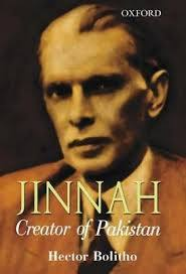
Published in 1954, Hector Bolitho’s Jinnah: Creator of Pakistan holds the distinction of being the first official biography of Pakistan’s founder, commissioned in the years immediately following his death. Drawing on interviews with Jinnah’s colleagues and contemporaries, Bolitho constructed a narrative that shaped how a generation of readers first understood the Quaid. Its access and immediacy — written while memories were still fresh — give it a historical value that later, more critical works cannot fully replicate, even where its interpretation now reads as reverential.
4. The Sole Spokesman — Ayesha Jalal
A scholarly reassessment of Jinnah’s political strategy
For readers interested in the mechanics of political leadership rather than personal biography, historian Ayesha Jalal’s The Sole Spokesman: Jinnah, the Muslim League and the Demand for Pakistan (1985) remains the most influential academic study of the period. Jalal examines Jinnah’s leadership of the All-India Muslim League and the constitutional negotiations of the 1940s, arguing that Pakistan’s creation was as much a product of political strategy and negotiating leverage as of ideological conviction. More rigorous than the earlier biographies, it has become essential reading in university courses on South Asian history — and remains one of the more contested interpretations of Jinnah’s aims.
5. Quaid-i-Azam Jinnah: Studies in Interpretation — Sharif al Mujahid
Essays on Jinnah’s political philosophy
Historian Sharif al Mujahid’s 1981 collection of essays examines Jinnah’s constitutionalism, his approach to democratic governance and his positions on minority rights, rather than recounting his life chronologically. Awarded Pakistan’s President’s Award as the best work on Jinnah, published between 1940 and 1982, it remains a serious reference for readers wanting to understand the ideas Jinnah invoked, not just the events of his career.
A Legacy Still Being Written
No single book fully captures Muhammad Ali Jinnah — and these five, read together, make clear why. They range from hagiography to sharp academic revisionism, from a sister’s personal testimony to prize-winning scholarship, and the gaps between them are as instructive as their agreements. Revisiting them is not just an act of national commemoration; it is a reminder that even a founding figure’s legacy remains an open conversation — one that each generation of readers has to work out for itself.