

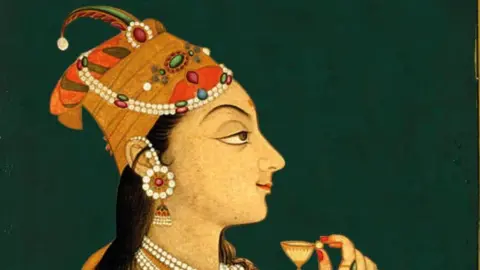
When people think of the Mughal Empire, names like Akbar, Jahangir and Shah Jahan usually come to mind. Yet one of the most powerful figures in Mughal history never officially wore the imperial crown. Her name was Nur Jahan, and for nearly two decades, she became the empire’s most influential woman, shaping its politics, diplomacy and culture at a time when few women anywhere in the world held such authority.
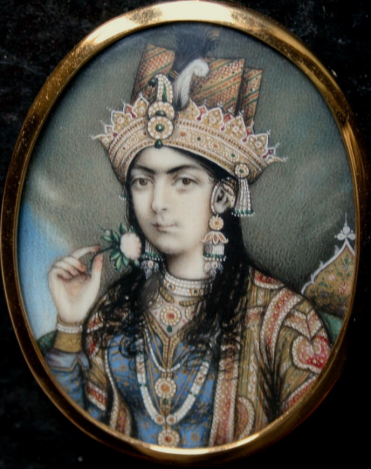
Born as Mehr-un-Nissa in 1577 to a Persian family, she came to the Mughal Empire as a child after her parents sought refuge at Emperor Akbar’s court. Intelligent, cultured and politically gifted, she received an excellent education that prepared her for a life far beyond the expectations of women in the royal court.
After the death of her first husband, she married Emperor Jahangir in 1611. Deeply impressed by her wisdom and grace, Jahangir gave her the title Nur Jahan, meaning “Light of the World.” Their marriage would change the course of Mughal history.
As Jahangir’s health declined due to illness and addiction, Nur Jahan gradually assumed control of many affairs of state. Unlike most royal women who remained behind palace walls, she became an active participant in government. She attended court, issued imperial orders, advised on military campaigns and played a decisive role in appointing governors and senior officials. Foreign ambassadors soon realised that gaining Nur Jahan’s support was often just as important as winning the emperor’s favour.
Her influence reached extraordinary heights. Imperial coins were minted bearing her name alongside Jahangir’s, making her one of the very few women in Islamic history to receive such an honour.
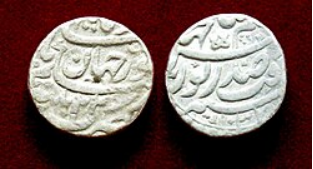
She used her own royal seal on official documents and became the centre of a powerful political alliance that effectively guided the Mughal Empire during the later years of Jahangir’s reign. Many historians consider her the de facto ruler of the empire from 1611 to 1627.
Nur Jahan was not only a brilliant stateswoman but also a patron of art, architecture and commerce. She popularised elegant styles of clothing, jewellery and perfumes that became hallmarks of Mughal fashion. She commissioned magnificent gardens and buildings, encouraged artists and craftsmen, and even managed an extensive network of trade that contributed to the empire’s prosperity. Her refined taste helped define the splendour of the
She also proved her courage in times of crisis. In 1626, when the rebel general Mahabat Khan captured Emperor Jahangir, Nur Jahan refused to surrender. She organised resistance, negotiated with rival factions and even entered the conflict herself in an attempt to rescue the emperor. Her leadership during one of the empire’s most turbulent moments cemented her reputation as one of the most formidable figures in Mughal history.
After Jahangir’s death in 1627, a bitter struggle for succession ended with Shah Jahan ascending the throne. Nur Jahan gradually withdrew from public life and spent her remaining years quietly in Lahore, away from the political arena she had once dominated. She devoted herself to charitable works and lived in relative seclusion until her death in 1645.
Today, her final resting place stands in Shahdara Bagh, Lahore, beside the tombs of Emperor Jahangir and her brother Asif Khan. Although more modest than some of the grand Mughal monuments, the Tomb of Nur Jahan remains one of Pakistan’s most treasured historical sites. Its elegant gardens and peaceful surroundings reflect the refinement of the woman buried within.
The tomb is also remembered for its moving Persian epitaph, traditionally attributed to Nur Jahan herself:
“On the grave of this poor stranger, let there be neither lamp nor rose; neither should the moth burn its wings, nor the nightingale sing.”
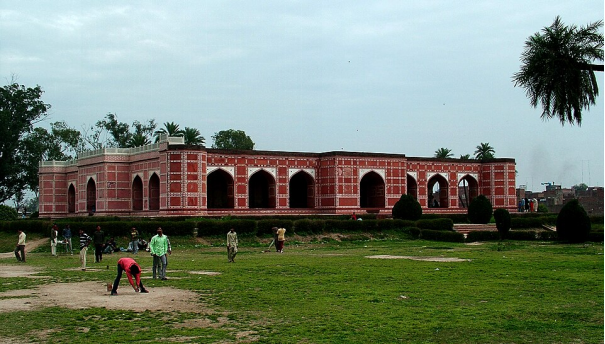
Tomb of Nur Jahan at Shahdara Bagh, Lahore.
The words are striking for their humility. They do not celebrate power, wealth or royal glory, but instead ask for silence and simplicity in death. It is a poignant contrast to the life of a woman who once stood at the very centre of one of the world’s greatest empires.
More than four centuries later, Nur Jahan remains a symbol of intelligence, resilience and leadership. In an age dominated by emperors and warriors, she proved that strategy, diplomacy and vision could shape history just as effectively as a sword. Her legacy endures not only in the monuments she left behind, but also in the remarkable story of the woman who, for a crucial chapter of Mughal history, effectively ruled an empire.