


How a 9,000-Year-Old Discovery Rewrote the History of Dental Medicine
Modern dentistry is often associated with advanced clinics, precision instruments and sophisticated medical science. Yet one of the most remarkable discoveries in the history of oral healthcare emerged not from an ancient Egyptian tomb or a Greek medical manuscript, but from the archaeological site of Mehrgarh , Pakistan.
Located in Balochistan, Mehrgarh was one of the world’s earliest farming settlements, flourishing between approximately 7000 and 2600 BCE. While the site is renowned for revealing some of South Asia’s earliest evidence of agriculture and settled life, it also produced findings that transformed historians’ understanding of medicine: the oldest known evidence of human dental treatment.
A Discovery That Changed Medical History
In the early 2000s, an international team of archaeologists and anthropologists examined human remains excavated from Mehrgarh’s Neolithic cemetery. They identified eleven drilled molar teeth belonging to nine individuals who had lived between 7,500 and 9,000 years ago.
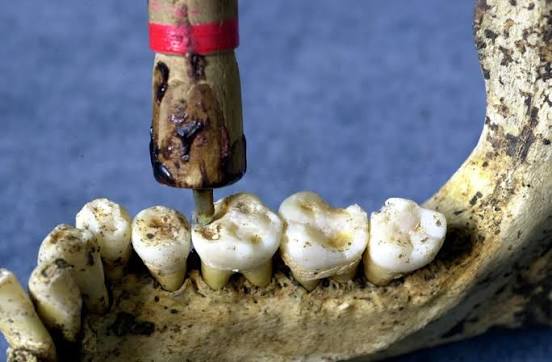
The drilled cavities displayed remarkable precision. Using microscopic analysis and micro-CT imaging, researchers concluded that the holes had been intentionally created using flint-tipped tools rather than resulting from natural wear or decay. Even more significantly, the surrounding enamel showed signs of continued chewing after the procedures, indicating that the individuals survived the treatment.
The findings, published in the journal Nature in 2006, pushed back the accepted origins of dentistry by more than 1,500 years and demonstrated that prehistoric communities possessed surprisingly sophisticated medical knowledge.
Innovation Born from Craftsmanship
Researchers believe these early practitioners adapted bow drills originally used by Mehrgarh’s skilled bead-makers. Experimental archaeology has shown that such flint drills could create holes in tooth enamel in less than a minute, producing marks nearly identical to those found on the ancient teeth.
The location of the drilled teeth also provides important clues. Most were permanent molars positioned at the back of the mouth, making cosmetic motives highly unlikely. Several showed evidence of tooth decay, leading researchers to conclude that the procedures were probably intended to relieve pain or remove diseased tissue rather than improve appearance.
Pakistan’s Place in the Story of Medicine
Mehrgarh represents far more than an archaeological site. It offers evidence that communities living in what is now Pakistan were developing specialised practical knowledge thousands of years before written medical texts emerged elsewhere.
Although these prehistoric procedures were not dentistry in the modern professional sense, they reveal an early understanding of anatomy, tool-making and therapeutic intervention. The discovery challenges long-held assumptions that complex medical practices developed exclusively in later ancient civilisations.
Today, Mehrgarh remains one of Pakistan’s most significant archaeological treasures and a landmark in global scientific history. Its drilled teeth continue to remind researchers that innovation often begins in unexpected places—and that one of humanity’s earliest attempts to relieve toothache originated on the plains of ancient Balochistan, placing Pakistan firmly among the birthplaces of medical ingenuity.