

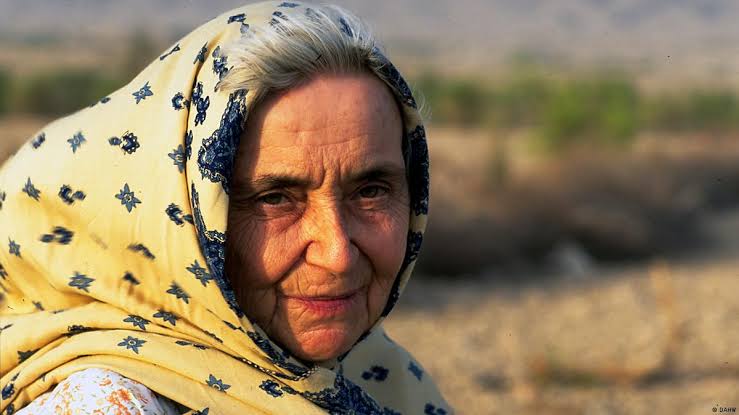
When Ruth Pfau arrived in Karachi in 1960, she found something that shocked even a young doctor who had already lived through the horrors of World War II Germany: entire communities ravaged by leprosy, living in squalor, shunned by society and denied basic medical care. What began as a brief stopover on her way to India turned into a lifelong mission that would transform Pakistan’s approach to one of history’s most stigmatized diseases.
Dr. Ruth Pfau visiting and treating patients in a remote rural community.. Source: Truthdig
Born in Leipzig in 1929, Pfau trained as a physician in Germany before joining the Daughters of the Heart of Mary, a Catholic religious order. Her path to Pakistan was almost accidental, but once she witnessed the conditions at Karachi’s McLeod Road leprosy colony, she made a decision that would define the rest of her life: she stayed.
At the time, a small leprosy clinic already existed there, run by her religious order out of little more than a hut made from fruit crates. Pfau took charge of it and transformed it into the Marie Adelaide Leprosy Centre, growing it from that single clinic into a nationwide network of over 150 treatment centers. Under her leadership, Pakistan became one of the first countries in Asia to be recognized by the World Health Organization as having controlled leprosy, a remarkable achievement for a nation with limited healthcare infrastructure at the time. She trained local doctors, nurses, and paramedics, built mobile units to reach remote villages, and fought tirelessly against the social stigma that often caused more suffering than the disease itself.
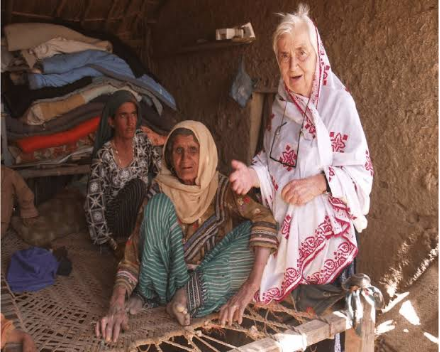
Her work did not stop at leprosy. Pfau later expanded her efforts to combat tuberculosis and other health crises, and she became a passionate advocate for people with disabilities and for disaster relief following floods and earthquakes that repeatedly struck Pakistan.
The comparison to Mother Teresa is not incidental. Like the Albanian-born nun who devoted her life to Kolkata’s poorest, Pfau, a European immigrant, dedicated over five decades to a country not her own, earning deep affection and official recognition. In 1988, she was granted Pakistani citizenship, and the government later awarded her the Hilal-i-Pakistan, Hilal-i-Imtiaz, Sitara-i-Quaid-i-Azam, and the Nishan-i-Quaid-i-Azam, among the nation’s highest civilian honours.
Ruth Pfau died in Karachi in 2017 at the age of 87. In a rare gesture, the Pakistani government organized a state funeral, and she was laid to rest with full honours, a testament to how completely she had become woven into the fabric of the nation she served. Her legacy endures not only in the clinics that still bear her mark, but in the enduring lesson that compassion knows no borders.