


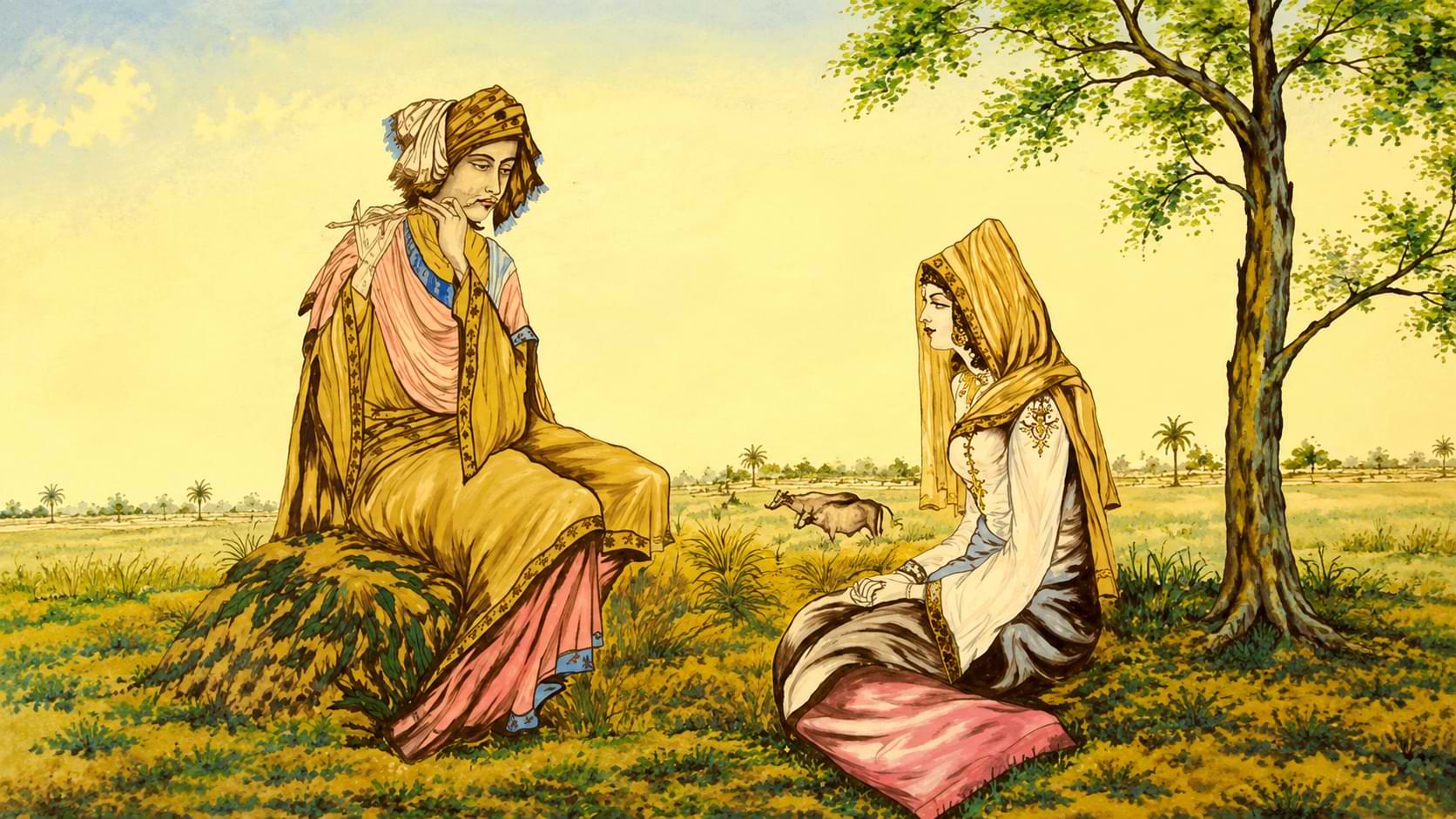
Heer Ranjha is the most culturally rich legend in the Punjab. Even though the tale might be old, it is certainly Waris Shah’s poem from the 18th century which gave the legend its final shape and made it a kind of sacred scripture of love for the lovers of many generations to come. The very fact that the poem is still sung after hundreds of years speaks volumes about its integration with the emotional world of the region.
While the story plot takes up a pattern that is fairly common in this genre, it stands out for the immense vigor with which it is told. Heer is the daughter of a well-off Jat family. She is deeply in love with Ranjha, a traveling musician of somewhat lower social status, who comes into her village after leaving his place due to some quarrels he had with his brothers. Heer and Ranjha fall in love in the course of time as he works as a cowherd in her father’s lands. But when their love becomes known, it encounters strong opposition from everyone around.
The unique feature that makes this legend stand out from the realm of simple cautionary stories is the moral ambivalence Waris Shah endows the main characters of the story, especially Heer. Heer cannot be defined simply as a passive victim or a defiant rebel figure; she acts, rebels, and tries to reason with others, showing a degree of agency that is uncommon for female characters in the similar folk legends of the time. The rebellion of the character does not appear to be senseless, but rather a statement of her personal opinion in opposition to a society that considers marriage to be a family business.
It is equally important how the poem has always been considered an interpretation of Sufism, as it is underlying the surface-level story all through. The wandering of Ranjha, his giving up on worldly comfort, and the persistent yearning of Heer have been viewed as metaphors of the journey of the soul in quest of the Divine, a perspective strengthened by the religious belief of Waris Shah himself. This dual-layeredness makes it possible for the poem to serve both as secular entertainment and spiritual reading, a factor explaining its enduring appeal.
However, what sustains Heer Ranjha in the end is not only its tragic conclusion, which is similar to many other regional myths, but also the ethical importance with which it addresses individual agency vs. tradition and custom. Instead of overcoming the conflict, the poem embraces the dissonance and sees love and social responsibility as conflicting entities that cannot be easily reconciled.


