


The two mediators build the mechanism meant to keep a fragile Lebanon ceasefire from collapsing.
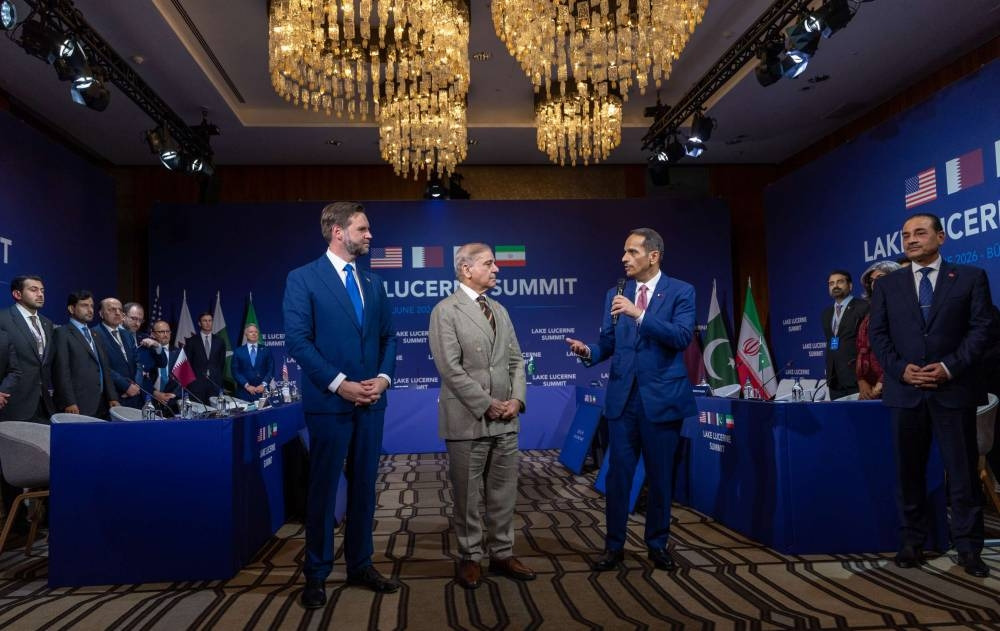
Pakistan and Qatar walked out of the first round of US-Iran talks in Switzerland with a concrete result on the conflict that has most threatened to derail the wider peace process. As mediators, the two countries helped the United States and Iran agree to set up a de-confliction cell aimed at ending military operations in Lebanon, according to the joint statement they issued early Monday after the Lake Lucerne Summit.
The mechanism is narrow but pointed. Under the arrangement, the cell brings together the parties and the Lebanese Republic, facilitated by the two mediators, to ensure adherence to the termination of military operations in Lebanon as set out in the Islamabad Memorandum of Understanding. In plain terms, Pakistan and Qatar are positioning themselves as the channel that keeps a shaky truce from breaking down again.
Lebanon has been the most combustible thread running through the entire negotiation. The fighting between Israel and the Iran-backed group Hezbollah has continued despite repeated ceasefire declarations, and Iran has insisted that any durable settlement must include an end to the violence there. That demand nearly sank the Switzerland talks before they began, with Iran initially holding back its delegation over the situation in southern Lebanon.
Iran’s Foreign Minister Abbas Araghchi singled out the new mechanism as the measure that will prove whether the diplomacy holds. Writing on X, he credited Pakistani and Qatari mediation with delivering major progress toward ending the Lebanon war and called the de-confliction cell the first real test of what was agreed in Switzerland. His framing places the cell at the center of the next phase, ahead of even the nuclear and sanctions tracks.
Pakistan and Qatar Mediation Builds the Truce Mechanism
The de-confliction cell was one of several outcomes Pakistan and Qatar announced as facilitators of the talks. Both governments arrived at Burgenstock having spent days in shuttle diplomacy across the region, carrying messages between the parties and working to keep Iran at the table after a tense start.
Qatar, whose prime minister Sheikh Mohammed bin Abdulrahman bin Jassim Al Thani has long served as a back-channel between Washington and Tehran, sat alongside Pakistan’s delegation led by Prime Minister Shehbaz Sharif and Army Chief Field Marshal Asim Munir. The Lebanon question was added as a priority session once talks opened.
The cell itself is a communication and monitoring tool, designed to manage incidents and prevent the kind of flare-up that has repeatedly undone previous truces. Its success will depend on whether all sides honor the commitments made under the memorandum during the 60-day window now running.