
Every pink salt lamp, spa scrub and gourmet kitchen shelf in the world traces back to one place. The Khewra Salt Mine in Punjab, Pakistan. The “Himalayan” label is a Western marketing term. The salt itself is Pakistani, formed over 500 million years ago in an ancient inland sea that dried up long before the Himalayas existed.
Khewra is the second largest salt mine in the world, after the Sifto Salt Mine in Ontario, Canada. It sits in the Salt Range, a mountain chain that runs approximately 186 miles between the Jhelum and Indus rivers in Punjab. The mine lies about 260 kilometers south of Islamabad and 160 kilometers southeast of Lahore. It is not located in the Himalayan mountain range. The Salt Range sits at the foothills of that range, geologically and geographically distinct from it.
Across Pakistan, this salt goes by one local name. Lahori namak, Urdu for Lahore salt, a reference to its geographic proximity to the city.
The Himalayan branding gained traction in Western markets through the 1990s and 2000s as global demand for natural food products rose. The label stuck. Today, the same mineral sold at premium prices in European and American stores reaches local Pakistani bazaars for a fraction of the cost under its original name.
How Alexander the Great Discovered the Khewra Salt Mine
According to historical accounts, the deposits at Khewra were discovered in 326 BC during Alexander the Great’s Indian campaign. His soldiers stopped near the Jhelum and Mianwali region and noticed their horses licking the rocks. The soldiers tried the rocks themselves and found them salty.
Organized extraction did not begin at that point. Mining at Khewra took formal shape during the Mughal era under Emperor Jalaluddin Muhammad Akbar, who introduced standardized salt extraction in the region. During British rule in 1872, mining engineer Dr. H. Warth constructed the main tunnel that forms the backbone of the mine’s current structure. After partition in 1947, the Pakistan Mineral Development Corporation took over operations and manages the mine to this day.
Inside Khewra Salt Mine, Pakistan’s Most Visited Underground Attraction
The Khewra Salt Mine extends through 25 miles of tunnels across 18 working levels and sits approximately 288 meters above sea level. The underground area covers 110 square kilometers. The deposits hold an estimated 82 million metric tonnes of salt.
The mine produces between 0.36 and 0.4 million metric tonnes per year. Around 70 percent goes toward industrial use. The remaining 30 percent enters the food supply chain for domestic consumption and export.
The pink color comes from iron oxide and trace minerals including magnesium, calcium, and potassium. The salt is approximately 98 percent sodium chloride. Color ranges from pale pink to deep rose depending on mineral concentration at the point of extraction.
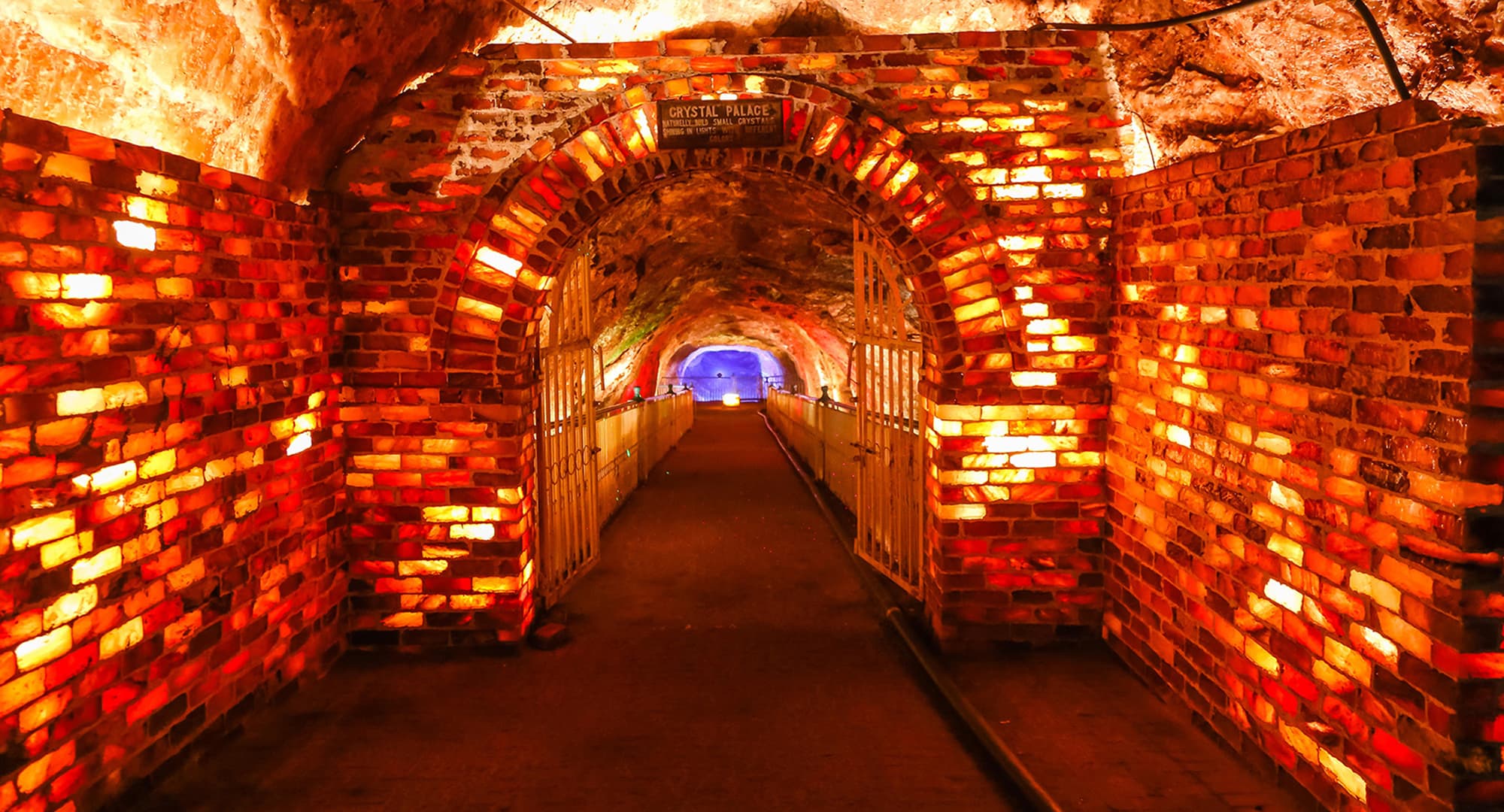
Up to 250,000 visitors travel to Khewra each year, making it one of Pakistan’s top tourist destinations. The tunnels include an underground mosque built entirely from salt blocks, a salt therapy chamber, salt stalactites and stalagmites, and illuminated chambers that display the natural pink and red tones of the rock.
Pakistan Himalayan Salt Exports and the Fight for GI Registration
Pakistan exports approximately 400,000 tonnes of Himalayan salt annually to markets across the United States, Europe, the Middle East, and China. Salt exports to China reached nearly USD 5.75 million in 2022, a 15.68 percent increase year-on-year, according to data from China’s General Administration of Customs. The product appeared as a featured export at the China International Import Expo.
To protect the product from misrepresentation in global markets, Pakistan is in the process of registering Himalayan pink salt as a Geographical Indication, a legal designation that would formally link the product to its Pakistani origin in international trade. The Salt Range deposits hold enough reserves to sustain current extraction rates for several hundred years.