


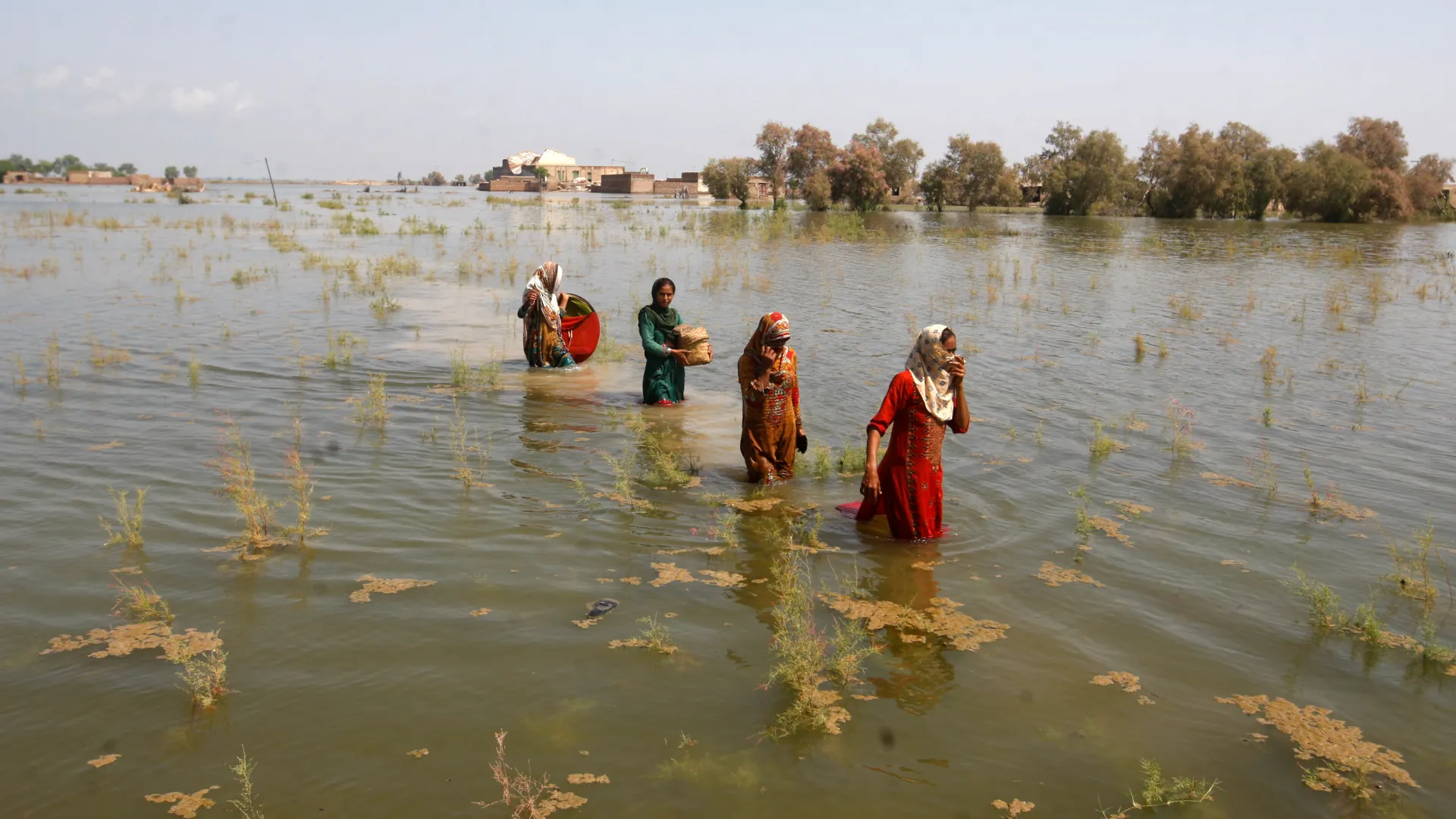
In 2022, floods submerged one third of Pakistan. More than 33 million people were affected, 8 million were displaced, and over 1,700 died. Total damages exceeded $30 billion, according to a joint assessment by the World Bank, the Asian Development Bank, the United Nations, and the European Union.
On Earth Day 2026, Pakistan’s recovery from those floods is being cited internationally not just as a humanitarian effort, but as a working example of climate-resilient rebuilding.
Pakistan’s 4RF: Rebuilding for the Next Disaster, Not the Last One
Kristina Costa, managing director of policy and strategic engagement at the University of Chicago Institute for Climate and Sustainable Growth, referenced Pakistan’s approach at a recent event.
“A few years ago, Pakistan had appallingly tragic floods,” she said. “What did they do to rebuild? They did not say we need to rebuild everything exactly as it was before. You’re increasingly seeing those kinds of solutions that actually blend resilience and mitigation together.”
Pakistan formalized that approach through its Resilient Recovery, Rehabilitation and Reconstruction Framework, known as the 4RF. The framework was developed after the 2022 floods and sets out how the country rebuilds infrastructure, housing, and agriculture with future climate shocks in mind rather than simply restoring what was destroyed.
An International Partners Support Group was launched in January 2023 at a conference in Geneva to coordinate international support for the 4RF across bilateral and multilateral partners.
Living Indus and Nature-Based Solutions
A core part of Pakistan’s recovery strategy has been the Living Indus Initiative, a government-led programme to restore the ecological health of the Indus River Basin. It focuses on ecosystem restoration, floodplain management, and water retention as tools for reducing flood impact, rather than relying solely on built infrastructure.
WWF’s Recharge Pakistan project, launched in September 2024, works alongside this effort. It targets the Indus River Basin and is estimated to directly benefit over 680,000 people and indirectly reach more than 7 million. The project restores degraded land and builds green infrastructure across multiple provinces to reduce floodwater reaching communities and farmland.
Pakistan’s National Adaptation Plan, published in 2023, includes nature-based solutions as a formal part of the country’s climate policy, covering wetland restoration, mangrove expansion, and flood-tolerant agriculture.
The Numbers on the Ground
UNDP’s Flood Recovery Programme has supported over 200,000 flood-affected people with hygiene kits, agricultural toolkits, solar home systems, and water filtration units. It also completed 800 climate-resilient homes benefiting more than 20,000 people, built to flood-resistant standards rather than replicating pre-flood construction.
Pakistan contributes less than one percent of global carbon emissions but ranks consistently among the world’s most climate-vulnerable countries. UN Secretary-General António Guterres, visiting Pakistan in September 2022, described the situation as a “litmus test for climate justice” and called for substantial international support.
The 2022 floods were followed by severe monsoon flooding again in 2025, affecting Sindh, Balochistan, and Punjab. Researchers and international agencies have shifted from treating each event as isolated and are now studying Pakistan’s response as an ongoing test of climate adaptation under real conditions.