

Oil markets moved the moment the news broke. Iranian Foreign Minister Abbas Araghchi announced Friday that the Strait of Hormuz is completely open for commercial vessels for the duration of the 10-day ceasefire between Israel and Lebanon. U.S. crude plunged 12% to around $83 a barrel. Brent crude slid more than 10% to near $89. Heating oil futures, a proxy for jet fuel, fell 11%. Wholesale gasoline futures dropped 6%. European natural gas prices fell as much as 10%.
The S&P 500 and Nasdaq Composite both hit all-time highs at the opening bell. The Dow Jones Industrial Average gained 1.4%. It was a broad market rally driven almost entirely by relief that the world’s most critical oil chokepoint was back in play.
Araghchi made the announcement on X, stating that passage for all commercial vessels through the Strait of Hormuz was declared completely open on a coordinated route already set out by Iran’s Ports and Maritime Organisation. The declaration came at around 4:25pm Gulf Standard Time on Friday.
Shipping Giants Welcome News But Urge Caution
The two largest shipping companies in the world welcomed the announcement but stopped short of immediately resuming transits. Maersk said that since the outbreak of the conflict, it had followed guidance from security partners in the region, and that recommendation had been to avoid transiting the Strait of Hormuz. Any decision to resume, the company said, will be based on risk assessments and close monitoring of the security situation.
Hapag-Lloyd said open questions remain, with its crisis committee in session working to resolve outstanding issues within the next 24 to 36 hours. The company said it would prefer to pass the strait as soon as possible once insurance coverage, military corridor details, and ship sequencing are confirmed.
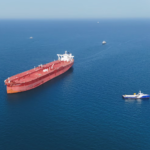
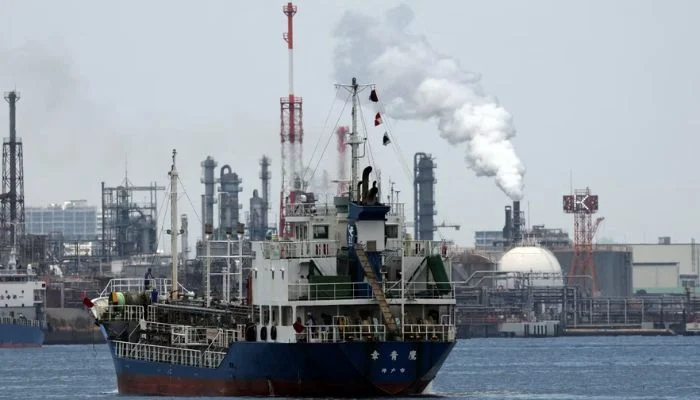
The first vessel to test the waters was the Shalamar, a Pakistan-flagged Aframax tanker that cleared the Hormuz with crude since the blockade began. According to ship-tracking data compiled by Bloomberg, it loaded around 450,000 barrels at Das Island in the UAE and is now in the Gulf of Oman heading to Karachi. It had previously abandoned a transit attempt on April 12 when news broke that U.S.-Iran talks in Islamabad had collapsed.
U.S. Naval Blockade on Iran Stays Until a Deal Is Done
Despite the market euphoria, the situation on the ground is more complicated. President Trump publicly thanked Iran for the move but was direct about what comes next. In a post on Truth Social, he said the U.S. naval blockade on Iranian ports will remain in full force and effect until a deal with Iran is 100% complete. Negotiations, he added, should go very quickly.
The blockade, imposed on April 13 after the Islamabad peace talks fell apart, targets all vessels entering or departing Iranian ports. It does not restrict freedom of navigation for ships transiting the strait to non-Iranian ports. Still, ING analysts warned Friday that the physical oil market is getting tighter every day that passes without a full restart of flows through the Hormuz. The bank estimates roughly 13 million barrels per day of supply has been disrupted, a figure that could rise further if the blockade holds.
Analysts at Rapidan Energy said minor disruptions could take weeks to clear, and that reduced Gulf production could keep oil elevated for three to six months. V Insights told CNBC that if the truce holds, prices could stabilise in the $85 to $95 range short-term. A breakdown in peace talks, however, could push prices back above $120.
France and Britain held a virtual summit Friday on restoring freedom of navigation through the waterway, with mine clearance flagged as a specific concern. U.S. Central Command has already begun mine-clearing operations inside the strait. The EU’s top diplomat Kaja Kallas said international law requires transit through the Hormuz to remain open and free of charge, and that any pay-for-passage arrangement sets a dangerous precedent for global maritime routes. French President Emmanuel Macron added that securing the strait must be done by a neutral and independent party.
For now, the waterway is open. Whether it stays that way depends on how long the Lebanon ceasefire holds and how fast U.S.-Iran negotiations move.