
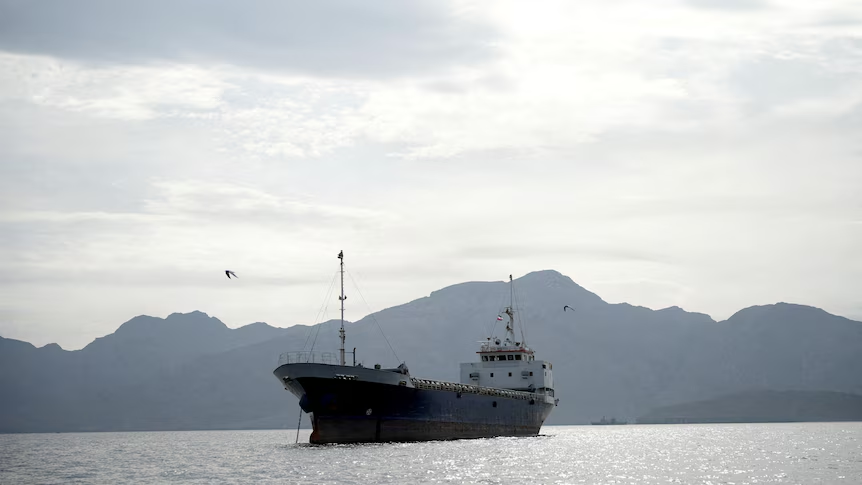
The Strait of Hormuz is open again. Iranian Foreign Minister Abbas Araghchi announced Friday that commercial ships can transit the waterway freely, linking the move directly to the 10-day ceasefire between Israel and Lebanon. Oil prices dropped. Stock markets climbed.
Araghchi made the announcement on social media, stating that passage for all commercial vessels was declared completely open on a coordinated route already set out by Iran’s Ports and Maritime Organisation.
The strait had been largely blocked since February 28, 2026. That was when the United States and Israel launched coordinated strikes against Iran. In retaliation, Iran’s Islamic Revolutionary Guard Corps banned passage, confirmed 21 attacks on merchant ships, and reportedly laid sea mines across the waterway. Maersk, CMA CGM, and Hapag-Lloyd all suspended operations shortly after.
Strait of Hormuz Oil Disruption Hit Global Markets Hard
The numbers tell the story. Before the closure, about 25% of the world’s seaborne oil trade and 20% of global liquefied natural gas moved through the strait. China sourced a third of its oil via that route. Europe relied on Qatar for 12% to 14% of its LNG supply, all of it flowing through the same narrow passage.
Global oil supply fell by 10.1 million barrels per day in March, according to the International Energy Agency. Crude prices surged to near $150 per barrel. Middle distillate prices in Singapore hit record highs above $290 per barrel. The IMF identified Qatar as the hardest hit, projecting a near 9% economic contraction this year after gas production ground to a halt.
Friday’s announcement moved markets fast. The S&P 500 rose 0.8%, the Dow gained 1.4%, and oil prices fell sharply as traders reassessed what reopening the strait could mean for global supply.
U.S. Naval Blockade on Iran Stays in Place
There is a catch. President Trump said Friday that the U.S. naval blockade on ships accessing Iran would continue, even after Araghchi’s announcement. The blockade was imposed on April 13 after peace talks in Islamabad collapsed. It covers all vessels entering or departing Iranian ports. On April 14, a U.S. Navy destroyer forced two oil tankers trying to leave Iran to turn back. By April 15, Admiral Brad Cooper confirmed a full blockade of all Iranian ports was in effect.
Diplomatic efforts around the strait have been running at full speed. French President Emmanuel Macron and British Prime Minister Keir Starmer co-hosted an international online summit Friday on a defensive multilateral mission to keep the strait open. Greece, Italy, and the Netherlands have shown interest in a naval escort framework. Starmer said reopening the strait is a global responsibility and cannot wait.
The International Energy Agency has said that resuming flows through the Strait of Hormuz is the single most important variable in easing pressure on energy prices and the global economy. Whether the opening holds beyond the ceasefire period is still unclear.