
Researchers from Pakistan’s National University of Sciences and Technology have been ranked among the most-cited scientists in the world.
Forty-five researchers from Pakistan’s National University of Sciences and Technology (NUST) have been named among the world’s top 2% of scientists in the 2026 rankings compiled by Stanford University and Elsevier.
Sixteen of the NUST researchers have appeared in the rankings over several consecutive years, according to a statement from the university. Those recognized this year include Dr. Miraj Mustafa and Dr. Mubasher Jamil.
NUST Rector Dr. Muhammad Zahid Latif congratulated the researchers. “The meritorious accomplishment of our truly erudite faculty and researchers has brought immense pride to NUST and the nation,” he said.
The number marks an increase from 2024, when 43 NUST researchers were included in the list.
How the Stanford and Elsevier Top 2% Scientists List Works
The list identifies the most-cited researchers in the world across all major fields of science. It was developed by a team led by Professor John Ioannidis of Stanford University and is based on citation data from Scopus, the research database run by the publisher Elsevier.
Researchers are ranked using a composite score that takes into account the number of citations their work receives, their h-index and their role as authors on published papers. The rankings cover 22 scientific fields and 174 subfields.
The list is published in two categories. One measures the impact of a researcher’s work across their entire career, while the other measures impact within a single year. Only those in the top 2% of their subfield are included.
NUST Researchers Among Pakistan’s Top Scientists
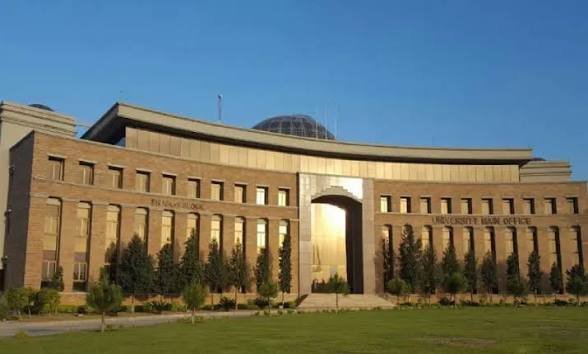
Founded in 1991, NUST is a public research university with its main campus in Islamabad. It offers programs in engineering, computer science, natural sciences, medicine, business and social sciences.
The university said the recognition reflects the work of its faculty across a wide range of disciplines and their contribution to research and scientific progress.
Researchers from several other Pakistani universities are also included in this year’s rankings.