


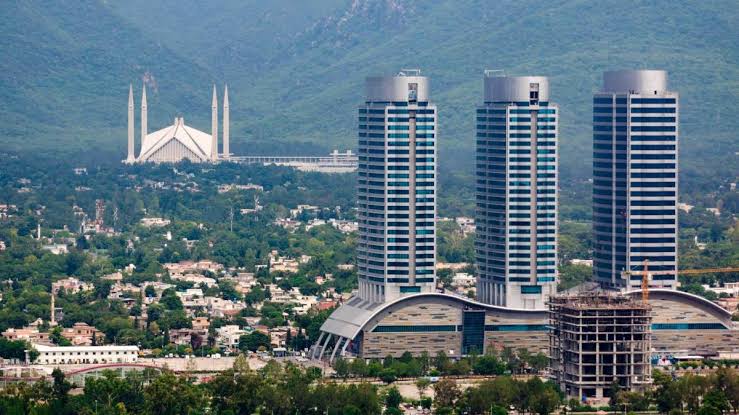
When people think of Pakistan’s capital, Islamabad usually comes to mind — a planned city of broad avenues, green hills and modern government buildings. But Islamabad is a relatively young capital. Before it was built, Pakistan’s seat of power moved through several cities, each reflecting a different chapter in the country’s early history.
Karachi was Pakistan’s first capital. When Pakistan emerged as an independent state in 1947, Karachi became the centre of the new country. It was here that the first government took shape, diplomats arrived and the institutions of a new state began operating. Muhammad Ali Jinnah, Pakistan’s first Governor-General, lived and worked in Karachi. For the young country, Karachi was more than an administrative centre. As a major port, it connected Pakistan to the wider world and became the country’s commercial gateway. Yet the city was never intended to remain the capital indefinitely.
In the years after independence, the government began looking for a location that could better serve as a permanent administrative centre. Karachi’s rapid population growth, commercial importance and distance from the country’s northern regions increasingly made it less suitable as the seat of government.
In 1959, Rawalpindi became Pakistan’s interim capital. The choice was partly practical. Located close to the existing administrative and military infrastructure, Rawalpindi offered the government a functioning urban centre while plans for a new capital were developed. For several years, Rawalpindi served as the country’s political headquarters. Important government offices operated there, while the new capital was being planned and constructed nearby.
That new capital was Islamabad.
Designed under the vision of Greek architect and planner Constantinos Apostolou Doxiadis, Islamabad was conceived as a purpose-built capital rather than a city that had simply grown into the role. Its sectors, avenues and green spaces were planned around a modern administrative centre, with the Margalla Hills providing a dramatic natural backdrop. The federal government gradually shifted to Islamabad in the 1960s, and the city eventually became the permanent capital.
The movement from Karachi to Rawalpindi and finally Islamabad tells a larger story about Pakistan itself. Karachi represented the urgency and optimism of a newly independent state. Rawalpindi represented a period of transition and consolidation. Islamabad represented the ambition to build a modern national capital from the ground up.
Today, Islamabad dominates Pakistan’s political map. Yet the country’s capital history is spread across three cities — and each preserves a different memory of how Pakistan learned to govern itself.
The capital may have moved, but the story of Pakistan’s state-building remains written across Karachi, Rawalpindi and Islamabad.