


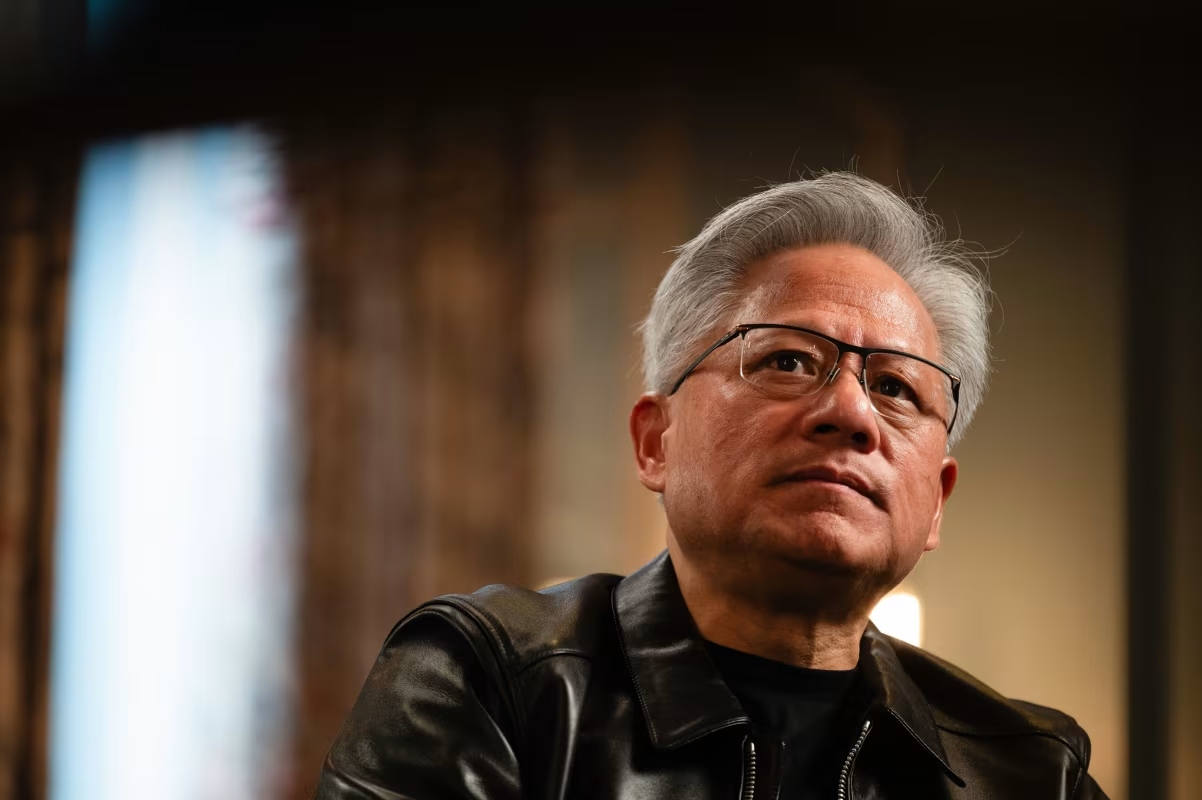
Nvidia shares jumped about 31% on Monday after Huang returned to lead the company, less than two weeks after his resignation.
Nvidia has reinstated Jensen Huang as its president, chief executive and a member of its board of directors, effective immediately, the company announced on Monday, November 23.
The board voted unanimously to bring back Huang, the company’s co-founder, following a series of discussions and meetings with him. In a statement, Nvidia said the board was satisfied with Huang’s “candor and ability to lead.”
The company added that the board had received input from senior levels of the US government during the process and, based on that input, was confident that Huang’s reinstatement “poses no national security risk.”
“The Board believes Jensen is the right person to lead NVIDIA, and that his reinstatement is in the best interests of our stockholders, employees, partners, and customers,” said Harvey C. Jones, Chair of the Board.
Chief Financial Officer Colette Kress, who had been serving as interim CEO, will return to her previous role.
“I am honored to return to Nvidia and lead one of the most consequential technology companies in the world,” Huang said.
US President Donald Trump welcomed the decision in a post on Truth Social, writing that “the Country needs Jensen’s leadership at NVIDIA” and describing Huang as a “Great Patriot and National Treasure.” According to reports, Trump personally encouraged the board to reinstate Huang.
How Nvidia Stock Rose After Huang’s Return
Nvidia’s stock rose about 31% on Monday following the announcement, its best single-day performance since May 2003. The jump added around $952 billion to the company’s market value in a single day.
Shares surged as much as 32% during trading. The rally also lifted the wider US market, with the Dow Jones, S&P 500 and Nasdaq posting their best day since April 2025.
The gain followed weeks of losses for the chipmaker. Nvidia’s shares reached a record high of $239.24 on October 6, when the company was valued at around $5.77 trillion.
On November 9, the stock fell 4.3% after Nvidia’s board opened an investigation into reports that Huang had been the target of a foreign intelligence effort. The decline wiped around $192 billion off the company’s market value.
Huang resigned as CEO on November 12 after acknowledging an extramarital relationship. Nvidia shares fell as much as 14.3% during trading that day.
By November 16, the stock had closed at $156.14, its lowest level since July 2025. Shares continued to decline in the days that followed, falling nearly 33% in total from their November 6 closing price of $186.64.
The drop also weighed on the wider market. The tech-heavy Nasdaq Composite closed in correction territory, more than 10% below its recent peak.
Nvidia’s Role in the AI Industry
Nvidia is one of the world’s most valuable companies and a leading maker of the chips that power artificial intelligence systems. It became the first company in the world to pass $5 trillion in market value in 2025, and it accounts for roughly 7% of the S&P 500.
Huang co-founded Nvidia in 1993 and had led the company as CEO since then, overseeing its growth from a graphics chip maker into a central player in the global AI industry.
On November 17, while he was away from the company, Nvidia reported its third-quarter results. That same day, Huang said on X that he would return as CEO if “the Board of Directors decides that my return is in the best interest of our shareholders, our employees, the company, and America.”
Huang and the board held their first conversations since his departure on Saturday, November 21, before reaching the decision to reinstate him two days later.
Jones will continue to serve as Chair of the Board.